.
About long-range long-radius specialist support assets (such as helicopters, artillery, engineers, maybe scouts) in general: A rule of thumb (of mine) is:
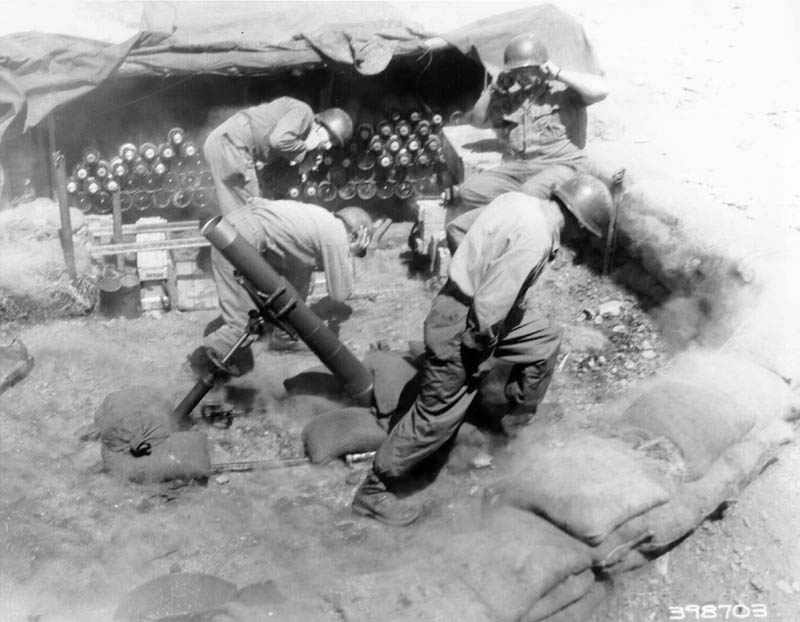
Long-radius specialist support assets should as a rule of thumb be assigned to a level of command that has approximately the radius of (short-term, ~24 hrs) responsibility / operations as the asset has radius of effect (very short term, minutes to 4 hours).
I developed this as a my rule of thumb (or rather as a description of the common ground of my opinions on different force designs) a while ago and mentioned it indirectly in earlier posts. The reasoning behind this is mostly about efficiency. Longer range assets than needed (say, 80 km artillery instead of 13 km mortars when you need 8 km radius) are more costly and thus often wasted at lower levels. It's on the other hand not convincing to give a formation commander an asset that doesn't enable him to relocate his main effort quickly (which is big chunk of his job, after all) because of its lack of effective radius.
There are complicating considerations that have to be taken into account as well, of course.
Horizontal support doctrine,
Schwerpunkt idea in a slow-moving campaign, speed of assets (
scouts, for example) and many other considerations play into this.
Thus it's only a rule of thumb. I justify the elevated position for the radius variable over the other considerations with my assumption (observation) that it appears to be the dominant factor most of the time.
- - - - -
Now let's move over to a specific application (I mentioned this one in an
earlier post as well): Helicopters as brigade or division assets. This is particularly popular with U.S.Americans and in small war contexts, but rarely if ever being mentioned in other contexts. Helicopters as division assets has been the dominant pattern in the U.S.Army for a long time (+ helicopters in armoured cavalry regiments ~ brigades, helicopters in marine expeditionary units ~ very small brigades).
The radius of effect of a helicopter unit is in excess of 100 km and thus much greater than the short-term area of operations of a brigade. A brigade may occasionally move 100 km over night, but something goes awfully wrong if its elements are in combat 100 km away from its temporary helicopter base.
What's more to be considered?
Helicopters are fuel hogs while armour, mech and even infantry brigades are manoeuvre formations (heavy divisions too). The combination of both looks quite wrong if you take into account that the mere supply of a moving brigade for its ground element's essential supply needs is already a logistical problem of the highest quality (and rarely mastered for long).
The fiscal cost of helicopters may contribute to them being an inefficient aerial support asset in comparison to alternatives, such as aerial recce drones and guided indirect fire munitions.
U.S. ground forces are the greatest proponents of a strong use of helicopters in regiments, brigades and divisions. They have been much-influenced by the Vietnam experience, a de facto ban for fixed wing aircraft in the U.S.Army and the assumption of air supremacy and effective suppression of enemy air defences.
They are quite specific and alone in this regard, which can be taken as an inspiration to think about whether their conclusions are correct and generally valid (which would mean that dozens of other modern armies were wrong about it).
The availability of helicopter support far forward (= in a brigade combat area) may be marginal due to hostile air defences. If in effect, this might turn the organic helicopter support into deadweight.
Helicopter support may be somewhat similar to other organic support (a subsittute). This resembles the 'UAV' point above. "KISS - keep it simple, stupid!" and the
concept of friction in war (v.Clausewitz) appear to suggest that such redundancies may at times be a mistake.
An organic helicopter force impact the march agility of the brigade. The additional vehicles add to column length and duration of passing of a bde convoy. The responsiveness to a march order may be poor because of helicopters still away or not in flyable condition.
Centralisation vs. decentralisation. Different armies have different preferences here, for good reasons. The responsibeness to a formation's support needs is better with organic assets, but having them organic reduces their availability for large operational-level actions. Decentralisation also reduces the efficiency of the dedicated support (~more aircraft mechanics needed for same qty of helos).
The temporary helicopter base in a brigade's area would be in range of (much) hostile artillery and even of hostile air surveillance. This would be the foundation for a high exposure to artillery fire on the base, which is unlikely if the base was more centralised with the corps, for example.
Finally, there are usually* alternative levels for the allocation of helicopter support assets at available:
# division
# corps
# theatre / Armee
I prefer the corps level, for modern corps would have a radius of short-term responsibility that matches about the (practical, ~90% of missions) radius of effect of helicopters.
(*: Marines and forces in small wars being an exception at times.)
- - - - -
Similar considerations can be applied especially to artillery support, which appear to have advanced in range even more than the (linear) growth of the area of responsibility / operations of formations did.
My approach can be contrasted with the (let me call it) "wish list" approach of some others who at times appear like spoiled children in their expectation of near-unlimited resources no matter what costs. The agility- and logistics-related points even show that having more does not necessarily equal being better off.
Armies have a responsibility to serve their people, but they have also a responsibility to avoid waste. This means they need to allocate resources rationally, not the least because this habit is important for great wars when practically all resources become very scarce.
S O
P.S.: I apologise if anyone finds my texts difficult to read because I cut them down to the bones without much explanation. I take much as self-evident and attempt to keep blog posts at a bearable length and thus omit some explanations.
.