2019/01/26

Military aviation history: The final air campaign that mattered in Europe

.
I spent much of the 90's as an aviation buff, soaking up ridiculous amounts of information about aviation (most of all historical military aviation). The internet finally offered me a horizon way past the few books on offer in local bookstores and libraries around 1997, but sometime around 2000 there still seemed little info of interest left to be learned in the field. Diminishing returns.

I still have this in the background and one topic is nagging me a bit; the dominance of attention on late-war hardware. The last campaign that really mattered was the air superiority campaign over Central Europe, which started for real with the introduction of P-51B as long-range escort fighters (first mission over Germany 11 December 1943, substantial involvement began in January 1944) and ended with the near-total destruction of the (aviation) fuel supply in the summer of 1944. The relentless bombing of oil industry and storage sites beginning in May largely devalued further production of German combat aircraft, tanks and motor vehicles in general. By September 1944 the German pilot training program had crashed and its output was reduced to low quality cannon fodder. New fighter pilots had much-reduced flying hours before they joined operational units, leaving much of the type familiarisation and tactical training to those supposedly operational units. Furthermore, all pilots had to become fighter pilots, whereas pre-1944 the less skilled pilots would get to fly transport or bomber aircraft.


We have thus very little reason to pay attention to what aircraft types and versions appeared  in service only by summer of '44 or later. The last militarily really relevant (NOT decisive) German hardware was the hardware of the winter 1943/44, at most spring 1944.

So, what was available as best German fighters at the time?

The Fw 190A-7 fighter with four good 20 mm guns (two of them synchronised electrically, which reduced rate of fire by about 10%) and two 13 mm guns (also synchronised electrically). Its engine was famously poor at high altitudes because of a single stage supercharger with a full pressure altitude* of less than 6,000 m (the U.S.A.A.F.'s 8th Air Force B-17 and B-24 bombers usually flew at about 7,600 m). It was outmatched by the two stage supercharger P-51B fighter (which also enjoyed superior aerodynamics) not only because of the supercharger issue, but also because the Fw 190A-7's BMW 801D-2 engine was essentially unchanged since 1942.** The Fw 190A-7 was generally marginally improved over the Fw 190A-4 version of July 1942 (biggest improvement was probably the thickening of armour to withstand .50BMG).

The Fw 190 offered great all-round view, great roll rate, very robust undercarriage, great firepower and great resistance to battle damage (air-cooled engine without vulnerable liquid cooling system except for the lubricating oil).


The Bf 109G-6 was the best available Bf 109 fighter version by New Year 1944. The G-6 version had been in production since February 1943 already and wasn't much better than the G-2 version of early 1942. The G-6 featured a single 20 mm or 30 mm gun (the latter had a slow muzzle velocity, but single hits often killed a fighter and 3...4 hits often killed a 4-engine bomber) and two 13 mm guns (synchronised electrically.
An "AS" designation was applied to the few and late G-6 with a DB 605AS engine (with DB 603's supercharger) likely beginning before February 1944, and there as also the /U2 modification with GM-1 injection (nitrous oxide, as substitute for the missing oxygen supply from the supercharger above approx. 5,800 m altitude). Only about 325 G-6AS and 324 G-6/U2 were produced in factories altogether (compared to almost 8,000 basic G-6).

The Bf 109 had no especially advantageous characteristics except that its power/weight ratio was fine (and it was a fairly small target), resulting in a high climb rate. It was plagued by an unsatisfactory undercarriage, which resulted in many accidents.
The basic Bf 109G-6 and G-6AS or G-6/U2 were rather unsuitable for the destruction of four-engine bombers, and probably even so with the 30 mm gun. Their firepower was quite poor; a problem that had plagued the Bf 109 since the F series in 1941.

Two additional underwing-mounted 20 mm or 30 mm guns could be installed, but this increased the weight, reduced the roll rate, reduced the climb rate and reduced the top speed. The E series' installation of older model 20 mm guns in slightly bulged wings was not reintroduced. There was a choice between a clean but still not really competitive fighter and a by comparison clumsy and in contact with hostile fighters even less competitive 'bomber destroyer'.


The obvious option would have been to go for a fighter group equipped with Bf 109G-6ASM (ASM = AS with MW-50 injection) as escorting force and a Fw 190A-7 fighter group as bomber destroyers by spring 1944, and something similar (more extreme) was attempted with the Sturmgruppen approach, to completely insufficient effect as the heavily armed (and armoured) bomber destroyers were not properly secured against the escort fighters.

Both Fw 190A-7 and Bf 109G-6 represented mid-1942 to mid-1943 technology and this didn't suffice even though the same could be said about the P-51B (the P-51's basic fuselage design was approx. two and six years younger than the German designs and this showed in the aerodynamics of the wing profile and the cooler design).

All the fancy technical advances made in summer 1944 to winter 1944/45 didn't matter any more. You wouldn't quite get that impression with the usual literature on the period and campaign, for there's an inappropriate level of attention on the irrelevant German aircraft variants and types that became available for service in relevant quantities only after the spring of 1944. There are 'too late, too few' remarks, but the authors don't resist paying excessive attention to fancy very late war designs while largely neglecting the types introduced in 1942/1943 relative to their actual importance.

A one-year lapse in competitiveness of in-service fighter designs rooted in raw material shortages (which caused a failure of turbocharger development programs) and a way too belated counter to the Rolls-Royce Merlin 61's two-stage supercharger revealed in the summer of 1942 doomed the Luftwaffe to not only fight in a severe quantitative inferiority, but also in a severe qualitative inferiority situation during its last air campaign that mattered.

The Luftwaffe's fighter designs were usually very competitive and at times clearly superior before and after, but not so during the half year when the 8th AF finally employed some good ideas for offensive strategic air warfare in combination.

Moreover, one could ask whether we should trust our modern fighter arsenals with their about 40 year design lifecycles.

S O

*: I translated "Volldruckhöhe" literally, as "full pressure altitude". I don't know the correct translation, though "critical altitude" and "full throttle altitude" popped up as a candidates. The "Volldruckhöhe" is the altitude at which giving full throttle usually makes sense for the last time during a climb, but that depends on engine control mechanisms. Aircraft usually reached their top speed a little above their full pressure altitude.
**: The usual statement (in literature) that the Jumo 213A of the Fw 190D series was superior to the BMW 801 at high altitudes does not square with its actual performance curves at all. 
Fw 190A (BMW 801) reached top speed slightly higher than 650 kph at about 6,400 m, with externel air intake it's a bit faster at about 6,900 m. A Fw 190D reached top speed about 670 kph at about 6,600 m. The Jumo 213A installation allowed for a little extra performance in general (especially with MW-50 added and in use by very late 1944), but it was no high altitude engine.

The Jumo 213A's full pressure altitude was 5,900 m, almost indistinguishable from the basic versions of the competing German engines. The Jumo 213A was no real high altitude engine. The DB 605 engine versions with DB 603's supercharger (such as DB 605AS) were the closest thing to high altitude piston engine available for German fighters. The only real alternative were DB 605 with GM-1 (nitrous oxide) injections systems (AFAIK BMW 801 with GM-1 were not used in fighters).
  
Some data:

Bf 109G-5AS and Bf 109G-5 speeds at different altitudes (equivalents to G-6AS and G-6, equipped with pressurised cabin and thus a little heavier) 

Fw 190A-6 speeds at different altitudes (very similar to A-7, graph also shows speeds achieved with an alternative external air intake)

P-51 speeds at different altitudes (in antiquated dimensions)

DB605AS performance at different altitudes
 
DB 605AM performance at different altitudes (This powerplant appeared in 1944 with MW-50.)

MW-50 did almost nothing for high-altitude performance (it made sense up to full pressure altitude only - there was but a few per cent power gain from the cooling effect above it), so we can compare contemporary DB 605AM and AS versions' high altitude performance: The DB 605AM's full pressure altitude was 5,800 m and the AS version had a full pressure altitude of 7,800 m. Performance steeply dropped above full pressure altitude. AM delivered 1080 hp at 5,500 m while AS with bigger charger still delivered 1050 hp at 7,800 m altitude.)

BMW 801D-2 performance at different altitudes with improved C-3 fuel and increased pressures (not relevant in first half 1944, used in Fw 190A-8); this shows the sharp drop in power above the full pressure altitude of the ordinary 5,800 m. The full pressure altitude wasn't changed by the summer '44 modifications to the engine.

http://109lair.hobbyvista.com/techref/systems/engine/as_vs_d/as_vs_d.htm

Hat tip to http://www.wwiiaircraftperformance.org/ and kurfurst.org - having such easily accessible free resources is delightful compared to the many unsupported statements made most of the aviation literature!


.

2019/01/19

Personnel reform

.
There are traditionally three categories of active military personnel in (almost?) all armed services; enlisted personnel, non-commissioned officers and officers.*

The officers have their roots in the noble class that traditionally led troops into war from pre-historic times** to 19th century, continued in a watered-down way till about WW2.

The enlisted personnel has its roots in levied, poorly-equipped and poorly trained soldiers. 
The NCOs in between have their roots in professional men-at-arms training and overseeing levied troops, but in some modern armed forces the junior NCOs are merely a bunch of chosen, higher quality enlisted personnel who get entrusted with additional tasks and responsibilities.

The current division of personnel into enlisted, NCOs and officers is clearly a product of path dependency. This begs the questions: Is it appropriate, is it optimal?

The current recruiting has difficulties presenting enlisted service as attractive (especially in regard to personnel retention), as the enlisted personnel exists in an organisation where there are very many superiors way beyond the actual needs of a functioning hierarchy (chain of command) and enlisted personnel is officially bottom of the barrel.

There may be promise in a more fluid rank system, and both the civilian sector and the integration of civilians in many processes of the army (such as with mechanics) shows that this is feasible. Some glass ceilings exist that separate the least-educated workers of a large corporation from the top management, but no such three defined groups, and some manager from a faraway location doesn't have the authority to order a worker to do something only because he's within an enclosed corporate area.

A clean sheet of paper design for a new personnel system could address the many lessons learned and scientific findings that do not square with the traditional hierarchical system.

It would give us an option to introduce downwards mobility that appears unthinkable in the traditional system. We could have promotions on a trial basis and/or temporary promotions, so we can test whether an individual is not just promising, but actually capable of a different task. This would help get around the Peter Principle.

We could also offer room for self-organisation and groups revealing natural leader talents. Natural leaders become visible if you don't force a leader onto a group by artificial authority.

We might find ways to make improvisations official that have existed for generations; things such as competence before rank. This improvisation was (is) practiced among pilots and between trainers and students, for example.

We could also make full use of authority by qualification, such as already practiced with trainer certifications. Those are so far awkward deviations from the standard system.


I suppose the best way to test a different personnel system would be to have some small and not terribly important armed service test it in the alliance. Slovenia's military, for example.

S O

*: Officers have quite sweeping authority of command over NCOs and enlisted personnel beyond the chain of command (exact regulations are detailed and vary between countries), and NCOs have such sweeping beyond-chain-of-command authority over enlisted personnel.
**: This is poorly documented in many areas and eras, and nobility may have been acquired by gaining respect of fellow men in some areas and eras.
 
.

2019/01/12

The starting point for military theory

.

Let's go to the absolute starting point for thinking about deterrence & defence.

There are foreign violence threats to our well-being and we cannot provide sufficient security for ourselves individually. We could presumably become assassins to punish hostiles for their aggressions, but that simply doesn't work on a grand scale and it doesn't help us individually.
To deter an aggression or to defend against an aggression requires a collective effort.

Deterrence and defence has been one of the tasks of government for hundreds of years in most countries that old. We should know the answer to the question "Why?" at this point.

We do things together that are best done together, not individually. We then call this 'doing together' government. The government is not some exogenous evil, incapable of solving problems (as American-style moderate anarchists like to assert), government is us doing things together.

Let this sink in; government is us doing things together.

Most of the things that best be done together are about repeating or continuous needs, so we establish rules, plans, organisations.

"Government" itself is an illusion in service of the community - whenever it has actual effects that's actually us doing things together.


We had intended privileged beneficiaries of our collective action before we had democracy. The state of our art at organising collective action led us to assign some monarch as this intended privileged beneficiary. The leader was a kind of agent for the people, but being in power enabled such leaders to suppose that their own well-being was the sole purpose of the collective action. Good riddance we got rid of that notion.

Nowadays government is us doing things together that are best done together, and all this is meant to be to our collective benefit. There are still unintended privileged beneficiaries and governments still do net harmful or simply wasteful things, of course. It's a work in progress.

- - - - -

I wrote "our collective benefit". This is a really difficult expression. Philosophy and science cannot provide accurate guidance about the utility of things. What's the utility of a night watch employee in a public museum to you? How highly does a guy next street value public radio? Are a hundred units of your currency as important to you as to some super-rich guy and some homeless person? We don't know each other's preferences at least until they were voiced.

It's impossible to accurately calculate the benefits of collective (public) action, even in hindsight. Yet there are ways to determine relative cost efficiency and ways to identify outright waste. There are also ways to identify obvious suspects for wasteful action.*
A prime suspect for wasteful collective action are avoidable wars. It is very difficult to discern utility from wars, and unsuccessful wars usually provide only marginal (if any) benefits, while incurring huge costs.

I mentioned before that utility of collective action is difficult to grasp with accuracy. Wars' benefits are especially difficult to at least estimate because they're no more about plundering or conquering. We don't conquer arable land, plunder, capture ships or take punitive payments from defeated enemies. Modern categories of 'benefits' from military action are rather about reputation (prestige), influence, military experience, marketing for arms, relationships and (very rarely) access to economic resources (which still need to be paid for in trade after the war).**

It's much easier to point out the benefits of defensive war: In the most extreme case, this saves our lives. In nearly as extreme cases, this saves our property and freedom. Deterrence saves even more than does defence, and can be supposed to cost less. Successful deterrence is superior to successful defence.

This is a bit less clear-cut in alliance defence. It's difficult to tell how the Portuguese would directly benefit from NATO defending the Baltic countries in a hot conflict, for example. A case could be made that maintaining an alliance with short term net losses may save enough military expenses in the long term to be a sensible decision.***

Again; government is us doing things together that better be done together to our own benefit.
Military policy (deterrence & defence) should be done by us in a fashion that we expect to benefit us the most.

There's still the issue about unknown utility (benefits), but economists have reasoned there's a kind of solution to this. Nobody really knows the preferences of other people, but said preferences influence our individual decision-making.
Economists thus know a practical way around the problem of hidden preferences; let everyone judge issues individually, and then let them voice their individual decisions. This simplifies things a lot and is the least inaccurate way of pursuing interests known to mankind. In other words; go vote or participate in a market. The latter works fine if the problem is about allocating your own resources.

The ultimate legitimation for us shouldering the downsides of collective action (such as taxes) is that we as a community agreed in democratic process to do it. We as a community voiced our preferences through voting. An improvement of the accuracy of the democratic process should thus tend to cause an improvement of military policy.****

(One could say that technocrats know best how to achieve an objective, but all their specialist knowledge means little if they don't know the correct objective, and they don't know the community's preferences directly, either.)

Such improvements may take different shapes. We could have more specific votes (such as direct election of minister of defence, direct election of a defence committee, or a vote on whether to buy those expensive combat aircraft or not as the Swiss have them). We could be informed more and better. We could discuss more and better. We could begin to pay attention at all (probably not a common issue among readers of this blog, but in the general public). We could better shield our representatives from manipulations by special interests and ideologues.

All those "how to" military theory facets that military theorists wrote about for 2,250+ years started past these starting points.***** They're like prescriptions for medicinal drugs without knowing the patient's interests. It's awfully expensive to blindly prescribe a one-for-all-illnesses cure package.

S O

*: Examples: special interests influence, path dependencies, supervisors of bureaucracies who agree with bureaucratic self-interest, sunk costs influencing decisions, some natural experiments (comparisons).
**: Except for Russians and maybe Chinese. The Russian Federation actually went to war to annex land, which was an outlier in the post-1973 world. It's very questionable whether this was a net economic benefit to the status quo ante citizens, though.
***: Many confused people appear to believe that being in an alliance is a reason to spend more on military power. To join an alliance reduces the pool of potential hostile powers and increases the pool of potential (very likely) allies. This REDUCES the need for military spending (or makes deterrence & defence feasible at all). The idea that being in an alliance requires higher military spending than was spent before as a country without allies is irrational, propaganda and a perversion of the purpose of a modern alliance.
****: Which fortunately happens to justify the articles that I wrote on this subject on "Defence and Freedom" years ago. 
*****: In case you thought I need a justification for recycling that cat GIF. ;-)

In case you erroneously read a justification for any 'my country first' ideology in here: There's also a community of nations, and to behave as a super-egoistical participant in such a community for long will lead to severe tit-for-tat treatment penalties. Almost everyone will be worse off afterwards, and especially so the super-egoist nation.
.

2019/01/05

Link drop January 2019

.
2018 was really fine for me personally, but rather mediocre nationally and internationally. No big problems were solved or reduced by much. Let's hope 2019 will be better!

- - - - -

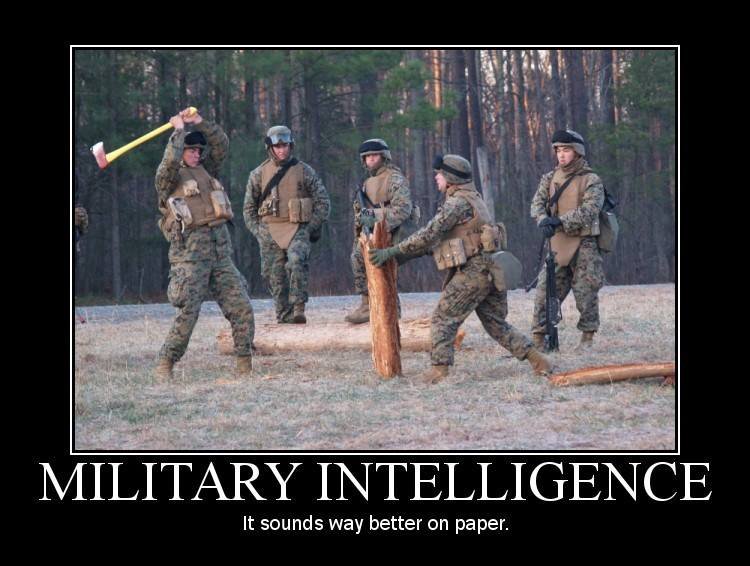
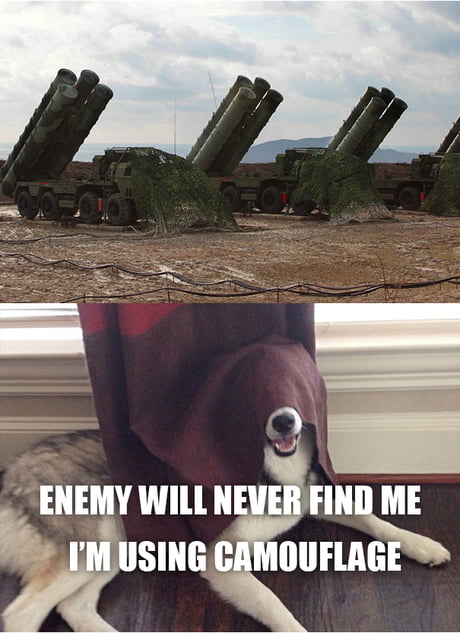
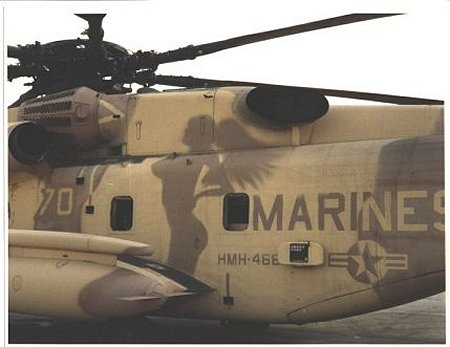
Amazing natural camo

 - - - - -


- - - - -

www.nytimes.com/2018/12/10/opinion/trump-gop-authoritarian-states-power-grab.html

Of course, the usual reply by the right wing is that the others do it as well, which is (a) largely incorrect and (b) no excuse anyway.

- - - - -


- - - - -

- - - - -

(about Costa Rica)


I wonder how they want to achieve 11 kts with such a relatively small sail area.
some more similar projects mentioned in a forum

- - - - -

boingboing.net/2018/12/17/russia-vs-robert-mueller.html

- - - - -

www.aerosociety.com/news/escort-spitfire-a-missed-opportunity-for-longer-reach/
A very nice summary on the issue whether the Spitfire could have been turned into a long-range escort fighter. The short answer is yes, though the Mustang with its lower drag (better cooler design, better wing profile, no rearview mirror and fully retractable undercarriage that Spitfire V and IX didn't have) was capable of even greater range. Even slightly modified Spitfire IX should have been useful for escort missions to the Ruhr area, though.

- - - - -

This is a photo I found in the intertubes.

CKEM missile, a favourite concept of mine. It's mostly high energy density solid rocket fuel, some stabilising fins, some minute charges that push the nose in different directions for steering, a 'long rod' penetrator similar to the ones used in APFSDS (though rather smooth surface and no fins) and somewhere in there is a tiny computer.
CKEM is so interesting because its kinetic energy penetration principle is similar to what tank guns' APFSDS uses, and thus dissimilar to the shaped charge warheads normally used by portable or light vehicle-mounted munitions. A countermeasure against shaped charges would likely fail against this one. This redundancy makes it harder to devalue a nation's anti-tank munitions arsenal.
Moreover, it requires no fuse that could be defeated. It can be operated in a fully predicted point of impact mode. This means any defeat of sensors after the launch could become irrelevant. It can receive midcourse updates apparently, but those are not really necessary unless you aim at really long distances.

Now the downsides
  • it's fairly specialised in defeating heavy and medium armour
  • it's still pretty heavy ("less than 45.4 kg")
  • it's a rocket that accelerates after launch, so it doesn't have full penetration capability on the first few hundred metres (effective minimum range frontal against MBT maybe 600 m?)
I suppose we should mount CKEM armoured recce vehicles and possibly (for ripple fire capability in ambush) on tanks as well. Tanks could then use smaller, less troublesome main guns if not even much more rapidly firing and much higher elevating main guns.
Meanwhile, infantry and non-combat forces would keep using portable shaped charge-based anti-tank munitions ranging from a lightweight 50 mm predicted line of sight single shot bazooka to ERYX-like munitions (huge calibre, I did not fully appraise that for a long time) and portable platoon-level infantry guns (M4 Carl Gustaf). 'Rear' area troops may make do with cheap(er) Panzerfaust 3-ish munitions.

Why do I write this? You won't find much redundancy and thus not much robustness in the actually used inventories. Javelin and similar missiles may even be defeated by denying them a lock-on in the first place using multispectral smoke. Backup AT munitions such as M136 are simply no satisfactory anti-MBT munitions. The German EuroSpike (MELLS) / Panzerfaust-3T duo (afaik with remnants of Milan missiles somewhere in use) is no better.

- - - - -

[Blog] I finally removed the Statcounter thing, for the December stats made no sense whatsoever. Again.

- - - - -

AK Vorrat wieder in Aktion. 

S O
.

2018/12/29

Russian manipulations

.


You're NOT a patriot if you get duped by agitators (or even foreign agents) to hate fellow citizens, period.

- - - - -

[German] https://www.buzzfeed.com/de/karstenschmehl/falschmeldungen-facebook-2018-fakes-luegen-fake-news

Schon im Kalten Krieg hat man den damals sowjetischen Bemühungen zur Unterwanderung und Spaltung des Westens viel Aufmerksamkeit geschenkt. Die Annahmen, was die 'Russen' da alles bewirken könnten, waren teils schon sehr wundersam bzw. schwachsinnig. Als ob Studenten, hippies und Punks im Falle einer Krise zu Waffen greifen und Aufstände durchführen würden.
Real gelang dem KGB und der Stasi damals eher eine spionierende Infiltration, und eine recht subtile Infiltration einiger Parteien. Strauss' unerklärlicher Milliardenkredit an die DDR gehörte vielleicht zu den wichtigsten Erfolgen (aber da ist bis heute unklar, wieso der zustande kam, vielleicht war die Stasi dabei nicht mal relevant).

Die Russen scheinen erst so richtig Fahrt aufgenommen zu haben mit ihrer Unterwanderung und Spaltung, als sie aufhörten, Personenkreise wie Ingenieure, Offiziere, Politiker und Medien als Hauptziele zu betrachten und sich stattdessen darauf verlagerten, die dümmsten und leichtgläubigsten Menschen zu beeinflussen. Zudem scheinen maßgeschneiderte Botschaften viel besser zu funktionieren als primitive pseudomarxistische Ideologie und Erpressung.

Jahrelang verblieb ich bei den alten Ansichten, dass die 'Russen' in ihren subversiven Aktivitäten weitgehend ineffektiv sind, weil Routinegegenmaßnahmen die im Zaume halten und man ja wohl nur schwer so blöd sein kann, darauf reinzufallen.
Inzwischen geschieht mit mir das, was die Senioren schon immer gesagt haben; mit fortschreitendem Alter wird die Meinung über die Menschheit immer weniger rosig. Man bemerkt einfach zu viele Schwachköpfe und traut der Menschheit immer weniger zu. Dementsprechend schätze ich die Widerstandskraft gegenüber der Russenpropaganda heute auch deutlich niedriger ein als noch vor 2-3 Jahren.

Es ist einfach enttäuschend, wieviele Menschen in unserem Lande wenig wissen, wenig auf Plausibilität prüfen, viel glauben und insgesamt weitab vom wissenschaftlichen Ideal des vernunft- und beweisbasierten Strebens nach Wissen sind. Und vor allem; wieviele Menschen offenbar ein psychologisches Bedürfnis nach Feindbildern haben.


S O
defence_and_freedom@gmx.de

edit same day:
https://www.economist.com/united-states/2018/12/08/what-psychology-experiments-tell-you-about-why-people-deny-facts

Comments are set to obligatory moderation, and moderating/unlocking may cause days of delay because of the Christmas time.
.

2018/12/22

Christmas movie and versatility vs. specialisation

.
It was difficult to keep up with the weekly schedule after I discarded some unsatisfactory texts, thus I present you my favourite Christmas movie to beef this blog post up:


- - - - -

A comment recently pointed out that my stance on warships (in favour of multi-role) differs from my stance on IFVs (criticising multi-role).
There were entire blogs and book author careers dedicated to apply one and the same idea over and over again to many different topics. I remember a mil blog where the author obsessed about "small and lightweight" in all military topics, for example.

I try to avoid this approach of setting up an ideological template and then to squeeze the whole world through this one template. I've been wary of those people in my own professional life who came to meetings with lots of general experiences and then just assumed that they know experience-based answers to problems without thinking about (or even only knowing) the specific case. They were blundering most of the time (and usually nobody called them out because they tended to be superiors in the hierarchy, or powerful/influential in some other way). Those people are usually utterly unaware of how much nonsense they spout, how much they waste everyone's time and how much damage they do.

Here's an example of how very different answers can be from one and the same person on seemingly almost the same subject:

Armoured fighting vehicles should in my opinion be rather specialised (combat, transportation, indirect fire support, standoff electronic warfare et cetera) when they're meant for use in a formation (battalion battlegroup, for example). This is where they can complement and support each other. A jack of all trades armoured fighting vehicle would be extremely expensive, extremely heavy (70+ tons) and most of its capabilities would be ineffective most of the time.

Meanwhile, the picture is completely different when we look at armoured reconnaissance, skirmishing, raiding on land (LRDG-style). These activities would be done with small units (2...4 vehicles) as manoeuvre elements, and these manoeuvre elements  might be separated by distances that make close cooperation of more than two such small units unlikely. The use of specialised vehicles causes a lack of capability (or at the very least lack of redundancy, and thus robustness) in such a case. Such small units' vehicles should have versatility prioritised over some other qualities, such as protection or ambition (air defence could be very short range instead of area air defence, for example).

I try to not be a template zealot who forces one way on all things. The extremism of pursuing such a template approach or of following an outright ideology is inconsistent with the lessons of (military) history. History shows the success and superiority of varied, tailored approaches, and the optimum changes as available technology and environment changes over time.

S O

Comments are set to obligatory moderation, and moderating/unlocking may cause days of delay because of the Christmas time. 

2018/12/15

Chinese efforts in Africa

.
I'm steadily amazed by how much attention the Chinese get for their efforts in Africa, and by how important they are perceived to be in Africa itself.

Here are some figures about their actual efforts:
"China has denied engaging in “debt trap” diplomacy, and Xi’s offer of more money comes after a pledge of another $60 billion at the previous summit in South Africa three years ago. Xi, addressing leaders at Beijing’s Great Hall of the People, said the new $60 billion will include $15 billion of aid, interest-free loans and concessional loans, a credit line of $20 billion, a $10 billion special fund for China-Africa development, and a $5 billion special fund for imports from Africa. Chinese companies will be encouraged to invest no less than $10 billion in the continent in the next three years, he said. (...) China loaned around $125 billion to the continent from 2000 to 2016, data from the China-Africa Research Initiative at Washington’s Johns Hopkins University School of Advanced International Studies shows."

USD  170 billion over the course of at least 20 years.* Less than USD 9 billion per year. The German annual foreign aid budget is a little higher, and it's much more aid, not mostly lending.

Population density in Africa c. 2000
(c) The Trustees of Columbia University in the City of New York

The difference may be a difference in perception (established aid streams being perceived as self-evident background noise), a difference in style (such as lots more high profile investments done with Chinese money, for example) or it's Western hysteria.

I suspect it's a combination of all three, and the stark difference to German foreign aid appears to be that German foreign aid is actually mostly foreign aid, while the Chinese are rather investing in economic and political relationships. They may do it with access to natural resources in mind, but it's safe to say that this isn't the only motivation.

Africa needs huge investments in infrastructure and education. The old colonial era transportation infrastructure was designed for export (such as rail lines to ports, but not parallel to coasts) and poorly suited for intra-African trade. It's also crumbling or has done so in many places. 

Maybe the largely basic needs-oriented German foreign aid style is not all that smart after all. A decade of projects to educate and assist farmers in some places falls well short of the effect that a Western African rail line a few hundred km inland and parallel to the coast, reaching from Dakar to Kano would have. A similar East African North-South railroad could boost intra-African trade and commerce as well.**

Maybe we Europeans should invest more in North Africa (could supply much solar power, but shouldn't supply more than ~20% of Europe's electrical power needs) and Atlantic Black Africa (railroads, durable paved highways). Such investments don't need to displace traditional foreign aid, and they don't need to be terribly selfish grand strategy policymaking either. It would certainly be within reach with our resources and the benefits*** to us could very well exceed the costs. The very low interest rates signal that there are too few opportunities for (private) investment in Europe itself - it may make sense to open up investment opportunities in Africa. Who knows - maybe Africa could even grab much manufacturing that would otherwise happen in South, Southeast or East Asia?

- - - - -

Now what would be the relevance regarding defence and freedom?
I suppose it could bring us into conflict with China (though a hot conflict is extremely unlikely), but it could also thwart Chinese efforts to gain footholds in the South Atlantic. The Africans will be wary of loaning military bases to Europeans (except that France maintains a few old ones), and maybe we could -with more political influence and better relations- convince them to refuse Chinese military interests in Atlantic Black Africa.

S O
defence_and_freedom@gmx.de

*: Chinese companies also appear to get contracts for large construction projects that aren't being financed with Chinese money. The Chinese construction companies have cheaper engineers, bring their own workforce (very few people hired locally), and usually deliver the product on budget and on schedule. Such projects are of economic importance, but not really relevant to grand strategy.
**: We've wasted money on Greece's stupid little Cold War with Turkey and on Greek pensions and subsidies instead. 
***: These are difficult to calculate in advance, especially so in the case of non-toll highways.
.

2018/12/08

Internet and opinions

.
I did comment again on a certain navy-themed blog and took another screenshot right away because I was sure the comment would be deleted - and not for lack of civility. I don't think my typo was to blame, either. (The first comment and right column are not context, they just indicate where I found this):

 
The quotes are real, not made up - and they're from one and the same blog post.

First, credit where credit is due: He's way above average Americans in actually acknowledging that European conventional military power is far from having trouble with wet paper bags.

Next, about the all-too common problem in there: The recitation of sentiments and prejudices instead of a pursuit of coherence or a show of any actual chain of reasoning. That's ordinary.
He doesn't deserve to be singled out for this content - I do it only because he provides such an easy example (he does often provide really obvious inconsistencies with his half-baked reasoning).

- - - - -

Agreement or disagreement is rarely correlated with whether logical, well-informed reasoning comes to the same conclusion or not. My life experience indicates there are rather two very different reasons for when people have a high or poor opinion of a statement:
  1. Is the person who issued the statement powerful/influential or not? (Powerful or influential people get away with most blundering unless they have equivalent enemies.)
  2. Do you agree with the statement? The statement must be incorrect if you disagree!
The anonymity of the internet usually removes power from the equation, thus these translations are good rules of thumb in most of the internet:

"Your opinion is crap" actually means "I disagree"
"Your opinion is fine" actually means "I agree with you"

The application of feelings and prejudices on issues appears to dominate almost every time even when the author strives to establish and maintain an aura of logical reasoning. The public discussion of topics such as defence policy suffers a lot from this rampant inability to reason and the widespread preference for sticking to pre-existing preferences during a discussion or while reading an article.

You may now very well go ahead and think that these observations apply to me as well. I would probably be the last to notice.

S O
defence_and_freedom@gmx.de

BTW, he actually explained why he deleted the comment, in a comment of his own. He claimed a personal attack. The (quote-supported) remark "incomplete reasoning that's devoid of logic" was apparently counted as a personal attack?!? That's quite some safe space expectation there.
He also claimed he never deletes a comment only because it's in disagreement. Well, I documented such a case, so I call that a lie. Of course, he can lie there at will - it's his own place, after all.
Maybe you wonder why I picked this fight. He strikes me as a stark example of fake-rational commenting on military affairs, that's why. There's a pretension of being facts-driven, of elevating the debate, of reasoning towards conclusions - but the conclusions are nothing but simple thoughts driven by sentiments. A few facts are the mere decoration that's added to the sentiment, which gets presented as 'conclusion'. The reaction to those who call this out is arbitrary and driven by denial about the criticism's substance. I ignored some such blogs in the past, but those didn't have that many readers and I preferred to let them languish in obscurity.
.

2018/12/01

Link drop Dec 2018

.

- - - - -

I noticed this very late, but now I applaud them for doing the right thing.
It's important to have the bridge engineers in place to bridge Oder and/or Vistula if the need arises - and it's even more important than Russian military HQs understand this capability. It's important for deterrence.
I would have called on the German army to double its pontoon bridge capabilities if the British had really withdrawn theirs and moved it past the channel, where they'd be of marginal utility by comparison. The bridges across Oder and Vistula rivers can be destroyed in the first minutes of conflict, and reinforcements from Germany, France or the UK would be delayed if no pontoon bridges are in place early on. Such pontoon bridging engineers are in my opinion of greater importance for European deterrence against Russia than all F-22s combined.

- - - - -


- - - - -


 - - - - -

www.armytimes.com/news/your-army/2018/11/06/a-potential-mobile-artillery-dynamic-duo-for-the-army-hawkeye-and-brutus/

155 mm  Brutus would be a step up for airborne, infantry and Stryker brigades, but still fall short of being a high quality SPG (self-propelled gun) due to its lack of fragmentation and bullet proofing, little if any onboard munitions and using a 39cal barrel instead of a more modern (better range) 52cal barrel (the propellant chamber may be small as well). Still, it might make these brigades' artillery relevant for warfare against 1st and 2nd rate opposition.
105 mm Hawkeye (which isn't new; I wrote about it repeatedly) could meanwhile provide a mostly superior alternative to 120 mm mortars for conventional warfare (with mortars retained as secondary ordnance for outpost duties), or become the sole indirect fire asset of airborne brigades.
I don't expect them to do either, though: The U.S. Army has many programs, and does rarely actually solve major equipment issues. They have a habit of failing to introduce all-new assault rifles, MBTs, IFVs and attack helicopters. Their 1970's/early 1980's generation of such equipment was troubled with shortcomings, still hyped, and soldiers on because all replacement programs were cancelled. Only the USMC is even worse, they failed in their attempts to replace their amphibious APCs since the early 1970's.
Americans can do semi-satisfactory upgrade programs (up to replacing all original parts, as in M109A7), but they cannot manage all-new major combat system programs.

- - - - -


- - - - -


0:02...1:24 - both answers were very good, and I'd like to add that they were terribly underrated. They should have worked on the latter point a bit more.
The press has a pro-establishment bias in many if not most Western countries because working as a relay for those in power (and commentator of what they said and did) is much easier, much quicker and much less work than to delve into issues, interview actual experts (not universal know-nothings a.k.a. pundits and 'leading' politicians) and assemble a thorough picture of an issue, complete with descriptions how analogue issues were addressed and possibly improved or solved in other countries.

I have great disdain for 'breaking news' reporting. We would be better off if all reporting followed a weekly schedule. Anything quicker than that should either be a super-urgent warning ("Tsunami incoming!"-style) or news about impending or actual start of war.

- - - - -

projects.thestar.com/donald-trump-fact-check/

www.washingtonpost.com/politics/2018/11/02/president-trump-has-made-false-or-misleading-claims-over-days/

They can agree it's in the four digits range, and thus unprecedented.
The irony is that the followers think that the rest of the world is lying to them.

- - - - -


- - - - -

[Blog] I will have pre-scheduled blog posts on 22 and 29 December and may set the comments back on mandatory moderation to keep that extremely determined Mumbai escort marketing bot out.

S O
.

2018/11/24

Fixed and variable costs

.
Fixed and variable costs are concepts that every economist knows very well, and over time I found them to be extremely useful tools for thinking about many things.

It goes like this:
You buy a machine that costs 1 Million €. Now you produce items that cost 1 € each to make.
Let's assume you buy that machine and produce exactly one item, then you forget about the machine. Your total costs of producing that one item was 1,000,001 €. 1 Million € fixed costs and 1 € variable costs.
Let's now assume you did not stop producing after one item; you produce a million items instead. Your total costs was 2,000,000 €. 1 million € fixed costs and 1 million € variable costs. The costs were thus two € per piece; 1 € fixed costs and 1 € variable costs per item.
The variable costs depend on the quantity, while the fixed costs are what costs you have to be able to produce any quantity at all.*

Fixed costs are often sunk costs, too; they incur anyway, regardless of whether you produce anything. A factory may consider the costs of the building as fixed costs in its production, but the building was probably built last year regardless of whether you continue to produce in it or not. Sunk costs should never influence decision-making, period.

These actually very simple concepts are very powerful mental tools. I've observed people having very confused thoughts about issues where resources allocation was of great importance. They lacked the economist's tools to make sense. Economic decisions driven by 'feelings' alone are all-too often poor decisions.

- - - - -

The fixed costs issue is pervading almost everything. Development costs and start of production costs are fixed, per copy costs are variable costs of a hardware program, for example.

One can also use the concept and transfer it. An interesting example in the military realm is about warships:

A warship needs a minimal crew for navigating and keeping it running. That's the fixed effort required for running a ship, regardless of what it's being used for.

The employment as a warship (excluding quite incapable patrol vessels) requires additional fixed effort, regardless of what specifically it's supposed to do: Extra communications gear, at least a multifunction radar, ESM, ECM, shock proofing, silencing, command centre, at least short range air defences, at least a 57 mm gun, at least basic anti-submarine hardware, propulsion power for higher speeds  - and the crew to make use of all this in at least a two-watch system.

HNLMS Tromp, a classic SARH missiles-armed AAW frigate
with obvious special AAW equipment ((c)Quistnix)
Why is this important? Let me show a hypothetical calculation:

Let's say the necessary basic equipment costs 100 coins.
The equipment needed to improve the ship to a dedicated air defence ship costs 50 units.
The equipment needed to improve the ship to a dedicated anti-submarine ship costs 50 units as well.

There are people arguing in favour of specialised ships. Let's look at that:

1 AAW ship costing 150 coins.
1 ASW ship costing 150 coins.
Meanwhile, one could have 1 general purpose (GP, AAW and ASW combined) ship for 200 coins with the same effectiveness in one package.** That's 1/3 less purchasing costs and even greater operating costs savings.

Now one could say all eggs in one basket is no good idea.

Well, let's look at a fleet of baskets to check this out:
We afford 10 AAW ships + 10 ASW ships OR 15 GP ships (purchasing costs each 3,000 coins).
The GP ships are 50% more capable. What do we have after 4 ships were lost in combat?

6 AAW + 10 ASW or 10 AAW + 6 ASW as extremely unfortunate scenarios, or evenly distributed attrition with 8 AAW + 8 ASW left. Meanwhile, the GP fleet is down from 15 to 11.
The GP fleet is still at least 37.5% more capable!

Let's say there are catastrophic losses; 10 ships sunk.
5 AAW + 5 ASW left. As are 5 GP ships. This is break even; GP ships and specialised ships have equal capability - but this requires 67.7% losses among the GP units! Instead, 10 ASW or 10 AAW ships could have been sunk, eliminating the ASW or AAW capability of the fleet. So why not think about the specialised approach as having the eggs in too many baskets?

"All eggs in one basket" was an irrational fear regarding GP warships in this hypothetical example. Feelings are a poor guide in resource allocation decisions.


HNLMS Kortenaer, a contemporary ASW frigate of the same navy
I write about this warship example because a warship is awfully expensive even if it has only basic equipment for self-defence against aerial threats including modern missiles, basic gun armament, mine avoidance sonar, SatCom, ESM (radar warning receivers, passive radio direction finders), seaworthiness, good endurance, crew quarters, redundant propulsion for well over 20 kts, helipad with related equipment, shock hardening, fire protection, boats and equipment for their recovery and so on. The huge basic ('fixed') cost leads to rather useless corvettes (which cannot afford much more than self defence***) and supports the case for GP warships over ASW or AAW warships.

The correct choice between specialised warships and general purpose warships isn't about personal preferences, or necessarily much about tactics. The correct decision-making method has to be dominated by the question how much of the costs is fixed for a basic, non-specialised and largely incapable warship capable of self-defence only. A resource allocation question should be answered with help of the appropriate economic tools.

Furthermore, the smaller the "extra" costs for either AAW or ASW capability become, the more likely is a GP ship the correct choice.****

S O
defence_and_freedom@gmx.de

(Some readers may have noticed that I deviated from the purely economic idea of fixed and variable costs, and transferred the concept to a different application. The analogy of "base+specialisation costs" is based on largely the same idea as the fixed+variable costs. The transfer of ideas to analogies is often useful - physics for example uses almost identical formula to describe a plethora of different waves. That's a tertiary point of the blog post; once you become educated with certain tools, you can be expected to make use of them, even transfer them to other areas.)

*: Not a textbook-grade definition.
**: Assuming no need for a larger hull and what higher order costs that causes. This simplifies the text. The moral of the story doesn't change if you assume 220 instead of 200 coins.
***: Hence they don't approach frigates in capability in anything but ship-to-ship missiles. Those can also be had even even much smaller (approx 1/10th the displacement of corvettes) fast attack craft. Corvettes are never high quality ASW or AAW ships. Corvettes are little but targets in a high end war.
****: This is why I wrote in the warship series in favour of GP warships (if warships at all). AAW better include AEW, and once you include (survivable) AEW you can largely do away with the expensive giant ship radars. The rise of surface to air missiles that need no illuminator radars eliminated their costs from the 'AAW extra expenses' list. An ASW ship can be an AAW ship simply by adding a console and a little more than a dozen VLS cells (which can even be retrofitted on superstructures!). The extra expenses for AAW capability (area air defence) have become tiny, so (near) future warships (escorts) should be GP warships.
.