2011/09/15

Different media strategies

.
This article (in German) describes the different strategies in Berlin and Hamburg in regard to fire raising of upper class cars.

The media reports with sensationalism about burning cars in Berlin, does strange campaigns about it, there are rumours about a political background being applied to every incident...the result is that many cars burn.


Hamburg on the other hand does largely ignore the problem in publications, no rumours are being pushed by local media - and the # of burning cars is shrinking.

- - - - -

I wonder whether the link to defence was obvious enough?!

S Ortmann
.

2011/09/12

The semi-mess is unraveling into a full mess (Near East)

.
It looks as if the semi-mess of the Near East 'peace' is unraveling. The U.S.-led approach to peace in the region was to bribe governments in the region into accepting certain terms of peace (with military aid and access to prestige stuff such as photo ops with POTUS or access to shiny U.S. fighters and tanks).
Those governments that did not play along were denounced as rogue states,t error states and bullied (Libya, Syria, Iran) - while others were too unimportant and had to be content that they weren't invaded (Jordania) ... or they even were were invaded eventually (Lebanon).

The actual reconciliation between the people, between the populations, did not came into being. Israel's in my opinion terribly short-sighted security policy poured too much oil into that fire by being not content with status quo (see settlements) and military action.


Now Israel is looking at a terrible grand strategic situation. The Turkish Erdogan government is finally fed up after suffering a minimal dosage of Israel's usual disrespect for Muslim nations and turns from kind-of-ally to political opponent.
The Arab spring flushed out governments that were bribed into friendliness and even cooperation with Israel (such as the joint Israeli-Egyptian blockade of Gaza) - most notably the Egyptian one.


I suspect we're looking at a major shift in Near East foreign politics. The U.S. doesn't seem to be capable or willing to renew the interim system of governments bribed into peace (hands up; who thinks that annual multi-billion dollar bribes to foreign governments are still easy in the current U.S. political climate?).

Israel appears to be becoming very busy with internal problems (not just economic ones) - problems so large that even the distraction of bullying Gaza a bit didn't sway the focus away from domestic issues.


It will be interesting to see whether the EU approach to Near East peace (bribing the people AND the government by mostly civilian assistance, especially in 'Palestinian' areas) will get the necessary funds to take over. Somehow I doubt it, given the current fiscal moods in Europe.


Maybe - just maybe - the Assad regime will be toppled, with a new chance for Israel to make peace (unlike Egyptians, Syrians should be somewhat wary of anti-Israel rhetoric since it was employed by their dictator). Maybe if they find an agreement about Sinai Golan heights...but that isn't going to happen, of course.


It sucks to miss a 30-year historical chance to reconcile peoples while you can still do it.

S O
.

2011/09/11

War as last resort?

.
A while ago it was fashionable to demand that war should only be considered as last resort in foreign politics. I never really got into this idea, and it was opposed by the hawks at least behind the scenes.

It was an arbitrary maxim that did not stand plausibility and theoretical tests - nor did it stand the utter lack of principles and self-discipline amongst Western foreign politicians who increasingly bought into the idea that they could 'intervene' militarily in distant places at little political cost.


Why is violence only as last resort wrong?

Well, this idea that violence is justified only if nothing else helps is misplaced. Violence is justified if it's the least terrible choice.
It makes no sense to stay peaceful and endure a predictably worse outcome than by fighting back. On the other hand, it makes no sense to fight (back) and endure a worse outcome than achievable by diplomacy.
Most importantly - and this is what hawks don't seem to get - there's extremely rarely (if ever nowadays) an opportunity to actually gain something by being violent.

Violence / warfare is inherently destructive, not productive. You could only gain a material advantage by stealing. You can gain immaterial advantages (such as national independence or freedom in civil war) by becoming violent, of course.

In the end, the choice between war and peace depends a lot on preferences. How highly do you rate the losses of war, how highly do you rate the advantages of achieving political objectives in war, how highly do you estimate the probability of achieving them through warfare in relation to diplomacy?


It's understandable that people disagree on the question of waging war or not.

It's also perfectly understandable that Western hawks a.k.a. warmongers want to invade country x, then y, bomb z and tell us that this is serious, good foreign policy: They are idiots. Idiots have idiotic ideas.


S O
.

2011/09/10

On the identification of natural leaders

.
"JMA" (I know his real name, but people stick to nicknames at times, even I do) posted a question to me in the SWC blog:

[QUOTE=JMA;125537]In his blog our friend Fuchs has two enteries which connect to this issue:

"Natural", self-organised small units?

Self organization; online gamer clans and Germanic warbands

From the latter I quote:

The model with the best individual warrior being the leader is furthermore inherently inferior to a model which requires the leader to be a good leader. It's reasonable to assume that some evolutionary selection mechanism is at work in the realm of raiding warbands. This raises additional doubts about the standard description of ancient Germanic warbands.


If Fuchs would like to expand on that here in relation to how one can select for leadership prior to exposure in structured training (in peacetime) or in combat (during a war) it would be appreciated.

Personally, I rate my blog higher than a forum where texts of mine will easily get drowned within days, so I decided to reserve the answer for the blog:

My key thesis is that you can spot natural leaders easier by watching people around them than by watching the potential leader himself.

You will not spot them if you put together a group of potential leaders, but if you put them into a normal sample group they might arise into natural leadership, kind of take over the group and lead it (at least in regard to specific problems).
Why not in a group of potential leaders? I experienced that before. They fight for power or at least reject unfounded claims for power or for having the lead voice.

A normal sample group finding its natural leader is quite close to having a squad well-trained and then seeing their only NCO die in battle. Who of the enlisted men -qualified by training as all of them- will take the lead, and be followed?
The German army began to prepare exactly for this before the First World War, and very often accepted such emergency leaders into NCO rank if they did well enough.


Such natural leaders are not necessarily the best decision-makers, but at least they get loyalty much easier than others (who might need the authority and powers given by the institution to lead men). This should result in superior team morale.


S Ortmann
.

2011/09/09

Quick thought: It's a grand strategic tragedy

.
The West attempted again and again to establish a rule of international law and its institutions, and to empower them. Most successes of these efforts came in the era since 1944, most of them associated with the United Nations or the European Community/Union.

The restrictions imposed on government's freedom of action is unpopular among them, though. Great powers eroded and evaded the rule of law thus and established a rule of force for themselves. Even small powers did so - the EU stability pact was such an example where a treaty was eroded because of tolerated violations by both small and great powers.


We have the prospect that the traditional great powers will become less powerful in relation to the rest of the world and they might actually benefit more from a rule of (international) law than ever before - but it's probably too late. They worked hard on ruining their own concept. To demand adherence to a concept they hypocritically ignored at will will be understood to be an expression of even more hypocrisy.

The exceptions to the rule of (international) law have been established as common for great powers, and future great powers will likely exploit this to their liking.

(A probably too light-hearted illustration)
In the end, the foreign political arrogance, lack of self-discipline and loss of expensively acquired foresight of the Western great powers might prove to have been a terribly short-sighted and foolish grand strategy.


S. Ortmann
.

2011/09/08

About "ADAPTIV"

.
"ADAPTIV" is apaprently the newest gadget of BAe Systems; hexagonal tiles that control the infrared emission of an outer surface (=tiles become warmer or cooler, as far as I understand these physics).

There's so much media echo to it that I've seen it even in a national German newspaper (German newspaper authors are usually no miltech fanbois).


What strikes me is - except the practicability (dirt, reliability, perspective, temperature management, thickness, robustness, compatibility with daylight camo paints, saltwater resistance for naval applications) and cost questions (likely restricting this to recce and point vehicles) - that so far I didn't see one implication in any comment on it:

A system that changes the infrared signature of a (almost) whole vehicle that fast (assuming the video is not accelerated) would break the lock-on of infrared-guided fire and forget missiles such as the still relatively new and modern Javelin and (Euro)Spike.
Even the fibre-optic command control mode of (Euro)Spike would largely be countered.
In other words; you wouldn't need to deploy a multispectral smoke screen between yourself and the approaching missile to break its lock-on anymore.

What's more: Infrared guidance lock-ons could be prevented by near-continuous changing of the surface's signature like Rorschach's balaklava. This might affect even automatic tracking systems such as in (IIRC) the MBT Leclerq's gunner sight.


S. Ortmann

P.S.: "adaptiv" without the -e" happens to be the German translation of "adaptive"...I guess the Brits at BAe didn't consider this in time.
.

Mis-use of anti-terror hysteria

.
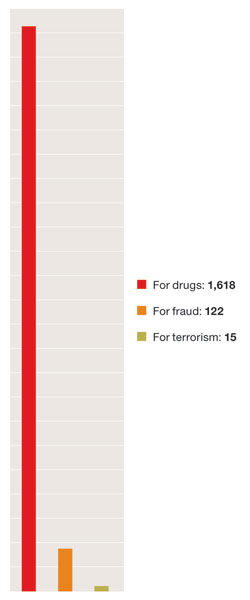
See this article (ESPECIALLY the "P2: Sneak-and-Peek" graphic!!!).

Rrelated: One example of so-called "anti-terror" legislation going ridiculously wrong

There's a pattern, and it justifies getting rid of the crap.

S O
.

2011/09/07

Camouflage concealment and deception progresses in the 20th century's German military

.
If you can be seen, you will be spotted.
If you were spotted, you will be identified.
If you were identified, you will be shot at.
If you were shot at, you will be hit.
If you were hit, you will be penetrated.
If you were penetrated, you are dead.

Most of the probabilities attached to these steps have worsened considerably for the target over the last about 170 years (since practical rifles and explosive grenades were introduced).

This is the reason why there are submarines, why even tank crews use camouflage, why "stealth" aircraft exist and why huge air and armour forces were eradicated in several Arab conflicts in mere days.

The best countermeasure to keep this chain of events from culminating in your death is to stop it cold at the first or second step. This is about camouflage, concealment and deception.


As usual, military history knowledge should be able to help us to grasp the problem and to develop analogue new answers to the evolving problem. That's (in part) why I compiled a list of interesting camouflage, concealment and deception advances of the German military forces during the 20th century. Some of them were internationally normal, others were possibly world firsts and some were most definitively world firsts.

These advances are primarily technical advances, for the tactical ones are way too numerous for a mere blog post.


Pre-WWI (1901-1913):

Intentional use of artificial smoke (in addition to the normal amount) in order to block the line of sight in naval surface actions (usually for withdrawal). This had been in used throughout the 19th century, but was established as a standard tactic only in WWI.

1907: German armies adopted grey-green field uniforms instead of the coloured ones (only light infantry units had used less visible colours such as green before).

First submarines joined the imperial navy. Submarines seek stealth if not invisibility by diving below the sea's surface. The aerial counterpart would be flying in or behind clouds and the ground warfare counterpart is tunnel warfare.


WWI (1914-1918):

scissor scopes / trench scopes that allow the user to stay behind cover while observing.Ironically, these scopes became practice targets for snipers and had to be camouflaged and kept small themselves.

slit visor for rifle scopes (sniper scopes), meant to avoid compromising sunlight reflections.

multi-colour painting scheme for steel helmets. Steel helmets - once introduced - also created the problem of undesirably bright sunlight reflections, as do many curved surfaces.

multi-colour painting schemes for guns and vehicles

early aircraft camouflage painting scheme

merchant submarine (blockade runner)

artificial battlefield smok

military aviation at night

employment of high altitude photo reconnaissance aircraft (Halberstadt C.V and C.VII, Rumpler C.VII)

extended army camouflaging against aerial reconnaissance


Inter-War Years (1919-1938)

early netting for camouflage

directional radio antennas for army communication

multi-colour printing on quarter shelter tarpaulin (an ingenious design that required a huge leap forward in textile printing technology)

new submarines with an unusually small above-water silhouette (meant for nightly surprise surface attacks)

introduction of many different camouflage painting schemes for military aviation


WWII (1939-1945):

deliberate exploitation of dust screens in desert warfare

slit headlamps for automobiles and trucks (meant to minimise visibility to aircraft)

night bomber technology with exhaust flame dampeners and radio navigation (Knickebein)

extremely high altitude photo reconnaissance aircraft (Ju86P and R) for missions over England (soon to be intercepted due to radar employment) and the Soviet Union (undetected till a crash landing)

radar jamming

camouflage pattern printing on both sides (coveralls, helmet covers; adaptable to different environments)

snow camouflage (white coveralls and paint)

low altitude flying (below radar and observer coverage) by Do 17 (and Ju 88) bombers beginning during the Battle of Britain (1940), later (1942) with Fw 190 fighter bombers

emphasis on dawn period attacks with bombers, especially torpedo bombers (1942)

smoke screening for industry targets; ground-based, with rockets, with light aircraft

misleading flare rockets (meant to deceive night bombers)

decoy industry targets and even major landscape manipulation to mislead bombers (including landscape manipulation to make ground imaging radars less valuable)

snorkel for diesel-electric submarines

Bold; underwater bubble generators for false sonar echoes

radar absorbing materials for snorkels

rubber surface for submarines, equivalent to modern anechoic tiles

acoustic sensors and mechanical computer for blind torpedo firing; no necessity to expose even a periscope to enemy radars

Walther engine for submarines and "electro" high-speed submarines; countering active sonar techniques of the WW2 period with unusually high underwater sprint speeds.

marginally radar-reflecting aircraft fuselage designs (example Horten Ho IX / Gotha Go 229)


Despite all this: The Red Army enjoyed the utmost respect of the German army for its ability to camouflage quicker, better and more often!


Cold War (1955-1990):

MBB Lampyridae polygonal stealth fighter (actually more of an aerial air-air missile launch platform)

control of infrared signatures by mixing hot exhaust gases with cool air (helicopters, tanks)


warship countermeasures to sonar and radar detection (noise and echo reduction, decoys)


Post-Cold War (1991-2011):

AIP SSK Typ 212 submarine (air-independent propulsion - doesn't need to extend anything into the air for weeks)

infrared camouflage paints

- - - - -

There was certainly more that I did not remember, but the pattern ought to be obvious nevertheless: The German military seemed to make advances in camouflage and deception primarily during wartime. A logical consequence is that there's likely a lag of survivability technique implementation until war breaks out.
We saw this with counter-RPG, counter-mortar and counter-IED technologies during the recent wars as well.

This is deeply disconcerting.


S O
.

LPDs

.
About nine years ago I began to notice the incredible versatility of LPD ships, first in a mine countermeasures (MCM) context (in which they usually don't operate, though).
My reasoning was that wartime naval mines tend to offer some surprises, so it's a good thing to have a good choice of MCM approaches. Helicopters, hovercraft, drone boats, underwater drones - all these small MCM assets can be employed by a LPD. The more daring approaches (using a ship in mine-infested stretches of the sea itself, primarily for employing its sonar) would be the only exceptions.

The amphibious invasion, resupply, evacuation, humanitarian aspects and the potential for being turned into a command ship, an improvised missile launch ship and so on are of course also versatility bonuses of a LPD category ship.

Chinese Type 071 LPD, (c)"kunlunshan 998"
I did never really write much about this fascination of mine for LPDs (I think I mentioned it once in a single line) on this blog, though. The reason is simple; it's about "Defence and Freedom". You usually don't need a LPD for the defence of your nation. You only want such ships if you engage at war on far away coastlines or prepare for the same. All you need to substitute for a LPD in an actual defence scenario are a few cheap civilian trucks with ISO function containers.
Refugee aid? Charter a civilian ship at a bargain price.

This is but one of many cost-lowering mechanisms that benefit countries which do not engage in far-away conflicts or prepare for the same.


S O
.