Showing posts with label Regions. Show all posts

2017/06/15

The Middle East and democracy

.
I was a lazy blogger this month so far, but for today I found a lazy method of blogging: I pull an excerpt from an e-mail conversation and simply publish it, mostly unmodified:

The Vietnam War was a tricky issue. On the one hand it may have been necessary to make a great stand against export of Bolshevism somewhere even after it was done in Korea, but on the other hand one confused a war of national unification with a step towards Bolshevist world revolution. The errors made in Africa and Latin America were similar; all-too often the real motives were ignored in favour of the simple "they're communists!" explanation (though this ultimately failed to defend apartheid in Rhodesia and South Africa).
We're doing this again. All this attention on radical Islam in regard to daesh is bollocks.
The real conflict in Syria and Iraq is a different one. They have group loyalties that are more powerful than ideologies. Sunni Arabs, Shiite Arabs and Kurds vote for their groups' parties, not for left-right parties. This leads to predictable subjugation / foreign rule of majority factions over minority factions. The Sunni Arabs may get a perfect Western style democracy and they will still feel foreign-ruled because Shiites and Kurds rule over them. There's again and again a rallying of Sunni Arabs in Iraq towards Sunni paramilitary efforts - which end up trending towards radical Islamic policies because radicals tend to dominate over moderates in civil wars.
The old answer was to have tyrannies that oppress one major faction, but these regimes crumbled.
The new answer should be proportional governance as it worked in Lebanon until war was imported to Lebanon after the PLO was kicked out of Jordan. Proportional rule like head of state is always a Shiite, head of government is always a Sunni, head of parliament is always a Kurd et cetera - and then promote programmatic ideological parties that transcend ethnic/religious factions.
They need no Western style democracy; they need old school Levant republicanism. The conflicts will cook up again and again (or be suppressed by tyrannic regimes) until they get proportional republicanism.
Now what do Europeans stare at instead? They freak out about some group of asswipes who pretend to follow the word of their imaginary friend and are world record aspirants in regard to making enemies.
"Islamofascism", the new "Communism".

S O
.

2017/04/02

The greatest deterrence & defence challenge world-wide

.
Since yesterday I'm in the mood to try my skill at the greatest challenge in deterrence & defence on this planet; how would Iran deter its (potential) enemies and defend itself in case this fails?

Iran is playing regional power out of an underdog position. It's a large and populous country in its region, but its list of potential enemies is peerless:
  • Saudi-Arabia
  • Kuwait
  • UAE
  • Qatar
  • Bahrain
  • Oman (not sure)
  • Pakistan
  • Turkey
  • Israel
  • U.S.
  • Russia
  • Afghanistan/Taliban
On top of this there's the potential for internal strife. This civil war potential (with ongoing low level insurgency in Balochistan) kept many more or less sane potential aggressors from invading Iran. Seriously, the internal divisions of Iran are so many that you need to pile Iraq, Afghanistan and Syria non top of each other to have an equivalent.

This map shows only the two biggest religious groups.
There are eight more substantial religious groups in Iran!
(The second map is from 1964.)

The biggest relief from the long list of potential enemies with no real ally in sight is that many potential aggressors have no interest in unleashing civil war chaos by breaking the Iranian state, so presumably they won't do it unless their leadership is idiotic or super ignorant *sigh*.

Now, let's group the potential threats:

Air raid threat
  • U.S. (cruise missile diplomacy)
  • Israel
Air war and naval blockade threat from the South
  • Saudi Arabia
  • UAE
  • Kuwait
  • Qatar
  • Bahrain
  • Oman
  • U.S.
Insurrection threat
  • almost all domestic groups except very devout Shia Persians and beneficiaries of status quo
  • U.S. (possible foreign sponsor)
  • all Persian Gulf pseudomonarchic kleptocracies (possible foreign sponsors)
Civil War spillover effects
  • Afghanistan (Taliban/Pashtu)
  • Iraq (Sunni insurgencies)
  • Kurds (from Iraq, Turkey)
  • Pakistan (if the Balochi rise up there for real first)
Distant scenarios
  • Russia (realistic only once quasi-imperial control of Caucasus region was regained)
  • Turkey (if Turkey becomes great power ~ Ottoman Empire again)
Full scale invasion threat
  • international coalition (only if they are really mad)

The current Iranian military is complicated and in large part a joke, with ridiculous claims and displays ranging from photoshopped missile launches to RPG gunners standing on motorcycles during parades to HAWK SAM repurposed as air-to-air missiles and a fake "stealth" fighter design.
So far this still served its purpose, though the air war inferiority across the Persian Gulf is no doubt unsatisfactory to the Iranian government. One should also keep in mind that the armed forces of such a state need not only serve legitimate purposes, but are also tasked more or less (varying by agency) with perpetuating the current political system (a theocracy with lots of democratic elements that are limited in their reform ability).

Again; even countries like North Korea, Russia or even Jordan have a simpler security environment!

Well, what would I recommend?

Air raid threat
This cannot really be protected against, for strategic and tactical surprise has to be expected and attackers would likely use the best equipment available to them. To go underground with the most likely targets is very expensive, and rather not feasible for many such targets (particularly the national government).

Air War and naval blockade threat
Iran's most important harbours are deep in the Persian Gulf. It's unrealistic to hope for the ability to export oil from there to world markets with less than about € 20 bn military spending for this air/sea war defence capability alone, and that's before taking into account a possible arms race with Saudi Arabia.
The threat of a protracted air war is a little different. The hostiles' air bases would mostly be in missile range (Iskander etc), so Iran wouldn't need to gain air superiority in the air or buy many expensive air defence systems. It could send an aircraft on a high altitude high speed run to quickly make some synthetic aperture radar imagery from afar, transmit the data to a ground station where officers decide which coordinates to shoot at with accurate missiles within minutes. The small combat aircraft inventories of Kuwait, UAE, Oman, Qatar and Bahrain could be defeated this way. Saudi Arabia's air power is in a different league, of course.
The best defence might be a surprisingly cheap strategy; the less offensive air power potential Iran has, the less motivated the Southern neighbours might be to build up their own air power. This isn't reliable (who knows what the kleptocracies build up their mini air forces for at all?), of course.

A promising route might be to build a respected air defence cluster at Tehran (S-300 and short range SAMs, meant to limit the damage done in an air war), pursue some ballistic PGMs (instead of inaccurate 1980's style "War of the Cities" rockets) and once possible get some 40ish Su-3x fighters or Chinese equivalents* with air combat munitions only (but also SAR and datalink capability).

There's little point in trying to use anything of lesser quality (older SAMs, inaccurate rockets or worse fighters), for it would fail to deter and fail to defend unless procured and operated in uneconomical quantities.

Insurrection threat

The best way to address this threat would no doubt be to treat minorities well, and to ensure loyalty of the armed services (to the government). There is likely a tipping point of damage to the state and insurrection activity that would lead to multiple more groups rising up, so even though or if minor insurgencies may be unavoidable (or couldn't be ended, as in Balochistan) at least that tipping point needs to be avoided.

It makes sense to prefer Shia Persians for key positions in the armed forces, and even for basic training. The less military and paramilitary competence is available to potentially revolting minorities the less likely is their revolt (well, that's what I suppose). Munitions depots need to be guarded and locked up well, and the vast majority of munitions should be stored in territories that would rather not revolt (Shia Persians areas). Certain very reliable units need be positioned at or near Tehran, and be suitable to secure the capital and especially government organs. Western countries need such protection against airborne raids only, but governments such as the Iranian one also need to have domestic revolt in mind.

Low level uprisings should be countered with policing, with military forces in the region but only held in reserve as quick reaction force to back up the police forces. Police can investigate well with the training and equipment required. Intelligence service-like methods of intelligence gathering on (violent) opposition groups and their supporters without link to specific crimes need to be part of the repertoire, but preferably so in separate police units (not the investigating ones). Foreign sponsorship of insurrection or terrorism would need to be detected, investigated, understood, proved, potentially interdicted and then exposed.

Civil War spillover effects

This includes all measures from dealing with the insurrection threat plus no provision of safe harbours (no toleration of recruiting, fundraising, arms purchases) for foreign civil war factions and a lot more military presence. Refugee camps would be operated by the Red Crescent or whatever humanitarian NGO is available to do it, but these camps would need to be policed with proper identity checks and documentation of at least all male refugees. Ideally the camps would be created at some place where public construction projects provide employment opportunity for most adult male refugees. Lots of military-secured road police checkpoints, surveillance between roads by military-reinforced police or border guards and other visible measures would be taken to keep the peace on the Iranian side of the border. Border transgressions by armed forces would be dealt with by making an example on the first occasion; excessive firepower involving artillery fire should communicate a zero tolerance attitude towards armed border transgressions.

Distant scenarios
Back in the Shah's days Russia was kept out by buying large amounts of sophisticated weapon systems (F-14, F-4, F-5, tanks) from the U.S.. This was in part an effort to actually possess a conventional warfare capability and in part a signal of bloc membership; the latter was probably a better deterrent in combination with the ethnic and religious composition that would have made a forced "communist" takeover a worse quagmire than Afghanistan would become after 1979.
Russia might be deterred like this again in the long term, though cooperation (in regard to oil industry, arms purchases and even a real alliance) seems more achievable than getting a Western big brother to deter a schoolyard bully.
Long-term conflict with Turkey could not be deterred this way, for it would more likely than not be about the Kurds. Turkey has made military incursions into Iraq and Syria without those governments' public approval or even against their public disapproval. These incursions were mostly aimed at harming Kurdish separatist forces. The Kurdish successes in Northern Syria and the Kurdish proto-state in Northern Iraq may lead to a declaration of Kurdish independence, which might lead to all out war with Turkey. This might involve Iran with its sizeable Turkish minority in its Northwest, and might so at a scale that would be ill-described with a mere "civil war spillover". I suppose the ability to make a stand at the border with conventional forces would be required to protect Iranian sovereignty in such a case, regardless of how Iran deals with the Kurds itself.

Full scale invasion threat

This cannot be defended against, but it can be deterred. The public of the potential aggressor countries in question could be informed about Iranian ethnic and religious diversity and fracture lines. The risk of causing civil war and breeding ground for extremism that would last for decades should be too great for any invader coalition. This can be reinforced by ensuring that enough Iranians (Shia Persians) are trained as light infantry, and by a promise to open the arms and munitions depots in time to arm the people for a powerful insurgency against any occupation force.


Now, what forces would be advisable?
  1. Border guards with light arms (up to recoilless guns and mortars) and decent equipment for surveillance as well as sufficient border policing skills.
  2. An air force of 40+ Su-3x fighters, hundreds of ballistic PGMs (300-499 km range, warhead effective against hardened aircraft shelter), ground radar stations that could support the Su-3x, 20+ ground attack aircraft for counter insurgency (Su-25) and maybe two regiments of S-300 at Tehran supported by additional low level air defences.
  3. An army of maybe six mechanised brigades and ten small infantry-heavy brigades.
  4. A kind of national guard (not the current Basij or Islamic Revolutionary Guards) that ensures enough males of loyal demographics are equipped and qualified as light infantrymen and NCOs. This would help deter invasion and provide a foundation for a quick expansion of the regular army. These forces would -when mobilised- also allow the regular army to be massed in one region if necessary, taking over its security missions elsewhere.

Furthermore, an alliance either with Russia (in the medium term) or India (in the long term, particularly if Russia doesn't agree) would make much sense. An alliance with Shia-dominated Iraq should be self-evident and might - if approached with great skill and care - even create an open door to the West if and when Western leaders are not too close-minded.
The current Iranian policy of playing protector and supporter for more or less oppressed Shia abroad does more harm than good for Iran, in particular it ensures the hostility of the Persian Gulf kleptocrat states and provides excuses for Israeli and U.S. political hostility.


The old and by now obviously given-up strategy of deterrence though being close to becoming a nuclear power (essentially enriching Uranium more than needed for civilian energy purposes, but less than needed for fission warheads) should not be revived. The Iran nuclear deal framework is a huge success for everyone except the fearmongers and warmongers in the U.S. whose plans it sabotages.

The one thing that Iran needs to guard itself against the most are great power ambitions. Those can only cause trouble given the hardly permissive international environment. Great power ambitions would also be very expensive, and Iran has great need for investment in domestic economic development instead. It is also extremely wasteful to purchase and maintain capabilities that would not be critical to deterrence or defence success, such as old fighters or rather pointless naval forces. Unnecessary offensive systems are an even greater waste of resources, for they provoke additional political hostility and arms racing.

Last but not least; Iran needs to work for a better opinion of it in the Western world, or at least in Europe. Substantial domestic improvements (such as an end to the de facto Apartheid against the Bahá'í minority and some more womens' rights) and no more stupid sabre rattling would create a fertile soil for a ten-year image improvement campaign.

S O
defence_and_freedom@gmx.de

*: That's tricky. The PR China is close friends of Pakistan, and I don't know enough about the international relations between these three to guess whether the PRC would deliver Chengdu J-10B fighters, for example.

edit April 2017: I was surprised to see the U.S. governmetn to be in agreement with my assessment /assertion that the NK regime acts rationally within its own system of preferences.
.

2016/05/12

Syrian Civil War explained [censored]

.
This is a sanitised version of a rant from October 2015.

I'm getting increasingly "disappointed" by comments about the Syrian Civil War and by the Western military reactions.
Thus even though I don't think the Syrian Civil War is in any way related to the defence of my country or its allies*, I will write down an explanation. 
All of this could have been understood within the framework of 18th century art of war already.

First, Da'esh (also known as IS, ISIS, ISIL - I don't think they're a "state", though). Their success is explained by a single, simple fact: They possess strategic and operational mobility.
This is not a matter of motor vehicles. They would still possess superior mobility if they used camels only. This is NOT about hardware. Their mobility stems from their personnel structure. They have a mercenary army. Their mercs are not all in it for money, but they are - typical mercenary - not from the region, and this is all-important. A jihadist from Europe doesn't care whether he's being sent into a fight in Western Syria or in Eastern Syria - Da'esh can even send him into Iraq.

Meanwhile, the other civil war factions have always been or have devolved** into local militias or networks thereof. Their fighters typically expect to eat their mother's or wife's meals every day at home, and don't intend to fight in some part of Syria unknown to them or even inhabited by some other ethnic or religious group.
These militias cannot easily muster the troops concentration for an offensive, and the few times they did they failed, not the least due to lack of unity of command. Essentially, they can only fight at home or in other regions of their own group, whereas Da'esh can set up a Schwerpunkt and attack with local superiority at any front.

The Assad regime would have lost long ago had it not received support from some mercs as well - Hezbollah. Yet Hezbollah isn't really in this civil war to win all of Syria back for Assad - they're rather motivated to protect the Shi'ites from what would happen if the Sunni forces conquer Shi'ite territory or even all of Syria. So Hezbollah is not much of a mobile reserve for Assad, particularly not any more after they experienced severe casualties.

Now about the bombing campaign of Western powers and Arab autocrats:
What they're doing are strikes at intelligence-delivered targets and at targets of opportunity. They kill, maim and destroy. It's pointless, because all this does is it suppresses Da'esh temporarily and partially.
They cannot win through this campaign of attrition unless Da'esh makes a huge mistake itself. Da'esh can simply avoid defeat by keeping its exposure small enough to not lose more personnel and material to the bombing campaign and ground combat than they can replace. This isn't difficult because their opponents on the ground lack a good punch, as I explained above.
These generals employ air power not to "win", but to delay defeat - again. They did the same over Afghanistan already.

Now the Russians. It appears they bomb with a regional focus, mostly preparing or supporting offensive action on the ground. It seems they did also motivate Assad to scrape together some kind of smallish mobile reserves, which can then be supported in action by air power. Assad doesn't appear to have been capable of mobilizing enough reserves, but Russian ground forces or increased economic strength through Russian subsidies may change this. The Russians may be incapable of super-technicised, sophisticated synchronised strike packages including SEAD, aerial refuelling, standoff jamming and whatnot, but at least they appear to have a modicum of art of war understanding. They may soon disappoint in this regard, of course - and I wouldn't mind it with Eastern European security in mind.

Meanwhile, the usual warmonger suspects who write in English have no more sophisticated proposals than to throw more resources at the problem, preferably many ground troops.

Not only those who start a war are responsible for its horrors, but also those who fail to end it quickly.

edit: The Washington Post offers a map of the air attacks, and a description of the recent fighting.

edit2: I noticed that this blog post may be misunderstood. I do NOT mean to assert that Daesh is superior and will win. They are doomed because they made too many enemies, period. It's going to be defeated by land power, though - air power is merely a supportive component.


S O

*: The Turkish government is embarrassing and insulting its own military when it claims they need help from allies, but they don't care because the secular military is not the AKP's darling
**: The Assad regime, which began to rely ever more on Shia and Alawite militias the more the regular army broke apart.
.

2015/10/29

A guess why Da'esh doesn't advance any more

.
Recently I was in an e-mail conversation and noticed that I had not yet written about my interpretation why Da'esh isn't advancing any more.

I'll simply summarise it in my rather concise style as 

(1) The classic reason: They reached their culminating point.*

(2) Like the ancient Parthians, their way of war works best in certain terrains - low population density areas in which they can exploit their superior mobility both tactically and operationally. Compare the maps below:


(3) They'd need to grow in capacity (mostly troops quantity) to expand further, but the constant bloodletting by ground combat, bombardment, desertion and even killing or imprisoning their own kept them from sufficiently growing so far.


I'm not aware how exactly their personnel strength is developing (only estimates are available), but I dare predict that Da'esh won't expand much into more densely populated areas any time soon without a substantial increase in numerical strength.So in this sense the attritionist campaign by USAF et al was a status quo-keeping "success". I doubt Da'esh will collapse or shrink much any time soon without major ground offensives against it, though.

S O

*: A reminder how classic military theory - even from the 19th century - can help interpret and understand events in modern warfare, no matter how "hybrid" or "4th generation" it may be .

edit 2015-11: The European Geostrategy blog agrees apparently.
.

2015/10/25

Is Syria in a civil war or under attack?

.
I'm (occasionally) trying to read some news sources which I expect to disagree with my world views. Recently I wandered into the Russian view on the war in Syria for a change, and saw a interesting claim:

There are ten thousands of foreigners involved in the war in Syria, dominating at least two and more likely four warring factions* - should it be called a "civil war"? The obvious and largely overt meddling of foreign countries in support of some factions adds another heavy dose of foreign participation. It appears the Russian perspective doesn't favour calling it a "civil war", they appear to pretend that Assad still has support by the vast majority of Syrians and foreign influences drive the conflict.

I myself called this war a civil war so far, but the Russian view of Syria under attack by foreigners has a point: The war is at least partially not a war between domestic factions. Syria has indeed turned into a battlefield in which opposing factions (and ideologies) from three or four different continents are colliding in battle.

The Spanish Civil War with its conflict between the extreme right wing (roughly summed up as  "fascists", domestic falangists with direct participation by National Socialist Germany and Fascist Italy) and the extreme left wing (roughly summed up as "socialists", domestic socialists with direct support by the Bolshevist/Stalinist Soviet Union) was a historical analogy.

I think it's both correct to call the war a "civil war" and to keep in mind it's in large part fuelled by conflicts between non-Syrians, even more so than the Bosnian War was. To not call it a "civil war" would indeed help to maintain awareness of the foreign influences, so I think that's fine as well.


S O

Finally, because it's so detailed and thus kind of interesting: Wikipedia's current map of the war (click it to see the bigger version):


https://en.wikipedia.org/wiki/File:Syrian_civil_war.png
(c) Wikipedia users NordNordWest, Spesh531 and others

*: For certain: Da'esh and Hezbollah. Likely; Al-Nusra, Kurds. Not counting intervening foreign regular military forces.
.

2015/08/16

2015/03/10

U.S.-Iran again

.
Compare the maturity of these texts:

an open letter


The politics behind this are in part domestic American (Republican Congress sabotaging Democratic president's policies at every opportunity) and in part a desire to bully Iran.

And by "bully" I mean "bomb".

It's noteworthy that Iran has been the victim of a string of U.S. aggressions since 1953 (when a democratically elected government was replaced by an absolutist monarchy with support of the U.S.), with great intensity during the 1980's.
The U.S.S. Vincennes which shot down an Iranian airliner didn't just happen to do a mishap:
The intent to shoot down an Iranian F-14 was nothing short of double murder intent, for a F-14 would have been no threat to a warship - particularly not while flying at high altitude. Moreover, the U.S.S. Vincennes actually violated Iranian territorial waters and shot at Iranian boats; both would be considered a 100% act of war if done by an Iranian vessel along the coast of New Jersey. Yet this was but one episode of the repeated bullying.
The U.S. support for Saddam Hussein's war of aggression against Iran including the breaking of Iran's legitimate naval blockade against Iraqi oil exports weighed even heavier.
The hostage crisis during the Iranian revolution pales by comparison and never was a valid excuse, particularly not after it was resolved.

It's extremely regrettable that Europeans were pushed by propaganda to work along and exert pressure on Iran as well. Now we're looking like bullies as well.

Iran - a country that's a member of the NNPT (Israel isn't) and didn't violate its NNPT obligations so far, whereas the U.S. did. And even if it did violate its obligations, the treaty has actually no enforcement provisions.

Moreover, I looked up the military history of Iran, and it turns out the last war of aggression by Iran (Persia) ended 1828. Ever since, they attacked no country, ever. 186 years of non-aggression.
Switzerland has the moral authority to speak of Iran as a dangerous country; the United States don't.


About the letters; it's megalomaniac to think that "future Congresses could modify the terms of the agreement at any time". That works in dictates only. The Iranian foreign minister criticized this correctly. The U.S. government could withdraw from such an agreement, but this would Iran free from all obligations therein.*
The Senate used to be the foreign policy central of Congress, now about half of its members pretend the basics of international law don't exist. THAT is a threat to international peace. Then again, this is no news - we knew this since 2003 at the latest.


It doesn't matter whether this text will be called "anti-American". That would be just as meaningless as being called "Communist!" during the 70's. "Anti-American" a thought-terminating cliché, not a meaningful statement.
 
What matters are the facts and Europe's foreign policy should be based on facts. Iran isn't the troublemaker. Its tiny support for the Hezbollah militia is marginal compared to how many militias, terror organisations, military coups and oppressive regimes the United States supported and supports. This Western hypocrisy isn't without parallels, and it's undermining an international order devised and enjoyed by the Western World itself. We're not going to sustain a hypocritical corruption of the international order for much longer in a world in which the West's share of demographic, political and economic power is diminishing. As Putin shows, others can play this game as well.
We would be better off to not confront imaginary threats and to not corrupt an international order that plays greatly into our hands even without abuse.


related:
2012-03 Top ten media failures in the Iran war debate

S O
defence_and_freedom@gmx.de

*: Assuming the Iranians aren't stupid enough to accept a treaty layout in which their very same obligations would persist towards a 3rd party until they withdraw themselves. An agreement without ratification branch is a weaker one than a ratified treaty, of course.
About the weight carried by executive agreements: link and another link and yet another from the Congressional Research Service.

P.S.: The letter was factually wrong. It purported to educate about their constitution, but got it wrong itself.

edit: I was factually wrong (with little consequence) as well and fixed it. Last Iranian war of aggression ended 1828. Hat tip to "F.",a commenter at "On Violence".
.a

2014/06/16

Crazies

.

There was once a Western leader who - after having his own great power adventure in that area 'blow up' - learned and concluded that those folks are too crazy to deal with. He did quit (after promising the exact opposite a few days earlier, and that's how his fans still remember him).

Yet somehow there are still a seeming gazillion of people who think that an active, meddling foreign policy in that area makes any kind of sense.
.

2013/11/26

"We Have a Deal With Iran. A Good One."

.
The Iranian nuclear deal struck Saturday night is a triumph. It contains nothing that any American, Israeli, or Arab skeptic could reasonably protest. Had George W. Bush negotiated this deal, Republicans would be hailing his diplomatic prowess, and rightly so.

The "bomb, bomb Iran" crowd hates it, but that was predictable. They're missing out on wanking off while the news report that yet another country gets bombarded.
Luckily, this anti-social crowd loses some of its fights, too.

S O
.

2013/08/18

Egypt's ongoing revolution and outlook

.
Back during the Mursi administration the Western media focused on his seemingly fast-paced effort to reduce the republic to a republic in name only and set up a dictatorship-theocracy.
At least there was still some hope for a happy ending, as many of his political moves could also have been interpreted as moves against the remainder of the Mubarak regime. I don't think there's a happy ending scenario for Egypt in the next years any more.

The Egyptian military isn't really a military. It's a kind of General Electric with many heavily armed security guards. The Egyptian military (army) doesn't only have is own factories for boots, uniforms, guns, ammo and vehicles, but also for civilian goods and services. It's a gargantuan kraken with tentacles everywhere. And its generals aren't generals, but top kleptocrats.
They didn't do the coup for freedoms and stuff, but because they were bribed to do so (billions of Gulf states money) and because they perceived the Muslim brotherhood and Mursi as a threat to their fortune. The "generals" would have done a coup against Mubarak if they were on 'team freedom and democracy'.
 
Pictures make blog posts more attractive, enticing and pleasant.
It's magic.
Now there's the likely scenario of the military staying in de facto power with a fig leaf of secularist civilian politicians who can get support from both the West and the Gulf states. There is not going to be an economic boom with much of the economy rigged in favour of military and political elite. There is not going to be a democracy since the MB will not be allowed to win any national election. There may be a civil war, but the 'military' has its many armed guards, can reactivate the old Mubarak regime connections and it has a sizeable portion of the population (secularists) as supporters (unless it alienates them), and rarely any government lost a civil war in such a configuration.

The other less likely scenario is a violent overthrow of the government by the MB. This appears to require a bitter, lengthy violent civil war. That's no setting for a move towards democracy. Why should the MB preserve democracy if democracy didn't preserve their legitimated rule? They would disrupt the society a lot and again there's no real economic boom to be expected. 


It appears that for the next couple years Egypt is messed up either way. The Egyptians have now the choice between the devil and the deep sea.

It is quite wise for Western leaders to not pick a side loudly. You cannot pick a 'good' team, there is nothing to be gained but you could be unlucky and alienate the future government team.


By the way; isn't it remarkable how Westerners have de facto no noticeable influence there? The influence of the Gulf states is more apparent. Call me isolationist, but I think the effectiveness of foreign policy for other purposes than having treaties of cooperation with foreign countries is vastly overrated in public. Plenty people have grandiose power fantasies, but actual events tend to disappoint such fantasies.

S O
.

2013/05/20

Some more about Turkey

.
Previous, related posts:
 
 
2009-03
Turkey and the EU

(This blog is old; even the 2008 post feels like yesteryear!)

Two additions to what I wrote about Turkey so far:

First, I edited this to the oldest of the three blog posts:
edit 2013-05: I should add that the Pan-Turkic ideology (a nationalist party got about 1/8 of the votes in the 2011 elections) could put Turkey into a rival position to Russia in regard to influence in Central Asia (Turkic languages there). The West's encroachment has been stopped in Belarus (as long as the dictatorship doesn't crumble) and Ukraine (where any national election can change the trajectory entirely). Russia would not exactly be happy to face a Turkish challenge on its southern flank.
 The mentioned Turkish nationalist party is this one.

The news people in Germany have decided to largely ignore Belarus, Ukraine, Transnistria or the Pan-Turkic nationalism. The occasional report about the dicatorship in Belarus or the domestic political struggles in Ukraine is always boring and it's much more likely for a German to learn that anything ridiculous happened in the U.S. or Australia than to learn anything about major developments in the Russian periphery. Balloon boy et al. The rare reports from the Ukraine are typically carried by the news people's ability to use a photo of the good looking blonde politician in their article.

As I see it, Russia has lots of long-term challenges and challengers in its periphery, and they will no doubt not give way easily, as they are very much interested in strategic depth.

Second, the Alawites story.

(c) NordNordWest and Supreme Deliciousness
(To mention the author is a copyright requirement,
but some authors of pics at wikipedia have outright ridiculous names.)
The Alawites are about to lose power in Syria, being a small minority and apparently unable to defeat the majority Sunni rebellion. Turkey's turn against the Assad regime - with which it previously had a 'good neighbour' foreign policy strategy - is also a turn against one of the minorities in Turkey. 
A move against a minority is often a turn towards more authoritarian/assertive and less cooperative grand strategy and political culture.
This could become a small piece of a decades-long shift towards a Sunni- and Turkic language-oriented policy and construction of a bloc in the Middle East and Central Asia. The plan to join the EU bloc is on ice, after all - and continued NATO membership doesn't really restrict the political freedom of action since (almost) nobody seems to pay attention to Article 1 of the North Atlantic Treaty anyway. Basically, they can conduct their foreign policy with whatever ambitions they like and still stay under NATO's protective umbrella.


S O
.

2012/05/11

About ceasefires for war zones

.
The ceasefire plans for Syria don't seem to be a lasting success, and it really astonishes me why anybody ever thought such a thing could succeed.

I understand it's the UN's job to work for a non-violent solution to (international) conflicts and for some reason this has begun to include domestic conflicts (as long as no very important country is involved).
That's fine, as far as it's about the prevention of large scale violence.

What's badly lacking among foreign politicians is the insight that hot large scale conflicts can usually not be solved with a truce and negotiations. That only happens when at least one side is exhausted / defeated.

There has been some criticism directed at the UN about how its peacekeeping efforts often only prolong violent conflicts instead of allowing for the 'natural' solution by arms (which is usually unfair, of course!).


Could we please forget about stupid ceasefire plans? There's no way how the Assad regime and the minorities which back it can coexist with the rebels, and they won't give up without losing the fight simply because the repercussions for decades of oppression, corruption and discriminations are worse than giving the warfare option a chance. Likewise, the rebels obviously won't tolerate the regime any more. This conflict will almost certainly be decided by gunfights, not by pen and paper.
Let's look if the UN and other external factors can influence the fight for power in Syria towards a less bloody, even quicker course. You're not going to find a non-violent course. Period.

I fully understand the desire to do something about a horrible conflict, but ratio and the knowledge of history should tell us that at times there's simply nothing we can do about it without doing more harm than good.

It sucks, but you know what sucks more? To make it worse.


S Ortmann

edit: Replaced "peace" with "ceasefires" in the title.
.

2012/03/15

Top ten media failures in the Iran war debate

.


I think this deserves a thumbs up and a link.

The warmongers are also hard at work over a possible intervention in Syria and are now applying the 'salami slicing + mission creep' strategy now, but that's another story.


S Ortmann
.

2011/11/04

Everything about Iran has to be bad, apparently

.
Western intelligence has known it for years"

The military blogosphere -if blogs picked the story up at all - was not pleased. So far the only reactions I found considered the "news" to be horrible (if true).


Now think again. What would it mean if Iran has had operational nukes for years?

It would mean that they didn't even bother to use them for the purpose of deterrence, much less actually use them or even give them to terrorists: All the horror scenarios about Iran's behaviour as nuclear power would have been obliterated by recent history.

Yet, many people are so much conditioned to think that everything about Iran is bad that they don't really seem to think any more.

S Ortmann
.

2011/09/12

The semi-mess is unraveling into a full mess (Near East)

.
It looks as if the semi-mess of the Near East 'peace' is unraveling. The U.S.-led approach to peace in the region was to bribe governments in the region into accepting certain terms of peace (with military aid and access to prestige stuff such as photo ops with POTUS or access to shiny U.S. fighters and tanks).
Those governments that did not play along were denounced as rogue states,t error states and bullied (Libya, Syria, Iran) - while others were too unimportant and had to be content that they weren't invaded (Jordania) ... or they even were were invaded eventually (Lebanon).

The actual reconciliation between the people, between the populations, did not came into being. Israel's in my opinion terribly short-sighted security policy poured too much oil into that fire by being not content with status quo (see settlements) and military action.


Now Israel is looking at a terrible grand strategic situation. The Turkish Erdogan government is finally fed up after suffering a minimal dosage of Israel's usual disrespect for Muslim nations and turns from kind-of-ally to political opponent.
The Arab spring flushed out governments that were bribed into friendliness and even cooperation with Israel (such as the joint Israeli-Egyptian blockade of Gaza) - most notably the Egyptian one.


I suspect we're looking at a major shift in Near East foreign politics. The U.S. doesn't seem to be capable or willing to renew the interim system of governments bribed into peace (hands up; who thinks that annual multi-billion dollar bribes to foreign governments are still easy in the current U.S. political climate?).

Israel appears to be becoming very busy with internal problems (not just economic ones) - problems so large that even the distraction of bullying Gaza a bit didn't sway the focus away from domestic issues.


It will be interesting to see whether the EU approach to Near East peace (bribing the people AND the government by mostly civilian assistance, especially in 'Palestinian' areas) will get the necessary funds to take over. Somehow I doubt it, given the current fiscal moods in Europe.


Maybe - just maybe - the Assad regime will be toppled, with a new chance for Israel to make peace (unlike Egyptians, Syrians should be somewhat wary of anti-Israel rhetoric since it was employed by their dictator). Maybe if they find an agreement about Sinai Golan heights...but that isn't going to happen, of course.


It sucks to miss a 30-year historical chance to reconcile peoples while you can still do it.

S O
.

2011/06/08

An example of outright dissonance in a security policy commentary

.
An excerpt from a Foreign Policy magazine website article:

The Arabs readied to strike -- but Israel did not wait. "We will suffer many losses, but we have no other choice," explained IDF Chief of Staff Yitzhak Rabin. The next morning, on June 5, Israeli jets and tanks launched a surprise attack against Egypt, destroying 204 of its planes in the first half-hour. By the end of the first morning of fighting, the Israeli Air Force had destroyed 286 of Egypt's 420 combat aircraft, 13 air bases, and 23 radar stations and anti-aircraft sites. It was the most successful single operation in aerial military history.

But, as feared, other Arab forces attacked. Enemy planes struck Israeli cities along the narrow waist, including Hadera, Netanya, Kfar Saba, and the northern suburbs of Tel Aviv; and thousands of artillery shells fired from the West Bank pummeled greater Tel Aviv and West Jerusalem. Ground forces, meanwhile, moved to encircle Jerusalem's Jewish neighborhoods as they did in 1948.

In six days, Israel repelled these incursions and established secure boundaries. It drove the Egyptians from the Gaza Strip and the Sinai Peninsula, and the Syrians, who had also opened fire, from the Golan Heights. Most significantly, Israel replaced the indefensible armistice lines by reuniting Jerusalem and capturing the West Bank from Jordan.
(my emphasis)


What do thee people to or with their brains? How does this work? Can it be avoided? How can someone sustain the cognitive dissonance of first describing in detail how something was done already and then proceed to assert it's impossible to do ... as if it was the most self-evident impossibility on earth.

How much gets the FP editor paid for being editor? Couldn't a taxi driver do the same job, possibly better? A working and awake person couldn't let such a contradiction in an article slip through, could it?


Proper and effective propaganda used to require a core of truth. Propaganda techniques seem to have advanced to a point where propaganda can float completely independent of truth and still be effective.


Propaganda is no good for policy. You better look at pro and contra with a rational, open mind. Propaganda and ideology are blinders.


S O
.

2011/03/02

Embarrassed bystanders

.
A few years ago, especially since the mid-90's, there were repeated demands that foreign policy in Europe becomes more ethical. Foreign politicians absorbed this and found a compromise; some countries do not export (much) military material into crisis zones, and occasionally a dictator is being criticized / encouraged in regard to human rights and democracy. The latter was especially visible in Beijing visits, it even looked as if such critique was previously arranged in a deal that included some form of political payment for the permission to school the regime in public.

The pro-ethical foreign policy crowd was nevertheless largely dismissed as something akin to tree-hugging hippies, unfit for the rough real world.

Oh my, it looks as if especially British, French and Italian governments should probably heeded the advice of those 'hippies' much more.

The British are embarrassed by their close ties to Libya, the French are embarrassed by their close ties to the old government of Tunisia (and the current one in Algeria), the Italians are just embarrassed by their government in general (and its support for Ghaddafi) and as a side-note the Americans are being embarrassed by their ties with the old government of Egypt.

The whole embarrassment is so thorough that their foreign policy looks terribly dysfunctional and ineffective these days. The U.S. government at least attempts to feign some influence with some speeches, the Italian government keeps choosing the wrong side of history and the British and French are simply paralyzed. The French minister for foreign affairs was so badly mired in the mess (after only a few months in office!) that she already had to leave it.

Future historians will most likely report that Europeans and Americans were mere bystanders in this chain of revolutions that changed the Near East.


Let's hope that there'll be a proper reset of foreign relations and we'll be smart enough not to grow unnecessary aversions. To have no foes is the cheapest form of defence.

S O
.

2011/02/22

1990 - 2010

.
The turmoil in the Arab world certainly begins to look a lot like the one in the Warsaw Pact around 1990.

We know what happened after 1990; the red scare subsided in core NATO countries and many Eastern European countries joined NATO.

Who dares to go on record with the prediction that the same will happen with Islamophobia and Arab countries as well?

S O
.

2011/01/22

FP article on Wikileaks and the Iranian uranium deals

.
While You Were Reading About Ukrainian Nurses …
Real news was buried in WikiLeaks -- like this revealing cable on Iran's nuclear ambitions.

By Gary Sick, January 19th 2011, "Foreign Policy"
 

Excerpts:

Based on their very candid discussions, the Turks saw Iranian President Mahmoud Ahmadinejad as "more flexible" on this issue than others inside the Iranian government but still under "huge pressure" from conservatives. Despite all the bad blood, the Iranians told the Turks that they would prefer to get the reactor fuel directly from the United States rather than from Russia and that they trusted the Americans more than the British. The Turks asked Ahmadinejad point blank if the core of the issue was psychological rather than substance. Ahmadinejad said that it was, yes, basically a matter of public perception.

The United States had never expected the Turkish-Brazilian effort to succeed, and when it did Washington simply turned up its nose in the most humiliating way and proceeded to enact more sanctions. The moral of this story: When it comes to a choice between negotiations and coercion, Washington refuses to take yes for an answer.

The willingness of President Barack Obama's administration to spurn such assistance is as disappointing as it is lamentable. Fortunately the Turks have persevered, refusing to take no for an answer.


It's no wonder that the U.S. gov hates the release of the cables before everyone but historians lost interest in them.

S O
.

2011/01/13

Erdogan's new grand strategy for Turkey?

.
The Turkish prime minister Erdogan seems to work towards a Turkish-Arab union.

The Arab governments are apparently less inclined to such proposals than the Arab populations.

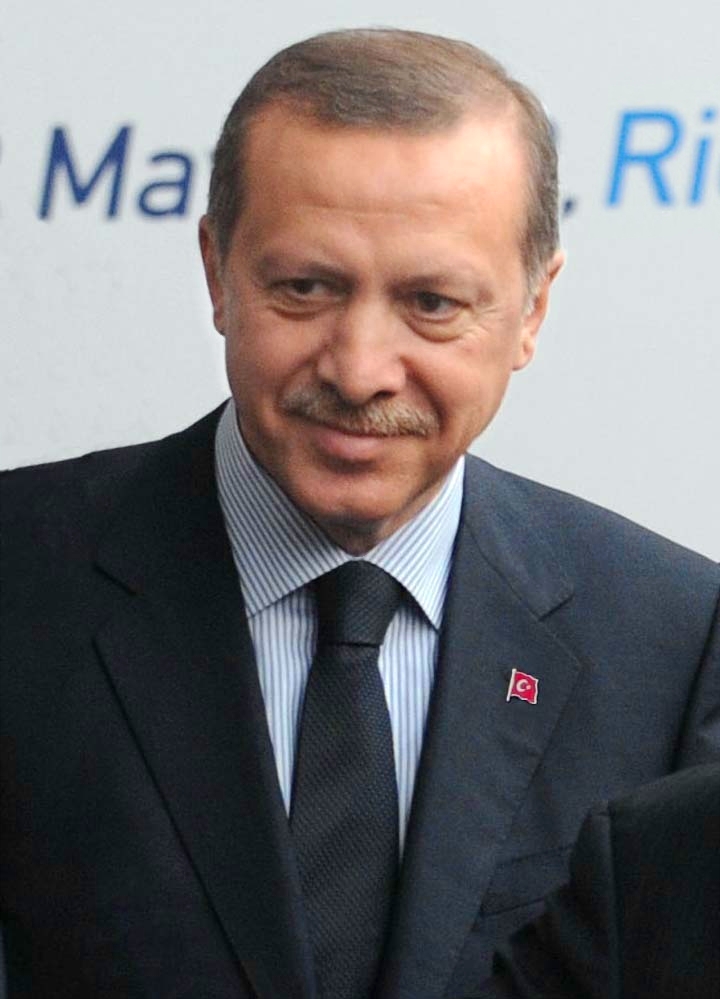
R.T. Erdogan, credit:Agência Brasil/Wilson Dias
Turkey's attempt to join the European Union for the economic advantage seems to be on hold because - let's be honest - the plan is unrealistic. The EU required Turkey to meet many democratization and modernisation demands. Turkey met most of those, and the democratization eroded the secular Turkish state's safeties against Islamist government take-overs. The (somewhat mildly) Islamist Erdogan government has been in power for a while and most likely long since understood that the EU membership project is delusional since Cyprus joined the EU. Cyprus can veto against Turkey's membership which it will certainly do as long as Turkish-protected North Cyprus remains a pressing issue. The Greeks are as far as I know not exactly pleased by the idea of Turkey in the EU as well.
Turkey has thus pretty much lost prospects for a further integration with the West.

Its standing in the Arab world and in Iran is on the other hand quite good, especially in regard to popular support instead of governmental support. The relationships are friendly (the relationship with Israel is cooling down in exchange) and Turkey seems to have compensated for its Ottoman Empire history of oppressing Arabs. Turkey also stands out as an example because of its economic boom during almost the whole period of Erdogan's government . The economic prosperity also seems to produce an improved assertiveness.

The good neighbour relations may turn into an actual alliance or union in the long term, especially if the Arab populations succeed to change their governments.


This is very relevant even for Germany for several reasons:

* Turkey is one of the most interesting countries in geostrategy because of its history, location and relations. 

* Turkey is (still) a NATO ally.

* Turkey is in political conflict with Germany's allies Greece and Cyprus.

* A Turkish-Arab alliance could not make do without a (new) nuclear power in its ranks if it is meant to provide defence against more than just Iran.

* A Turkey that drifts away from the West would be relevant in NATO planning for both Southern and Eastern frontier security.

* The significant Turkish-German minority in Germany. Turkish policies can influence Germany through this minority. Luckily, Erdogan has made a flip-flop a while ago and now seems to support the integration of this minority into German society instead of emphasizing its Turkish character.

Such a Turkish-Arab alliance/union could happen in a few years or in a few decades - or never. It really depends on what happens to the Arab governments. The political dissatisfaction in Syria and Egypt could bring the end to the current authoritarian governments in the Arab world, similar to what happened to the Warsaw Pact in 1980-1992.


No matter partial Islamophobia or not - we should most certainly be friendly to the project of a Turkish/Arab union once it develops. To oppose it and then see it happen nevertheless would be a really bad start and could lead to a simultaneous East-South challenge to European security.


S O
.