Showing posts with label Grand Strategy. Show all posts

2025/02/25

An URGENT to do list for free Europe

.

I hate having been correct so much with my Cassandra warnings about Americans turning Fascist and against Europe. I hate having been correct with my warnings that small wars are bollocks and alliance defence & deterrence are getting too much neglected inf ace of Russian aggressiveness.

I erred on the side of caution and overestimated Russian military and military-technological prowess (which still pointing out that they weren't as strong as they pretend and are widely believed to be).


So here's a list of things we need to URGENTLY do now, exploiting that the mainstream finally woke up to 'security policy' being something deserving attention:


  1. Harden ourselves against American economic sabotage through Microsoft, Cisco and the likes
  2. Harden ourselves against other American economic sabotage such as cutting us off from SWIFT backoffice financial services.
  3. Quickly create an alternative to Starlink and an alternative to SpaceX's reusable rockets for low satellite lift costs
  4. Kick Russian & American intelligence and most "diplomats" out, especially stop tolerating them snooping on our telecoms. This includes closing the "Russian House"s.
  5. Stop relying on NATO, for it's compromised by Americans, Hungarians, Slovakians and possibly Turks
  6. Stop relying on the EU for security policy because it's compromised and blocked by Hungary and Slovakia.
  7. Establish a new alliance that's designed to neutralise 5th column (Americans, Hungarians, Slovaks, Turks and whoever might turn to the dark side) sabotage & betrayals. 
  8. Improve nuclear deterrence based on the French arsenal (though American BMD is turning this into an elevated challenge).
  9. Establish conventional deterrence against the Americans (vs. American threats of naval blockade, naval air attacks and missile attacks)
  10. Kick American troops out of Europe.
  11. Effectively counter propaganda networks (Transatlantiker in Germany, Putin's stooges, European unification ideologues, Murdoch media, TikTok, Twitter) in order to create freedom of political action.
  12. Understand that most European nation states are capable of great efforts, not impotent.
  13. Reorient our armed forces to focus 99% on deterrence & alliance defence.
  14. Force our armed services to become more efficient (liberally fire generals & admirals), including breaking the 'miniature balanced forces' bollocks. The armed forces shall not be permitted to follow self-interest; they exist to serve!
  15. This includes focusing on mobilised strength, not peacetime active duty personnel strength & structure. 
  16. Stop relying on the arms industry. Create arms & munitions production capacity outside of the sluggish established arms makers, just as we did to nowadays unfathomable success in both world wars. The artillery munition production efforts so far are scandalously inept compared to 1915ff and 1939ff.
  17. Understand that Putin's regime has to lose its war of aggression beyond reasonable doubt (no efforts to help them saving face!) and support Ukraine accordingly, including direct intervention. Start by telling the Russians that they have already lost now that we decided so and enact a naval blockade as a first step.
  18. Get ready for a new Cold War, this time against Russia and the U.S.. This goes beyond the pure defensive on the European continents and its peripheral seas.
  19. Stay out of East Asian great power games.
  20. Seek India as defensive ally to add mass and economic potential to the bloc, but be wary of them turning full (Hindu-)Fascist, for we might find ourselves in need of allying with the PRC in the worst case scenario!
  21. Establish a "Stay out of Europe" doctrine vs. the Chinese AND the Americans and enforce it

Please note I did not pretend that huge military spending increases are necessary or in any way central to free Europe's successful deterrence & defence!

S O

defence_and_freedom@gmx.de

.

2025/01/31

The stay out of Europe doctrine

.

The Americans created the "Monroe Doctrine", basically the ambition to keep European powers out of messing in the Americas. They weren't able to enforce it until they were. It's a rare example of clear-cut grand strategy, and it kinda worked for a very long time.

Anyone who thinks clearly about the security of free Europe and uses the publicly available (and certainly not very far off) data understands that the Russians aren't able to challenge free Europe in war, certainly not after squandering the Soviet legacy equipment and millions of artillery shells and rockets. The only really troublesome conventional warfare threat to free Europe (understanding that the Fascist Americans are more likely adversaries than allies, but would certainly not engage in much continental land warfare in Europe) is a combination of Russia AND China.

A proper grand strategy for the security of free Europe in the Eastern direction thus has to deter China from coming to Europe with any substantial land forces.


It should be understood that we need to establish and maintain a taboo, similar to how the Monroe doctrine eventually started to keep Europeans from pursuing ambitions in the Americas: Any Chinese ground forces are taboo in Europe and its periphery. This is unlike the Russian thinking that as a great power, it can dictate to small powers around itself ('influence sphere'/Russki Mir): For one, it's defensive and second, it's not about infringing sovereignty. It would just lead to sanctions on China for entering the sphere with ground forces (beyond embassy guards and military attachés). European forces should reciprocate by staying the eff out of East and Southeast Asia with their own land forces, even in regard to temporary military exercises.

It's obvious to me that this needs to be extended to North Korea, which is under Chinese influence and has no business of having troops in Europe.


Obviously, this was not what European politicians heeded when North Korea sent its slave-soldiers to help Russia attack Ukraine. 

It wasn't possible to further sanction North Korea and it wouldn't have been prudent to sanction China for this North Korean behaviour, but we could have set up a fund for Ukraine to buy Western weapons and fill it with one million Euros for every North Korean soldier that we believe entered Europe to assist Russia in its war of aggression.


Once again, I diagnose grand strategy incompetence and impotence among the leadership of the major European countries. Somehow it's the smaller countries such as Finland, Estonia and Czech Republic that have MUCH more competent political leadership. Germany didn't have a good chancellor in for four decades, for example.

related:

/2014/08/if-western-great-power-gaming-wasnt-so.html


S O

defence_and_freedom@gmx.de
.

2024/07/08

Free Europe's security challenge if America turns full fascist (Part II)

.

The political consequences.

I wrote in 2016 that one shouldn't quit NATO ASAP when America turns fascist, despite the summer of 1914 experience with Austria-Hungary

We should quit eventually (there's a 12 month period between quitting and actually leaving the treaty, see article 13), though. The time should be used to build up deterrence & defence against the United States of America (that would be part III of the series).


The lessons learned about Putin's fifth columns in Hungary, Slovakia and kind of (more complicated) Poland point strongly at the EU not being fit for acting as a multinational defence organisation for Europe.

The European unification fanatics, EU politicians and EU bureaucrats would oppose it, but we would have to create a separate and functional European Defence initiative. It doesn't need to be a real alliance; the Lisbon Treaty can serve that purpose. We'd need a coordinating and meetings agency because we'd need to keep Americans, Canadians, Russia's 5th column, America's 5th column and unstable partners who might fall into such a category out of the core consultations and core preparations.

I mentioned the Lisbon Treaty. We really should raise awareness about it now that the "neutral" Swedes have shed their neutrality. Disregard Austrian sensitivities about them wanting to pretend to remain neutral! They signed the Lisbon Treaty as well. The public needs to understand that the Lisbon Treaty is at least as much an alliance as is the North Atlantic Treaty. Perception makes treaties powerful. Just look at Article I of the North Atlantic Treaty, which hardly anyone knows and thus almost nobody complaints about its violations. How many comments in newspapers or on television would point out our EU collective defence obligation if Vienna was hit by a Russian missile? They would probably manage to notice -with Wikipedia's help- that Austria is not NATO member, that's all.

We need to change that! A Turkish attack on a Greek island means the EU members go to war with Turkey. A Russian missile on Vienna means the EU members go to war with Russia. An American missile on Paris means the EU members go to war with America. This should be self-evident to the majority of adults in all middle-sized and large EU countries.

Finally, we need to stockpile strategic raw materials more and develop alternative routes of transportation with enough capacity for very high value but small volume and mass exports and imports. We could not make do with only services & air freight as objects of trade beyond Europe and its periphery. The stockpiling in particular would be difficult (and capital-intensive), but also useful in case of a Pacific War.


The problem with all this is that the current generation of politicians in the larger European countries is utterly worthless. They would rather misgovern so badly that their own country falls to extremists than to get their act together for European security in less than a generation.

Part III will be more about development, procurement and force design.

S O

defence_and_freedom@gmx.de

.

2022/07/09

Threat country ranking for Germany (top 5) (2022)


Germany is very safe these days. My normal check list

  1. Will we get blockaded?
  2. Will we get bombed?
  3. Will we get invaded?

is almost completely unrealistic. Germany is almost certainly not even part of the most feverish Russian Empire restoration dreams of anyone with power in Russia.

To still participate in alliances is similar to why countries such as Portugal or Luxembourg participate:

  • solidify a sense of European-North American commonality
  • contribute to Western cooperation
  • collective security as a means to maintain buffers and to keep friendly Eastern neighbours from being forced into an exploitation scheme similar to COMECON
  • laziness and path dependency

I suspect an additional intent to misuse/abuse alliances for military adventure gaming, but that's not the topic this time.

So the military threats to Germany directly are marginal. Still, there are scenarios how certain countries can inflict great harm on Germany, and I will attempt to rank them.

First, let's remember the concept of expectation value, which is probability of an event multiplied with its importance (probability of something bad happening times how bad it would be). I bring this up because I anticipate that people will disagree with my ranking on grounds of low probabilities, while I attempt to pay attention to expectation value of harm, so the severity of the harmful event is of equal importance as the probability.

So, this is the ranking, and no, without further explanation you will not understand me correctly on this:

  1. Russian Federation
  2. United States of America
  3. People's Republic of China
  4. India
  5. Israel 

Now to the explanations:

#1, Russian Federation (with its appendix Belarus)

This threat is fairly simple.

  • Russia can attack NATO/EU allies and thus force Germany into a direct war,
  • it can cause economic damage (it actually already does so with de facto cyber war and economic war, albeit of course we do also kind of wage economic warfare on them via the EU trade restrictions),
  • it might affect Germany indirectly with radioactive fallout (I suppose a direct attack is too unrealistic to warrant attention),
  • it's known to exploit far right wing and other idiots (including the far left) inside Germany to undermine our democracy and promote internal distrust, paralysis and unrest.
  • It's the official threat, geographically close, there's a history of (always unnecessary) conflict with Russia and even politicians in power talk occasionally about how one has to be careful to avoid a shooting war with them.

#2, United States of America

This does beg the question why the U.S. would possibly harm us intentionally. The simple answer is it already turned 80% Fascist recently, just barely withdrew from that and I think there's a 30% probability that it will complete the move towards a Fascist dictatorship / 'controlled democracy' within the next ten years (maybe five). Moreover, the United States have already shown (and not just by Fascist politicians) a willingness to wage economic war against Germany by its attempt to blackmail us into a specific policy change (giving up North Stream 2). Regardless of how sensible that move would have been; it was up to us and the extreme efforts and economic warfare waged were extremely disrespectful of German sovereignty, which the Americans were used to ignore because it did not really exist until 1990. The U.S. also has a history of bullying and economic warfare, so this is totally in their tool set.*

There are multiple ways how they could inflict harm on Germany. The two most extreme ones are

  • They can basically switch off the German economy and government by backdoors in Microsoft software alone. Nothing more is needed really. In case you wonder how I can be sure about the existence of backdoors: Every autoupdater function in software is a backdoor technically, period. They have many options for less extreme forms of economic warfare.
  • A fully Fascist U.S. might side with Russia as its wannabe dictator already did in the past. In the most extreme scenario continental Europe might face a barrage of thousands of cruise missiles and air attacks from carrier battle groups (this is rather a scenario for the 2030's, as it would require much propaganda preparation for such a move).
  • Additionally, their idiotic economic policies habitually create business cycles of boom-bust that do by the very large size of their economy and through trade and financial system connections cause economic disruptions and even recessions in Germany as well.** This is not a security policy threat, of course.

#3, People's Republic of China

An intense conflict with the PRC could be launched both as a side effect of a Pacific War between the PRC and U.S. and as an effort to enforce Chinese intents of influence sphere expansion and economic expansion.

  • They could cease export of rare earths and other key goods as a means of economic warfare,
  • they could affect Germany indirectly by radioactive fallout,
  • they could drag Germany into a Pacific War by bombing North American soil,
  • they could wage economic warfare through 'cyber warfare', using backdoors and known/intentional non-patchable vulnerabilities of Chinese-made internet-connected electronics. The issue of the security of Huawei internet infrastructure electronics was raised in the past years.

#4, India

I do not suppose that India is a direct threat, albeit things can change. India's current cuddling with Putin's Russia sure is not encouraging to us.

The Hindu-nationalist government is on a confrontation and escalation course with domestic Muslims and Pakistan. This may lead to a thermonuclear war on their subcontinent. The probability is very low, but existing and the damage even to Germany could be extreme. This hypothetical conflict is the primary scenario for theoretical studies of nuclear winter nowadays.

I consider mostly the possibility of radioactive fallout (much more radiation than in the other mentioned scenarios) and nuclear winter-induced famine risk to be a possible harm to Germany, but even a limited thermonuclear war on the Indian subcontinent would certainly have severe consequences for Germany.

An India that closely aligns with Russia could add to the threat that Russia poses (see #1).

#5, Israel

So basically there's an apartheid government that waged a war of aggression and conquest and is despite numerous efforts of the United Nations still keeping territories illegally occupied and is colonising them. This government is armed to the teeth including a sizeable air force and has nuclear-tipped ballistic missiles that can easily reach Europe. Many of their people have a kind of aversion against Germany and ethnic Germans in particular and can easily be motivated to scapegoat us. It's astonishing that this is not widely considered to be a threat country, it seems an inescapable conclusion to me, albeit maybe one for chats behind closed doors.*

S O

defence_and_freedom@gmx.de

*: I think it's incorrect to scratch a country from a threat list only because relations are fine and peaceful NOW.

**: Post-WW2 Germany does not create severe recessions on its own, but it's importing them through trade. 

.

2022/02/24

A messed-up international disorder


So, looking at the mess in Ukraine, what's my take?

The upside: Putin is apparently not the type for strategic surprise attacks. This calms my fears for NATO, as Russia could only hope to succeed with an aggression in the Baltic if it attacks by surprise. I am very pleasantly surprised about this.

Why did Western policy fail in Ukraine? In short; it was half-assed. No great power signed and ratified a bilateral alliance treaty with Ukraine to cover it until a much longer (and more overt from the beginning) NATO accession process could be concluded. Either draw Ukraine into the West or don't, half-assed measures are prone to disappoint.

So what did Russia do? The Russian Federation with Putin as de facto dictator (voting him out of office is not really an option for Russians) violated international law (Charter of the United Nations and more) by becoming aggressive against Ukraine in 2014 and occupying parts of its territory. It's thus an aggressor and occupier comparable to Iraq 90/91, Israel since 1967, Turkey since 1974 (a NATO member and I don't see any sanctions), Morocco since 1975, the U.S., UK and Poland in 2003 for a difficult to determine duration.

As you might have spotted, only one country on that list was beaten up (repeatedly) for the offence. All others officially got away, typically due to protection courtesy by the UNSC veto feature.

This is the problem: The West routinely expects non-Western countries (especially governments it doesn't like) to adhere to international law and paints them as evil when they don't (and often does so even only because there are expectations such as Iran never having violated the NPT, but still being assailed constantly). Yet International Law doesn't seem to feel all that binding and imperative to Western great power policy, or even only to its proxies.

Do as I say, not as I do.

A great attempt was made to build a world based on international law and order in 1944 with the founding of the United Nations. The 1991 war to hand back Kuwait to its kleptocrat-tyrant was widely perceived as a most promising effort to enforce such a rule of international law in the post-Cold War era. 

Yet the Americans did not scale back their (since the trigger-happiness of Reagan in the 1980's) habitual aggressions; they bombed Afghanistan, Bosnian Serbs (with Brits and Frenchmen), Sudan and Iraq (repeatedly, but with little munitions) in the short 1992-1998 time frame. None of this was legal under international law, and there wasn't even the slightest hint of fig leaf legality in the bombing of the Bosnian Serbs around Sarajevo.

Meanwhile, the NATO bureaucrats and allied politicians worked hard to keep NATO "relevant" after its original purpose became obsolete; a defensive alliance was re-worked into an intervention/war adventure club.

Then came the 1999 Kosovo Air War, preceded by a multinational campaign of lies. There was no genocide, period. The Kosovars' intent to become independent was legitimate, but the Serbs-run governments' police, paramilitary and military actions against the violent independence movement were legal under international law and an ordinary response. The conflict happened in the context of the earlier genocidal massacre committed by Serbs at Srebrenica in Bosnia and thus the Western public was fairly easily convinced and swayed by the lie of an alleged ethnic cleansing/genocide in Kosovo (I was fooled back then as well, and never again since).

Almost all Western powers of note participated in this aggression against Yugoslavia, which was blatantly against international law. The recognition of Kosovo's independence years later and ongoing Western troops presence to keep it that way provided blueprints that were later used by Russia.

West Germany/Reunited Germany had its original sin with this Kosovo affair and our federal constitutional court threw officers under the bus who had correctly and valiantly refused orders to participate in this aggression.

Afghanistan was invaded in 2001. It was no a clean self-defence by a long shot, as the Taleban were never killing anyone outside of Afghanistan and Pakistan, but most if not all countries kinda understood and tolerated the American rage.

Once more, NATO was brought into the conflict for absolutely no need, and very contrary to the North Atlantic Treaty, but by this point nobody seemed to care about the treaty any more. The idea of what NATO is or should be had been warped beyond recognition. The craze about the Taleban who had merely granted hospitality to UBL who helped them in their civil war lasted for two decades and very recently the U.S. government stole billions of dollars owned by the Afghan government. It appears as if they are bound to multi-generational anger about Afghanistan comparable to how they still hate Iran's government for the 1979 embassy crisis.

The Kosovo Air War blueprint of massive campaign of lies, deception and vilification was replayed by the Neocons to lie the U.S. (and the UK under the fool Blair, plus Poland) into a completely unjustified war of aggression against Iraq in 2003 (this time I didn't fall for it at all). Again, they got away with it in the UNSC, but this time the Iraqis made it very expensive for them. The American wars in the Mid East including Afghanistan total exceeds USD 6.5 trillion expenses including long-term costs.

The lying moron did "cruise missile diplomacy" (an aggression) against Syria, and most Americans seem to think he was a peacenik who abstained from aggressions. That's how badly their perception of what constitutes aggression was warped.

Now let's skip the South Ossetia War of 2008 (the Russian Federation was and is an aggressor in both South Ossetia and Abchasia, similar to what the West did in Kosovo), and look at the Russia-Ukraine conflict:

By international law, Ukraine is a sovereign country, including Donezk, Lugansk, Crimea. Its government is legal and legitimate, but that's not even of importance. Even dictatorships are sovereign countries and shall not be attacked under international law.

By international law, Russia is waging a (most of the time limited, as for example no air power was used until 2022) war of aggression against Ukraine.

The outrage is huge in the West.

How could Russia do this? Russia is evil! 


Sure, it's evil, but so are we Westerners.  

The problem is that the West did not only fail to bolster International law, it systematically disregarded it and preferred "might makes right" for itself.

The U.S. and UK are just as evil as Russia.*

Other European countries stood by, supported or tolerated or sometimes called for the aggressions of the U.S. and UK. Most of "the West" is guilty by association, as much as Germany was involved in starting the First World War by giving the aggressive Austria-Hungary a "blank cheque" that it'll support it in the summer 1914 crisis. Austria-Hungary's behaviour in summer of 1914 was accurately replayed by the Neocons in 2002/2003. All those politicians who like to give speeches about learning from history are cherry pickers.


Now we live in a world where Westerners understand that they aren't the only ones who can exploit such international lawlessness and play "might makes right".

This is a failure of Western foreign policy, and a well-deserved disgrace on the Western world. Putin would have had much more to fear if he ruled Russia in a world that had become accustomed to international law being followed by great powers for three decades. Now instead, he can rest assured that Western hypocrisy has dulled the blade of international law and his aggression will be tolerated by most of the world just as were Western aggressions.

Maybe we can push back the warmongers and launch another push for international law (for real), but it will be too late for Ukraine. Russia will at the very least (in my opinion) keep parts of Ukraine occupied and an open wound that very much prevents its accession into NATO, similar to what it does to Georgia.

It's much more likely that the warmongers who in large part got us into this messy, lawless world will feel an updraft and there will be more interventions and more military spending.

I hate warmongers and defense with an "s" hawks.

S O

defence_and_freedom@gmx.de


*: France is a trickier case, and I dismiss Poland's participation in the war of aggression against Iraq as a one-off.

2020/01/11

China's international position

.
There's a curious map about which countries support the PR China in regard to its oppression of the Muslim Uighur minority in the West of China:


It is curious that multiple Muslim countries appear to support China in its oppression of its Muslim minority. The Chinese influence or perceived bonds to China must be strong if the map is correct.

There's another and very similar map about support for China regarding its South China Sea territorial dispute, but it didn't withstand scrutiny:


I didn't do the research to check the former map's accuracy, for the latter map already has the key takeaway: There's no non-"Western" support for arbitration. I interpret this as most poor countries not being in favour of fair international law approaches to conflicts when the PRC is involved. This interpretation may be to far-reaching, but I am not aware of any evidence to the contrary.

I wrote repeatedly that the Western World is only a stalwart proponent of international law when it's about enforcing its will, and habitually ignoring international law and even its own treaties when they restrict the West in its bullying (a.k.a. "cruise missile diplomacy").

That would leave a terribly small quantity of true supporters of international law. Switzerland, Liechtenstein ... anyone else?

Aside from the IL angle, I read a really strong position of the Chinese (relative) newcomer great power in the "Third World" and "Second World" in these graphics and this fits to what else I saw over the years. It appears that the West isn't just failing to ward off Chinese efforts to secure its access to African raw materials; it's failing to look attractive. We've got too much baggage, and may even look like the inferior future customer and investor market.
This doesn't quite fit to the self-image of Europeans, Americans and Japanese who tend to think that their way of life is the best or very close to being the best.

It appears that the West needs a grand strategy change in foreign policy. Instead, it's playing petty games in Syria and elsewhere and brings lots of useless politicians into positions of great power.


S O
.

2019/10/12

Strategy changes

.
Several of my blog posts were written under the (mentioned) assumption that we should have a division of labour in NATO / EU. The Baltic countries and Poland should focus on self-defence against a strategic surprise attack. Germany should be able to quickly deploy a decisive ground forces strength capable of stopping Russian ground forces, Turkey should be able to close the Bosporus even to submarines, Spain should be able to close Gibraltar Strait even to submarines and so on.

I hinted back in 2017 that such an alliance grand strategy of deterrence by frustrating even strategic surprise attack scenarios might need adjustments if the Turkey situation doesn't develop well.  Strategy changes may be necessary, and this may be a terrible issue given the inertia in the armed services.

A complete change of an air war strategy may take 30...40 years, for that appears to be the life cycle length of combat aircraft and air defences from introduction to disappearance. I doubt it will become much quicker unless there's a major war wearing down the inventory.

Even unspectacular changes of a national defence strategy such as reorganisation of the army (which should be possible in little more than a year including the re-training periods) often last 5+ years nowadays.

This slowness is what seemingly almost everyone has become used to, and has become accepted as normal, if not inevitable.
It's not. 
Remember, Germany built a continent-dominating military based on a 100,000 men army and 10,000 men navy in less than seven years. No computer programs were used, and we should get rid of them if computer programs were slowing down rather than accelerating things. Technology advanced, so we should be quicker, not slower. Whatever technological change made us slower should be dispensed with.

It's a rule of thumb to replace a strategy every about five years in a business. Few large businesses (such as concrete factories) can successfully operate without having and adapting a strategy. Likewise, we should expect strategy changes every five years on the national and collective defence levels. Any longer intervals are symptoms of failure by the executives involved.

An armed bureaucracy that expects to change strategy every about five years has to move to be able to change course every about five years. Such an adaptable armed bureaucracy could dare to react to its environment with more specialised adaptions than a sluggish armed bureaucracy that lives and preserves inertia and conservatism above every thing else. It's a bureaucracy's self-interest to preserve itself and to not change much, so the impetus towards adaptability has to come from the civilian leadership.

Political leadership may change as well, but ours in Germany exists in four-years legislative cycles, and this fits the five-year rule because we don't really hand over power in four-year intervals. Our governing coalitions last about 5...14 years.

We should be much more adaptable on the strategic level both as nations and as collective security organisations (alliances).

S O
.

2019/06/08

The rot of Pax Americana (II)

.
Previously, I argued that the United States violated its own temporary grand strategy for peace and prosperity in the Western world with its own actions in the 50's. It would be considered a "rogue state" because of its undermining of unfriendly governments, its violent aggressions and its militarism if it was a majority Muslim, East Asian or simply "communist" country.

Remnants and façades of the international system built in the 40's and early 50's still hold out, in part because nobody wants to give nuclear war a try and in part because Europeans (and until recently also Americans) at least partially support them.*

Some European countries are somewhat aggressive (particularly the previous colonial empire UK and France), but overall, continental Europeans appear to have one precondition for being the decisive champions for a rules-based international order for peace and prosperity that the United States appears to lack:

Most of them appreciate win-win cooperation as a strategy, unlike the United States, which have  been decayed by quasi-anarchist propaganda ("(...) government is not the solution to our problem, government is the problem."**) and which cannot really settle on such a strategy any more.
I don't doubt that they have at least one political party capable of occasional win-win cooperation diplomacy, but I doubt that they have a political party of importance that would do so in a more consistent way than the country did during the 1960's-2010's.

Could Europe become a champion for a rules-based international order for peace and prosperity?

A long list would need to be checked in my opinion:
  • European unification ideologues would need to look outward a lot more and seek peace & prosperity on a global level instead of being fixated on European unification, for without them there would not be a large-enough ambitious base for such a grand strategy
  • Europe would need to join its influence with India and some other major countries in the long term (this may be Nigeria and Brazil)
  • European public(s) need to understand the utility of a win-win cooperation, and resist the decaying infiltration by ideologues from the U.S. and Russia
  • France would need to become more self-disciplined and stop its occasional violent interventions in Africa that often run counter to a rules-based international order
  • Europe would need to be willing to face the U.S., UK, Russia and possibly PR China at least in non-violent ways (UNSC votes, France's UNSC veto power, economic sanctions, refusal of diplomatic support and cooperation, support of opposing proxies)
  • Europe would need an approximately common news picture of the world. It cannot act in unity without perceiving the world approximately the same way  (keyword "elite nations" in journalism)
  • Europe needs to secure its raw materials access independently from any power it might need to face off against in defence of international law (this is about diplomacy & trade, not much about naval power)
  • Europe (EU) would need to maintain credible nuclear deterrence (France) as long as there are other nuclear powers
In other words; I doubt it will happen. Mankind is probably (and has been for sixty years) on a path away from win-win cooperation as the norm and away from an international order for peace and prosperity that's based on international law.
We're moving back to the previous world order of great powers pursuing their interests at the expense of others (with everyone most likely being worse off as a result).

We'll likely fail at the climate change challenge and fail to get to global net zero CO2-equivalent emissions from human actions' first order effects.*** We may get cleaner, healthier air in European cities from electrified motor vehicles, we will maintain necessary food supply and energy supply and preserve most of our coastlines for decades to come, but we'll fail in the greatest challenge since the risk of self-ruin by thermonuclear war simply because Western societies have decayed**** just short of true greatness, and turned away from pursuing a grand strategy for smart win-win cooperation in a rules-based world.
Challenges such as atmospheric CO2(-equivalent) content cannot be dealt with without a global appreciation of the utility of cooperation and confidence in major countries' commitment to agreed-upon obligations.

In the end, the Americans who were such a beacon of hope for mankind in 1944-1953 may be the first to blame for global civilizational decay with their aggressiveness rooted in not having had lost a great powers war ever (at least not thoroughly) and the egoism of their Rich who undermined the government / national community with egoism and anarchical ideologies to receive some taxation reprieve for a few decades.
Obviously, some other countries (especially UK, France, Russia, Saudi-Arabia) deserve much blame as well, while the others are mostly guilty of complacence and of being followers on the wrong path.

S O

*: Especially France and the UK disregard international law when it suits them, as well. The whole 1999 Kosovo Air War and Poland's participation in the war of aggression in 2003 add to the picture of Europeans being unreliable defenders of a peaceful international order.
**: The "(...)" part was "In this present crisis", but the anarchist-minded people decided to ignore it and turned the later section into their article of belief, usually granting the military an exception.
***: Thus we'll almost certainly fail to achieve net zero global CO2 equivalent emissions taking thawing permafrost and such into account. We will not stop, much less reverse, climate change a.k.a. global warming before some natural mechanism does it for us. That may take thousands or ten thousands of years, though.
I myself am guilty of believing the mainstream idea during the 90's, thinking that some savings by improved efficiency here and there would suffice as global warming countermeasures. Back then, we would have needed to add a zero emissions technology perspective (solar-hydrogen economy) and major carbon sink efforts (such as special net negative carbon concretes, maybe fertilizing some maritime areas with iron) to the "efficiency gain" route.
So in all fairness, it's not just the cooperation issue that makes us fail, but also the sluggishness of mainstream opinion turning around.
****: I can already hear some European right wingers loudly liking to read this, which is tragic.
They don't realize that their model Russia is de facto at the end state of total decay. Russia fails at science, health achievements, economy, civic development, culture and freedom and European right wingers who embraced Putin's Russia as political ally are nothing short of traitors to their own nation in my mind. They don't fight decay - they embrace it. A barefooted black lesbian couple with green hair loudly chatting in a foreign language on a train is not societal decay; the loss of community and loss of confidence in solving problems together as a nation is societal decay.
Putin doesn't want to save Europe from the gays and the brown-skinned people - he wants it to become as dysfunctional, corrupt and unproductive as Russia already is.
.

2019/05/18

The rot of Pax Americana (I)

.

I disagree completely, and I do so from the perspective of someone who appears to have normalized American foreign policy much less. The real end to Pax Americana didn't come in 2016-2019.

We seem to agree on the starting point; the foundation of the United Nations in 1944. One could trace back American efforts to establish a peaceful, rule-based an prospering world to much earlier dates, but they were of little consequence.

Back in 1939-1944 the United States' "greatest generation" did the most they could to establish a peaceful post-war (or at least post-WW2) order based on rules and diplomacy. 

The problem is that they strayed from that path soon, just the United States did after the First World War, when it let the League of Nations fall well short of its potential by not joining it in the first place.

As early as 1953 the United States turned towards the evil side by supporting an anti-democracy coup d'état in Iran. That one was really about big oil interests (which aren't nearly as often behind American policy as the stereotype suggests). Their turn away from being a champion of a rules-based peaceful world was completed at the latest with the overt support for the Bay of Pigs invasion of Cuba in 1961. That one was at least in large part about the red scare.

Ever since, international law, treaty obligations and the desire for a peaceful prospering world were pushed away by even slight desires to manipulate, disrupt, destroy, punish or kill. I'm talking about subverting democratically elected governments (example Chile 1973), about supporting tyrants, about covering up murder, about abductions, about torture (support for and doing it), about habitual bombing of countries, about supporting a war of aggression with military force (Gulf War) and about illegal invasions of countries (Laos, Grenada, Panama, Iraq) here.

I understand American readers are not really accustomed to see those historical actions described this way, but the preceding two passages are solidly supported by historical facts. Whether ends justify means is another question, but the means used were not in support of a rules-based international order for peace and prosperity.

- - - - -

The Pax Americana wasn't sabotaged  post 2016 by Trump. It had already been turned into a myth by the 1960's. Peace wasn't mostly maintained in the Western world by some American grand strategy, but by the common enemy Warsaw Pact and by European reconciliation and unification efforts since the mid 1950's.

Writers used to blather a lot about "global policeman", particularly in the 90's. That, too, ended in 1953. There's only been a couple global bullies of varying sizes since. UN blue helmet troops come the closest to 'global policeman' role, but they're rather some object security guards or border guards than policemen.


So in the end, I think Krugman looks at the history of the past sixty years through a rosy mythology lens and his partisanship only recently allowed him to see some shadows. Other authors and scholars (such as Bacevich) have a much more complete field of view and offered much better observations and opinions about American foreign policy. Krugman is worth having our attention in regard to trade economics and many other macroeconomic topics, though.

S O
.

2018/12/15

Chinese efforts in Africa

.
I'm steadily amazed by how much attention the Chinese get for their efforts in Africa, and by how important they are perceived to be in Africa itself.

Here are some figures about their actual efforts:
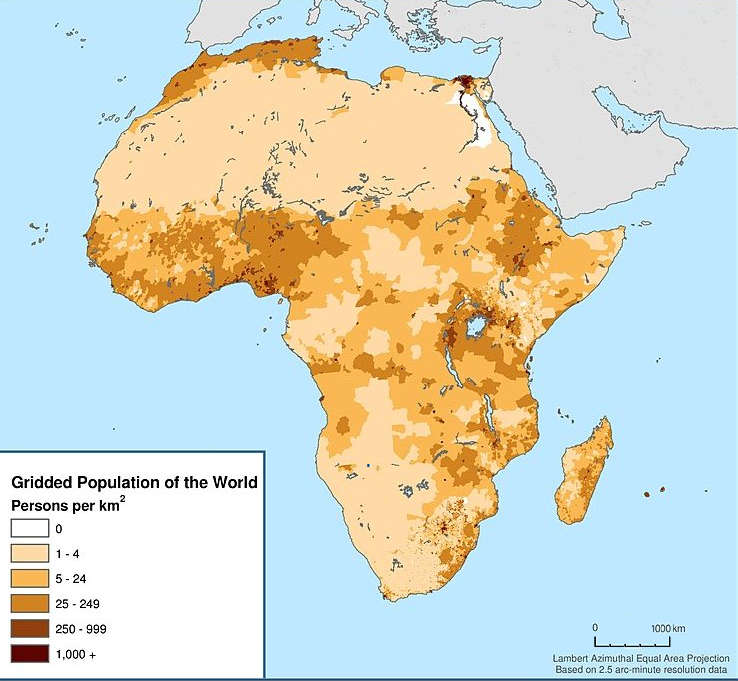
"China has denied engaging in “debt trap” diplomacy, and Xi’s offer of more money comes after a pledge of another $60 billion at the previous summit in South Africa three years ago. Xi, addressing leaders at Beijing’s Great Hall of the People, said the new $60 billion will include $15 billion of aid, interest-free loans and concessional loans, a credit line of $20 billion, a $10 billion special fund for China-Africa development, and a $5 billion special fund for imports from Africa. Chinese companies will be encouraged to invest no less than $10 billion in the continent in the next three years, he said. (...) China loaned around $125 billion to the continent from 2000 to 2016, data from the China-Africa Research Initiative at Washington’s Johns Hopkins University School of Advanced International Studies shows."

USD  170 billion over the course of at least 20 years.* Less than USD 9 billion per year. The German annual foreign aid budget is a little higher, and it's much more aid, not mostly lending.

Population density in Africa c. 2000
(c) The Trustees of Columbia University in the City of New York

The difference may be a difference in perception (established aid streams being perceived as self-evident background noise), a difference in style (such as lots more high profile investments done with Chinese money, for example) or it's Western hysteria.

I suspect it's a combination of all three, and the stark difference to German foreign aid appears to be that German foreign aid is actually mostly foreign aid, while the Chinese are rather investing in economic and political relationships. They may do it with access to natural resources in mind, but it's safe to say that this isn't the only motivation.

Africa needs huge investments in infrastructure and education. The old colonial era transportation infrastructure was designed for export (such as rail lines to ports, but not parallel to coasts) and poorly suited for intra-African trade. It's also crumbling or has done so in many places. 

Maybe the largely basic needs-oriented German foreign aid style is not all that smart after all. A decade of projects to educate and assist farmers in some places falls well short of the effect that a Western African rail line a few hundred km inland and parallel to the coast, reaching from Dakar to Kano would have. A similar East African North-South railroad could boost intra-African trade and commerce as well.**

Maybe we Europeans should invest more in North Africa (could supply much solar power, but shouldn't supply more than ~20% of Europe's electrical power needs) and Atlantic Black Africa (railroads, durable paved highways). Such investments don't need to displace traditional foreign aid, and they don't need to be terribly selfish grand strategy policymaking either. It would certainly be within reach with our resources and the benefits*** to us could very well exceed the costs. The very low interest rates signal that there are too few opportunities for (private) investment in Europe itself - it may make sense to open up investment opportunities in Africa. Who knows - maybe Africa could even grab much manufacturing that would otherwise happen in South, Southeast or East Asia?

- - - - -

Now what would be the relevance regarding defence and freedom?
I suppose it could bring us into conflict with China (though a hot conflict is extremely unlikely), but it could also thwart Chinese efforts to gain footholds in the South Atlantic. The Africans will be wary of loaning military bases to Europeans (except that France maintains a few old ones), and maybe we could -with more political influence and better relations- convince them to refuse Chinese military interests in Atlantic Black Africa.

S O
defence_and_freedom@gmx.de

*: Chinese companies also appear to get contracts for large construction projects that aren't being financed with Chinese money. The Chinese construction companies have cheaper engineers, bring their own workforce (very few people hired locally), and usually deliver the product on budget and on schedule. Such projects are of economic importance, but not really relevant to grand strategy.
**: We've wasted money on Greece's stupid little Cold War with Turkey and on Greek pensions and subsidies instead. 
***: These are difficult to calculate in advance, especially so in the case of non-toll highways.
.

2017/12/05

Cooperation & solidarity vs. politics of aversions

.
Back in the 80's there was much talk about the competition between capitalism/democracy and planning economy/single party dictatorship. During the 90's many people believed the thesis that Western liberalism had won for good.

I suppose this idea of Western liberalism is largely misunderstood. Its divisions are so extremely divergent since the 80's and have so very hostile partisanship divide between their followers that by now we could proclaim a new system competition within the Western world, in addition to the harassment by the relatively unimaginative authoritarian oligarchy with great power mindset in Russia.

The divide in the West isn't really about progressives and conservatives; few people truly deserve either label all-round anyway. The divide is different.

Germany's current society was built on a foundation of "us". "We" act together to solve our problems and challenges. Cooperation/togetherness and solidarity are the basic building blocks for this. Not everyone adheres to this foundation, but I suppose about 60-80% of Germans do.

The competing concept was revived in the 80's by Reaganism/Thatcherism, and became ever more extreme and rabid, but also ever more dishonest in the U.S. during the 90's and especially the Obama years:

It's a world view of "me, me, me!", in which one doesn't want a dime of one's taxes spent on helping 'brown people'. The central motivation in such politics is not to solve problems together, but to marginalize if not outright subjugate and hurt 'others' - brown people mostly, but also political enemies.

One group after another was declared to be 'takers', 'enemies', 'them', 'foreign'. Over time, this affected African-Americans, Hispanics (the supportive Cubans mostly excluded), Asians, Europeans, 'Leftists', more or less all government agencies, lesbians, gays, transgender, unemployed people, single mothers, women who had an abortion, medical personnel and consultants associated with abortions, journalists (up to the few actual news people on Fox News), Jews (though they are usually not targeted by those in high positions), Puerto Ricans and even Hawaiians.
The opposing political forces became more adversarial and hateful as well as the political culture deteriorated badly since the mid-90's with politicians obviously putting party before country most of the time.

This adversarial concept for politics solved few problems (though it did sometimes cut back errors made by the political opponent). Today, the U.S. has an unsustainable fiscal situation, unsustainably low savings rate, unsustainably low investment rate including public infrastructure investments, excessive spending on healthcare and 'security'/'defense', cannot solve pressing problems such as obesity rates/environmental issues/drugs/gun crimes/minority poverty rates and is rapidly losing most long-time friends in the world.
Still, there are plenty people who think that Germany needs exactly that kind of thinking.

It's obvious to me that switching to such an altogether different perspective on how to run a society would cause great transition harm to Germany even if the perspective as such was leading to superior policies.

For this reason there's a system competition between the U.S., Hungary, Poland and to a lesser extent the UK* (as well as minority political parties) on the one side and the cooperation- and solidarity-minded Germany, Netherlands and Scandinavian countries (as well as no doubt a couple other countries) on the other side.

Sure, the more mainstream interpretation views Hungary, Poland, Trumpism and Russia in one block that's threatening the Western liberal system. But I think this misses the point; Putin is merely amplifying the strength of antisocial ideas. The real competition if not conflict was there by the 80's already, then covered-up by the dominant Cold War that made Westerners close the ranks.


I fully expect comments calling me 'interesting in military affairs, naive in politics' and similar. There's nothing in here that would convert followers of the politics of aversion into cooperation- and solidarity-minded people, after all. This was just a diagnosis of how I see the fundamental problem of our time.

S O

P.S.: Years ago I wrote about current challenges to Germany. I did not think of this one yet. It's become much more obvious now. Three years ago the popular majorites of Germany and the United States still felt like real allies. That was before adversarial politics triumphed in the U.S. in 2016 and Germany had an political party that directed aversion against minorities (and the established order) and still mattered.

*: They're having particularly interesting politics now, with the left wing of the supposedly left party having become powerful and opposing a poorly-led right wing.
.

2017/09/30

The Kurdish referendum

.

There's a problem with the referendum, and as usual much of the media did a terrible job at shining light on it*:

The wording of the referendum question appears to be (translated):
"Do you want the Kurdistan region and the Kurdistani areas outside the region’s administration to become an independent state?"
https://www.nbcnews.com/news/world/iraqi-kurdistan-set-hold-referendum-its-independence-n803741

Now that's bad if it's the correct translation. They asked a small portion of Kurds, but the referendum seems to support claims on Turkish, Iranian and Syrian territories (so far I have seen no claims that the referendum was held in Syria) as well. Even to someone who's supporting the right of peoples to self-determination over the survival of existing borders that's troublesome. No group or state should ever lay claims on another state's territory. The Turkish, Iranian and Syrian Kurds may gain the right to secede on their own, Iraqi Kurds cannot create such a claim for them.

Kurdish settlement areas (not a Kurdish majority in all marked areas)

It's regrettable that the question wasn't limited to the Kurdish region in Iraq, for now Turkey, Syria and Iran actually have a good case for opposing the Iraqi Kurds. Now they can paint them as aggressive.

It may remain without significance because the four countries oppose the Kurds anyway and just about everyone appears to have picked a side or seems unlikely to ever pick a side, of course.

- - - - -

The Catalan independence referendum on October 1 is going to be extremely interesting. Imagine they pull it off and a majority votes for independence with a high turnout. This would be extremely interesting for Europeans. On the one hand the governments in Europe would not want conflict with the Spanish government, on the other hand there was the Kosovo precedent and generally lots of good arguments for Catalan freedom (if and once they vote for independence).
Some of the top politicians - including Merkel - are not psychologically prepared for this. Merkel doesn't really shape things. She's an administrator of the status quo policies who does u-turns on certain policies when the pressure can be expected to reach a breaking point soon anyway. She has no idea of what way the EU should head in the question of secession movements that are firmly opposed by their central governments.

S O

*: I'm not bashing the media in right wing "fake news!" style there. I'm disgusted by the huge difference between journalists' high opinion of themselves and the actual quality of their output.
.

2017/06/07

NATO throughout the times (my interpretation)

.
The NATO as originally founded was meant as a defensive alliance against Soviet power, no doubt. It also served as a delineation of the Western bloc, and signaled that no overthrowing of any government by a communist insurgency would be tolerated within this alliance (everyone still remembered the Greek Civil War).

Western European designs for defence cooperation have in part been superseded and in part been given up once NATO with inclusion of the United States of America was founded in early 1949.

NATO assumed an additional role for some Western European governments once the Federal Republic of Germany joined; it was a harness to make Western Germany useful, and at the same time somewhat controlled while partially giving up its occupation.

NATO became the medium for the U.S. government for hegemony in Western and Southern Europe, and the French government reacted with a withdrawal from NATO's military institutions (France always remained a treaty member and thus a NATO ally).

This state of affairs lasted for decades till the end of the Cold War.

It was obvious that the old Soviet threat was gone by late 1991. This posed a huge challenge, for without the unifying bogeyman there was a risk that the European great powers and Americans would drift towards adversarial instead of cooperative stances. Western Europe and the U.S. could have become rivals or enemies instead of staying allied.
NATO thus became in part a bond - similar to a marriage vow - that was meant to keep Western/Southern Europe on the one hand and the U.S. on the other hand on friendly, cooperative terms - allied.

This required NATO to serve a more obvious purpose, though. A purpose that could be communicated (nobody wanted to talk of the risk of transatlantic hostility). Ideally, such an obvious purpose would require frequent cooperation and permanent institutions. Such a purpose was found by developing the idea that NATO wasn't only meant to defend itself, but also to provide for its security by stabilising and pacifying its periphery, its neighborhoods. This led to the multinational military actions in and over Bosnia and the Kosovo (Air) War. There were but two non-former Yugoslavian country that could have claimed that its sovereignty was at risk because of the wars in Yugoslavia: Austria (airspace violations) and Albania. Neither were NATO members. Still, every statesman in NATO seemed to pretend with a straight face that intervention in the neighborhood was actually about our security as well.

There was a parallel development in Eastern Europe. Countries that had gained freedom from Soviet dominance if not independence after generations or centuries of being incorporated into Russian Empires and Soviet Union joined NATO to protect themselves against Russia. Western Europe liked this, since pushing the frontier to the East made the distance to the Russian mainland very comfortable. Germany had been front nation throughout the Cold War and just about every WW3 scenario saw it nuked over and over. Now, after the NATO expansion, all of Russia but the Kaliningrad exclave seems very, very distant. The new NATO members saw this attitude and many of them (all three Baltic countries, Poland and Czech Republic maybe the most) sought close ties to the U.S. in addition to the treaty membership. They weren't terribly irritated by the obvious American disinterest in Eastern Europe and Russia throughout the GWB administration. They did to some degree refuse the idea that they should become obvious auxiliary forces providers, but they did pay a price to the U.S. for the feeling that the U.S: would be indebted in return: This price was participation in "small wars" (Poland in Iraq, several countries in Afghanistan) and the orientation of a substantial part of their armed forces towards such small wars rather than direct deterrence and defence in Eastern Europe. Much of the needed equipment was bought, but some equipment was also acquired through American military aid.

This state of affairs seems to have changed gradually from the South Ossetia War to the Crimea occupation. Calls for more seriousness in NATO about deterrence and defence in Eastern Europe (including finally creating contingency plans for defence) grew to public proportions (also in Norway) and by 2015 it's finally widely acknowledged that NATO is a defensive alliance - in Europe. Nobody really knows that Trump thinks about it.

There are nevertheless still remnants of the doctrine that NATO is a club for interventions, not the least because of the article V activation in regard to Afghanistan. This act was not really the intent of the Americans, but an effort to do once more something together for bonding and an effort to make the invasion of Afghanistan more acceptable at for the voters at home. The Taliban switched to guerilla warfare real quick and gave up overt political control of most of Afghanistan, so the supposed collective self-defence quickly assumed the shape of an occupation of Afghanistan. Never before had any alliance considered it to be self-defence to go after the hosts of an aggressor even after said hosts lost control of their country. But this wasn't about self-defence; it was about bonding for the cooperation-minded Europeans and it was about not yielding to brown Muslims for the Americans, which liked to receive so many auxiliary troops for Afghanistan while they were mostly busy occupying Iraq which they had attacked without any having any real self-defence excuse.

So now NATO is again a bloc facing the Russians, it may sooner or later be drawn into a U.S.-PRC conflict in one way or another and it's burdened by the remnants of a "bonding by intervention" doctrine. European statesmen are still very cooperation-minded, but the U.S. president seems utterly incapable of cooperation (neither understanding the concept nor how to exploit the European pursuit of cooperation), at least in regard to democratic countries. 
NATO is as of now mostly a European alliance, with the U.S. being a member in name due to inertia, not because of intact cooperation and will to cooperate at the level of its president.


S O
.

2016/11/08

Leaving NATO?

.
I've held this back for a long time, but thus also thought about it for a long time:

Let's say a great power in NATO turns fascist. Should Germany leave NATO and rely on the EU as its defensive alliance?

There's little doubt in my opinion that a fully neutral Germany would break NATO's backbone in Europe. There would be no West-East land connection for NATO logistics in Central Europe without Germany. A neutral area would stretch from the Baltic Sea to the Western Alps. Northern Italian ports would become the primary ports for moving Western European and North American troops into NE Europe, such as a Baltic or Poland defence scenario. There would be a bottleneck south of Austria, too. Balkan ports such as Thessaloniki would be a fine choice for defence of Romania, but be terribly distant from NE Europe.
Thus German neutrality would make a huge impact due to geography in itself. A defence of NE European NATO would suddenly not hinge on quick reinforcement (as I wrote in many posts before), but on what's already in the region. Reinforcements would arrive very late (most of them about 2 weeks later that with status quo) save for weak air-lifted forces. The only effective alternative to prepositioned forces would be prepositioned equipment (POMCUS-style).


Germany would not become truly neutral if it left NATO, of course; it would still be a member of the EU and thus remain allied with the same countries in NE Europe.

Now let's look at the pro and contra, in a short form:

Pro leaving NATO in the event of a fascist great power in NATO:

This essentially boils down to (save for ethical reasons) what I wrote before;
You may get into trouble if you are and stay allied with an aggressive power. A fascist great power would likely fit this description (though Fascist Spain wasn't aggressive).

Another reason for leaving is actually a permanent one, true regardless of the allies; Germany needs no allies. It's surrounded by friends, and even Russia is in no way a realistic threat to a neutral Germany. In fact, a case can be made that being allied increases the risk of war and thus of suffering for Germans.

There's also the thing about the EU; whatever assistance Germans want to give to Eastern Europeans could be given through EU membership. NATO is kind of superfluous for deterrence and defence in Europe against Eastern European and Mediterranean neighbours, at least from a level-headed German perspective.

Contra leaving NATO in the event of a fascist great power in NATO:

The main argument was laid out here before
Without NATO a bond between Europeans and North Americans (particularly the U.S.) would be cut, but this bond may be the only thing (certainly it is the most influential thing) that keeps the two continents from developing rivalry and antagonistic behaviour. The U.S. spies on many of its European allies as if they were hostile powers even with this kind of alliance in effect. There sure are many issues that drive a wedge between Europe and North America, and it's the alliance that keeps the bloc together.
Right now below 2% GDP military spending is plenty for deterrence and defence of Europe even without American support, but we would need to go past 3% GDP if we were to orient our deterrence and defence AGAINST the U.S., probably more if we began to play great power games AGAINST the U.S. in Asia and North Africa.
Germany dropping out of NATO would not cut this bond, but fracture it. It would also fail Kant's categorical imperative test; it would be unethical to leave it up to the other Europeans to keep that antagonism-preventing bond intact.

- - - - -

The idea of leaving NATO is impractical politically, of course. The far left in Germany would love such a move, but even the greens would most likely betray their own rhetoric of three decades (again) if such a move was really up for a vote. Social Democrats wouldn't see any reason to leave and Christian Democrats would make a most determined stand; after all, NATO member ship and the whole integration with the West was their idea, their (and the FRG's) grand strategy for 60+ years.

Furthermore, there's a network of "transatlantic" journalists, news media editors and think tanks that are resolutely pro-NATO, even pro-U.S.. It's a well-organised lobby and it would produce a storm of outrage if any non-green, non-deep red top politician even only uttered the idea of leaving NATO. A fascist great power in NATO would NOT change this. They would no doubt promote sitting this out.

- - - - -

Well, what to do in such a hypothetical event?

I suppose we should draw the lesson from history for real (not only drawing lessons from 12 particular years) and take note that we sure need to do the opposite of what was done in 1914:
We should publicly declare that we do not support or condone aggressive behaviour. 

No two-faced charade as in 2002/2003 when Chancellor Schröder weakly condemned the war of aggression against Iraq, but supported it indirectly.
Furthermore, we should call out all aggressive behaviour as a violation of North Atlantic Treaty obligations, publicly and strongly so. Everyone shall understand that the bad ally isn't the one who refuses to attack a sovereign country, but the one who does attack a sovereign country. The former is an obligation under the North Atlantic Treaty, the latter is a violation of the same.

In case that fascism settles and lasts for more than a few years in a NATO great power because democracy was defeated, we should cut our ties with it. This would even require leaving the EU if fascism takes hold in a European great power. We could invite all non-fascist EU members to a "EU 2.0" treaty afterwards.

S O
.