Showing posts with label EU. Show all posts

2025/02/25

An URGENT to do list for free Europe

.

I hate having been correct so much with my Cassandra warnings about Americans turning Fascist and against Europe. I hate having been correct with my warnings that small wars are bollocks and alliance defence & deterrence are getting too much neglected inf ace of Russian aggressiveness.

I erred on the side of caution and overestimated Russian military and military-technological prowess (which still pointing out that they weren't as strong as they pretend and are widely believed to be).


So here's a list of things we need to URGENTLY do now, exploiting that the mainstream finally woke up to 'security policy' being something deserving attention:


  1. Harden ourselves against American economic sabotage through Microsoft, Cisco and the likes
  2. Harden ourselves against other American economic sabotage such as cutting us off from SWIFT backoffice financial services.
  3. Quickly create an alternative to Starlink and an alternative to SpaceX's reusable rockets for low satellite lift costs
  4. Kick Russian & American intelligence and most "diplomats" out, especially stop tolerating them snooping on our telecoms. This includes closing the "Russian House"s.
  5. Stop relying on NATO, for it's compromised by Americans, Hungarians, Slovakians and possibly Turks
  6. Stop relying on the EU for security policy because it's compromised and blocked by Hungary and Slovakia.
  7. Establish a new alliance that's designed to neutralise 5th column (Americans, Hungarians, Slovaks, Turks and whoever might turn to the dark side) sabotage & betrayals. 
  8. Improve nuclear deterrence based on the French arsenal (though American BMD is turning this into an elevated challenge).
  9. Establish conventional deterrence against the Americans (vs. American threats of naval blockade, naval air attacks and missile attacks)
  10. Kick American troops out of Europe.
  11. Effectively counter propaganda networks (Transatlantiker in Germany, Putin's stooges, European unification ideologues, Murdoch media, TikTok, Twitter) in order to create freedom of political action.
  12. Understand that most European nation states are capable of great efforts, not impotent.
  13. Reorient our armed forces to focus 99% on deterrence & alliance defence.
  14. Force our armed services to become more efficient (liberally fire generals & admirals), including breaking the 'miniature balanced forces' bollocks. The armed forces shall not be permitted to follow self-interest; they exist to serve!
  15. This includes focusing on mobilised strength, not peacetime active duty personnel strength & structure. 
  16. Stop relying on the arms industry. Create arms & munitions production capacity outside of the sluggish established arms makers, just as we did to nowadays unfathomable success in both world wars. The artillery munition production efforts so far are scandalously inept compared to 1915ff and 1939ff.
  17. Understand that Putin's regime has to lose its war of aggression beyond reasonable doubt (no efforts to help them saving face!) and support Ukraine accordingly, including direct intervention. Start by telling the Russians that they have already lost now that we decided so and enact a naval blockade as a first step.
  18. Get ready for a new Cold War, this time against Russia and the U.S.. This goes beyond the pure defensive on the European continents and its peripheral seas.
  19. Stay out of East Asian great power games.
  20. Seek India as defensive ally to add mass and economic potential to the bloc, but be wary of them turning full (Hindu-)Fascist, for we might find ourselves in need of allying with the PRC in the worst case scenario!
  21. Establish a "Stay out of Europe" doctrine vs. the Chinese AND the Americans and enforce it

Please note I did not pretend that huge military spending increases are necessary or in any way central to free Europe's successful deterrence & defence!

S O

defence_and_freedom@gmx.de

.

2025/01/17

The West doesn't understand nationalism

.

My thesis is that the West doesn't understand nationalism (any more). It understood it until about the Second World War. The First World War almost shattered our societies, the second one kind of did.

Back in 1950 when North Korea attacked South Korea 'we' interpreted that as the spearhead of communist world revolution, but it was an attempted war of national unification.

When North Vietnam attacked South Vietnam 'we' interpreted it as the spearhead of communist world revolution, but it was a (successful) war of national unification (with an additional war for small farmer liberation from rich landowners).

When the Russian federation attacked the Chechens 'we' interpreted it as a great power's attempt to avoid fracturing, but it really was part of Russian nationalism/imperialism.

All the troubles that the Russian Federation caused in its periphery; Moldova, Ukraine, South of Caucasus region; it was (and is) all about keeping the independent countries from drifting away so they can once again become part of a Russian empire.

Likewise, China is understood as being a country, but it really is the Han tribe dominating a big bunch of actually different peoples, some of which have actually been convinced that they're the same as the Han. Having a script that can be read in any language helped the Chinese empire for thousands of years and was probably the reason why "China" is now considered to be a country, not a continent or subcontinent like fractured Europe.

We don't properly understand nationalism at home, either. It doesn't matter to many of us whether immigrants are useful for elderly care and other vacant jobs. Immigrants in our nation states feel like squatters in an inherited family home; they don't belong there, why would they get to enjoy what's ours by birthright? So basically, modern immigration policy (and European unification ideology/policy) utterly disregards nationalism, which has been designated as a harmful relic rather than a source of cohesion and strength.

I suppose we won't get much better policies on immigration, deterrence&defence, trade or plain foreign policy until our Western societies learn to understand nationalism again. It's a thing, it won't go away anytime soon and to disregard it only builds up huge internal friction and tension. A failure to understand foreign nationalism leads to failures in immigrant integration and in foreign, deterrence & defence policies.


S O

defence_and_freedom@gmx.de

.

2024/07/08

Free Europe's security challenge if America turns full fascist (Part II)

.

The political consequences.

I wrote in 2016 that one shouldn't quit NATO ASAP when America turns fascist, despite the summer of 1914 experience with Austria-Hungary

We should quit eventually (there's a 12 month period between quitting and actually leaving the treaty, see article 13), though. The time should be used to build up deterrence & defence against the United States of America (that would be part III of the series).


The lessons learned about Putin's fifth columns in Hungary, Slovakia and kind of (more complicated) Poland point strongly at the EU not being fit for acting as a multinational defence organisation for Europe.

The European unification fanatics, EU politicians and EU bureaucrats would oppose it, but we would have to create a separate and functional European Defence initiative. It doesn't need to be a real alliance; the Lisbon Treaty can serve that purpose. We'd need a coordinating and meetings agency because we'd need to keep Americans, Canadians, Russia's 5th column, America's 5th column and unstable partners who might fall into such a category out of the core consultations and core preparations.

I mentioned the Lisbon Treaty. We really should raise awareness about it now that the "neutral" Swedes have shed their neutrality. Disregard Austrian sensitivities about them wanting to pretend to remain neutral! They signed the Lisbon Treaty as well. The public needs to understand that the Lisbon Treaty is at least as much an alliance as is the North Atlantic Treaty. Perception makes treaties powerful. Just look at Article I of the North Atlantic Treaty, which hardly anyone knows and thus almost nobody complaints about its violations. How many comments in newspapers or on television would point out our EU collective defence obligation if Vienna was hit by a Russian missile? They would probably manage to notice -with Wikipedia's help- that Austria is not NATO member, that's all.

We need to change that! A Turkish attack on a Greek island means the EU members go to war with Turkey. A Russian missile on Vienna means the EU members go to war with Russia. An American missile on Paris means the EU members go to war with America. This should be self-evident to the majority of adults in all middle-sized and large EU countries.

Finally, we need to stockpile strategic raw materials more and develop alternative routes of transportation with enough capacity for very high value but small volume and mass exports and imports. We could not make do with only services & air freight as objects of trade beyond Europe and its periphery. The stockpiling in particular would be difficult (and capital-intensive), but also useful in case of a Pacific War.


The problem with all this is that the current generation of politicians in the larger European countries is utterly worthless. They would rather misgovern so badly that their own country falls to extremists than to get their act together for European security in less than a generation.

Part III will be more about development, procurement and force design.

S O

defence_and_freedom@gmx.de

.

2024/07/07

Free Europe's security challenge if America turns full fascist (Part I)

.

The risk of the United States of America turning full Fascist has entered more mainstream media. I wrote about it years ago, but there's no reward for being early.

What would it mean threat-wise to Europe?

The threat ranking would change, and not just because of Americans: The Russians turn into Italians with nukes. They consume their Soviet arms arsenal inheritance in Ukraine. The addition of the Finnish army to NATO and the ruin of the VDV render Russia impotent versus free Europe, even if Turks and Hungarians would side with Russia.

So the threat ranking would change from 

  1. Russian Federation
  2. United States of America
  3. People's Republic of China
  4. India
  5. Israel 

to

  1. United States of America
  2. People's Republic of China
  3. Russian Federation
  4. India
  5. Israel 

The PRC being mostly of concern regarding a possible reinforcement of Russia if we (Europeans) are stupid enough to get involved too much in the Far East. (I believe that embargo & arms sales are the way to go in case of a Chinese assault on Taiwan main island, Philippines, ROK or Vietnam.)


So, what could the United States of America do to free Europe?

For starters, they could switch off our economy because our governments are stupid.

It could also subject free Europe to air attacks. This would mostly be cruise missile attacks (that damage would be repairable, though key repair industries require protection or redundancy). "Stealth" bombers could be a problem because we didn't face them so far and haven't built up the necessary long wavelength search radar network to detect them at useful distances. Those "stealth" bombers would mostly drop just some more cruise missiles, though.

Then there's the threat of naval aviation and worst of all, the USAF could set up bases in striking range, and striking range is thousands of km to them.

So let's look at the map:


Greenland, Iceland, Faroe Islands, Ireland, UK, Azores, Madeira, Canary Islands, Morocco and Israel are plausible bases for air attack. I omitted Egypt because that seems too much trouble for Americans and too much at risk nuclear-wise. Only UK and Israel might be voluntary bases, the rest would be invaded.

The parallels between U.S. vs. free Europe and U.S. vs. PRC are evident now. The U.S. needs in both cases

  • not really fear attacks on its own territory
  • attack primarily by air power
  • especially by cruise missiles
  • use nearby bases that need no great land force for their defence
  • the ability to take said bases by amphibious/triphibious invasion
  • cut off oceanic trade
  • produce (ten) thousands of guided missiles during wartime

This means it's near-impossible to enhance European security vs. Americans by pushing for arms limitations on the American side. They wouldn't agree to those because they need those arms for the conflict with China that's on their minds.


A Fascist America in conflict with free Europe could actually lead to a Sino-European alliance instead of a Sino-Russian alliance. The Americans may have what it takes to defeat the Chinese, but they cannot afford what it takes to defeat both China and free Europe at the same time - not even if Taiwan, South Korea, Japan & Philippines aid them out of self-preservation motives.

On the other hand, a quasi (Hindu-)Fascist India could ally with the U.S. due to its issues with Pakistan and China and then we've got about the same mess as if China allies with Russia, for India will become a huge industrial powerhouse especially so with the war economy-relevant 'old' industries soon.


Part II will cover what European defence policy (basically, force design) needs to include to tackle the 'hostile Fascist America' contingency.


S O

defence_and_freedom@gmx.de

.

2022/09/04

Adapting to a paper tiger threat

.

I find it remarkable that Russia failed so badly at mobile warfare.

The initial invasion was more akin to the Czechoslovakia occupations than to mobile warfare. This failed in the North due to stern opposition and enhanced rasputitsa (mud season reinforced by intentional flooding of some areas).

There were some -successively less ambitious- two-pronged encirclement attempts in the East. All of them failed to even only breakthrough on both sides.

Ever since that, Russia has gained very little terrain, and only so with massive use of artillery and very slow advances to limited objectives.

There's practically no hints of the mobile warfare competence of the Warsaw Pact armies left that was feared by NATO throughout the Cold War and rested on what the Soviet Union had shown to be capable from late 1942 to autumn 1945, especially Operation Bagration and the Manchurian Operation.

It's going to be most important to understand the reasons for this displayed low capability. To understand the reasons may help us understand how long this ineptitude will last (Can it be reformed away in a few years?) and inform us about indicators that tell us when it gets or got resolved.

My suspicion is that they are too stretched thin to be able to form operational reserves, as even mechanised formations need to hold the front-line. They may also have hoped to break Ukrainian morale through artillery bombardment during the summer.

- - - - -

Russia is still the main land threat to Europe, as China is far far away. EU and European NATO land warfare capabilities should be very largely oriented against Russian aggression against NATO/U. We can safely cut military expenses to a lower level if we properly understand how weak Russia is and why it is so weak. It makes absolutely no sense for our societies as a whole to go into a military spending frenzy now. Military spending is government consumption. All unnecessary (excessive) government consumption is a bloodletting against our own prosperity.

We can radically change into WHAT land power capabilities we spend our military budgets in order to achieve maximum efficiency when and if we understand the Russian land warfare capabilities. Right now it appears that a few key weapon systems suffice to counter Russian armoured vehicles and to largely degrade the effect of Russian air power over the battlefield.

Infantry is not really an arm of decision; it sweeps, observes and holds, and that's it. Massed infantry attacks seem not only inappropriate, but also plainly inefficient.

This leaves artillery. Russian artillery excels with quantity while being largely devoid of quality. We need to counter this quantity, and better than by just blowing up some munitions depots with GUMLRS missiles as the Ukrainians do. Russia can cope with this by dispersing its munition dumps and improved counterespionage may enable proper hiding of the same.

We know the tools of the trade that counter artillery. Artillery radars, sound ranging and flash spotting (the latter especially by aerial platforms) can be used to detect firing artillery and mortars. Other sensors (mostly airborne ones) can be used to track the artillery or mortar system as it changes position after firing. Precision-guided munitions and up to a certain range also dumb or merely trajectory-corrected artillery fires can engage the tracked artillery or mortar system when it's not on the move any more.

We could also jut detect the position and then immediately send fibre-optic guided missiles out that could engage the firer system even on the move. Nothing came of German and American efforts to make such a missile system ready, but the Serbians have one and the Japanese could offer us theirs for license manufacturing. The Israeli systems of this kind are at most suitable for counter-mortar fires due to short range.


So we could fix some of your shortcomings (spare parts stocks, deficient battlefield air defences, munition stocks), put some emphasis on defeating a quantity-rich Russian artillery and focus on getting the force design most efficient based on what we know. Nothing of this requires a sustained increase on military spending in free Europe.


S O

defence_and_freedom@gmx.de

*: Russia overran Georgia in 2008, so apparently the Georgians had a spectacularly bad army, below even Arab standards. Well, they were trained by the U.S. armed forces, which was historically a near-100% guarantee to lose the next (and often also the ongoing) war. All Western army training missions were disasters or are disasters-in-waiting. They seem more serve to corrupt the indigenous army with preparations for a Western-controlled coup d'état than to be a real military training mission.

2022/08/27

IT security for real

.

Imagine your country's economy can be switched off by another country. Further imagine that also much of private life can be switched off by another country. Let's say that other country has half the voters flirting with fascism. Would you feel that this is an existential threat to your country and its sovereignty?

Well, we're de facto living this nightmare already.

- - - - -

Every autoupdater for software is technically a backdoor through which the software company can change software on your computer.

Every operating system with an autoupdater function (hidden or overt) can take over the entire computer with ease, unstoppable by all security features. The same applies to server software.

Example: Microsoft could - compelled by the U.S. government or on its own - switch off the economy of Europe with malicious non-optional updates for the Windows operating system and the Windows server operating system. The latter could even erase most backup data. Operating systems can also permanently damage the computer hardware, turning a data loss into a catastrophic nationwide loss of computers.

I consider this an unacceptable vulnerability for government and economy, and very undesirable for the private sector.


To increase the robustness of a nation against such an attack is simple; move from trusted software to trustworthy software.

It would be easy to mandate that no federal government institution is permitted to purchase or install software that's not on a whitelist without a temporary waiver by a properly staffed and competent agency. The whitelisted software would all be certain open source software. Open source (source code visible to the public) alone is not good enough. You also need proper audits of the open source code, timely audits for patches, a regime how to handle extremely urgent hotfix patches and the audited and later not manipulated source code either has to be compiled directly or the installation-ready version has to be available from a secure and trustworthy source. For-profit software providers (this is feasible with open source software in some ways) would have to pay for the thorough security audits. This would incentivise them to create lean code (for cheaper audits), and lean code can more easily be kept safe than bloated code anyway.

This would effectively lead to offices running Linux and OpenOffice rather than MS Windows and MS Office. Both are available for free and would even save the government much money.

This IT security regime could diffuse to state governments and be extended (with enforcement) to selected businesses such as hospitals, infrastructure providers and arms industry. Further incentives to harden the economy against catastrophic IT sabotage could be non-mandatory and still effective, such as making companies liable in court for damages caused to others by their non-secure IT. This also includes liability for damages when you use outdated software commercially.

The multinational level (EU) can go even further, and force suppliers of software that runs on non-secure operating systems to offer a no higher-priced and no worse version of their software for a whitelisted operating system. This would help private users to migrate to secure operating systems and secure applications.


Likewise, hardware may be extremely insecure. It's very difficult (=expensive) to look into the logic of chips. Yet chips and other electronics components (which may include chips without seeming to do so) are a severe security hazard themselves. They may have non-removable functions that compromise security.

To increase the robustness of a nation against such an attack is simple; move from trusted hardware to trustworthy hardware.

This is less practical than with software, but at least critical government departments (including the military) and critical businesses (especially infrastructure providers) could move to whitelisted hardware, for which design plans are known and which has been produced in a trusted place (for Germany this would be Germany, for Luxembourg this would be most EU countries) based on those design plans. It's acceptable to lag behind in performance by a few years, most government computers do so anyway. The trusted production facility would thus not require the newest chip manufacturing technology. Again, a 100% implementation of such a security regime would be impossible. There would again be a need for an authority that can and does give temporary waivers, but not too liberally so.

- - - - -

Next, encryption should be mandated for many activities, and this encryption should be based on a preferably quantum-proof encryption developed without interference by government spy agencies and their helpers. I mean encryption without intentional weaknesses. Furthermore, certain particularly sensitive communication (and archives) should feature one-time-pad encryption, which simply cannot be broken if done right. To establish such encryption standards and to enforce them through outlawing products that are in violation (with sellers forced to reimburse buyers fully), through inspections and fines and through legal liabilities would be feasible on the nation-state level.

- - - - -

The EU's talk about digital sovereignty is largely bollocks. They do so very little about security issues (and in fact multiple governments in the EU keep weakening security in order to be able to spy more easily themselves) that I have but one conclusion; their real motivation is not "digital sovereignty" or IT security, it's to deny the rent-seeking American software companies dozens of billions of turnover and profits. It's more of a transatlantic economic policy wrestling than an IT security initiative.

The EU might achieve all it wants to achieve with its "digital sovereignty" stuff and in the end MS could still switch the European economy off, and not just for a few days or weeks.


No invisible hand of markets establishes satisfactory IT security. We would require decisive action by politicians, and this is very largely (the software & encryption facets) feasible on the national level.


S O

defence_and_freedom@gmx.de

.

2022/04/18

This is going to cause me trouble

.

Foreign policy in Western Europe and later the whole EU was coined by cooperation and building of support for joint policies after 1951. This stood in stark contrast to the events of the Second World War and much of the 1930's as well as the First World War. The ultimately unsuccessful efforts to come to peaceful cooperation from the late 1920's had been picked up and brought to success.

We entered an age in which -at least within Western Europe and within our societies- confrontation had a bad reputation while cooperation, consensus-seeking and talking to adversaries had a good reputation to the point of being considered the only acceptable behaviour.

This macro level behaviour reminds me of the stereotypical advice that women give regarding conflicts; talk, talk, talk. Never in my life have I heard a woman advise to confront a source of trouble. This seems borne from evolution to me; the women of the world would have spent most of the past 900,000 years or so with broken jaws and worse if they had immediately confronted aggressive men rather than tried to keep the conflict at the level of talking (and shouting). It sure seems to have been a successful evolutionary strategy, but I suspect this success was misleading.

It's usually not the talking that reduces or solves the problem with some aggressor; it's that one man or multiple men step in to defend the woman. So the evolutionarily successful strategy wasn't really to limit yourself to talking; it was for women to buy time till men address (often solve) their problem with an aggressive man. This appears to have been lost somehow, and the belief in the power of the spoken (or written) word took over within Western societies.* 

Today's women appear to suffer from the twin delusions that their hardcoded approach is universally superior and that they typically solve conflicts with aggressive parties themselves. I have never seen the latter happen in my life. All that I ever saw was that aggressive people shied away from further escalation when men stood up and faced them, deterring further aggressive moves.

Sadly, this twin delusion has infected the political 'class'. Germany has many politicians who are highly proficient in hiding failures and shortcomings until given intense scrutiny, and highly proficient in building networks of political support within their own party. Nowhere to see is a talent or suitable character for standing up and facing an aggressor to force him to cease with his aggressions.

Instead, they fall back to the only thing they know, the only thing the women ideology recommends; talk, talk, talk. Well, this and spending public money, especially when others chose to do more than talking.

Sorry for the blunt and unsophisticated messaging, but this repertoire is terribly incomplete. Cooperation, consensus, network-building all have their place, time and subject where they are the best path of action, but the challenge posed by aggressors isn't among them. Maybe they could eventually succeed, but this would be way too slow, and lead to too much suffering and damage. What's needed is a good-old-fashioned, stone age-hardcoded behaviour of a group of men standing up and facing the aggressor selflessly.

I do not believe that the public (media, politicians, pundits) are ready to accept this publicly. Their careers depend on not acknowledging it, for none of them are competent enough for their jobs and this could become completely obvious. Our society (societies) allowed a delusional ideology to take over, and it led us to a path of giving extraordinary power to systematically flawed personalities.


S O

defence_and_freedom@gmx.de

*: This clearly excludes their dealing with foreigners on distant continents.

.

2020/10/24

Cyprus security

.Cyprus is a EU member, but not a NATO member - and its Northern part is de facto occupied by Turkey.

The International Law position on the whole occupation is rather clear-cut; Turkey is about as much an illegal occupier of Cyprus as Israel in the West Bank and Iraq in Kuwait 1990/91.

List of United Nations Security Council resolutions concerning Cyprus

Meanwhile, there's the people's right to self-determination, and a case can be made that the Turkish-speaking Northern Cypriots have a right to secede. This gets complicated by the history of ethnic cleansing, which is always illegitimate.

Its non-occupied population is speaking Greek, and despite cultural differences with Greece there is a possibility that Cyprus could be drawn into a stupid Greek-Turkey hot conflict. An invasion of the unoccupied part of Cyprus by Turkey should draw the EU into war with Turkey.

Lisbon (EU) Treaty:

7. If a Member State is the victim of armed aggression on its territory, the other Member States shall have towards it an obligation of aid and assistance by all the means in their power, in accordance with Article 51 of the United Nations Charter. This shall not prejudice the specific character of the security and defence policy of certain Member States.

Commitments and cooperation in this area shall be consistent with commitments under the North Atlantic Treaty Organisation, which, for those States which are members of it, remains the foundation of their collective defence and the forum for its implementation.

- - - - -

The UN peacekeeping mission on Cyprus gets extended every six months, but it only has about 1,000 personnel and they're more eyes than guns. They are relevant for deterrence, but also irrelevant for defence.

The British forces on the island are a bit more substantial and their bases occupy an irritatingly large share of the country, but they do only contribute two infantry battalions to the defence, which pales in comparison to the ten thousands of Turkish troops on the island.

The Greek forces in Cyprus are just the same; about 1,000 personnel strong, more a deterrence mission than a defence capability.

Cyprus lacks the economic and personnel potential to defend itself in case of a Turkish aggression. 

Defence budget about 355 million USD in 2020 

Military personnel according to "IISS Military Balance 2020": 15,000 active, 50,000 reserves, 750 paramilitary

Cyprus' military would likely be able to defend against the Turkish troops already on the island, but incapable of defending against a major reinforced attack by Turkey.

- - - - -

The populations of the EU countries hardly know about Article 42 and some of those who know about it dispute that it is of any consequence. This goes beyond just people from formerly neutral countries (Sweden, Austria). There is thus no motivation to reinforce Cyprus' defence with ten thousands of deployed foreign troops (not really a nice thing to have for Cyprus anyway) nor to subsidise it into a militarised Israel-like state that could defend itself. Both  could provoke a preventive invasion by Turkey anyway.

The geography gives Turkey all the air power advantages, so any help to Cyprus against Turkey would 

  • require excessive resources (carrier fleets),
  • be indecisive or
  • have to include strikes on Turkey itself (air power on the ground, warships in ports).

- - - - -

So far the approach was to have multiple "tripwires", to not dispute the Turkish occupation by force and to generally let the problem linger on for want of a promising solution strategy.

My personal stance on such cold conflicts is simple. Illegal occupations shall not be tolerated for the sake of peace and protection of sovereign countries. Every single country that illegally occupies another country or part thereof should be subjected to decisive, strangling economic sanctions that escalate to the point at which the country cannot import anything but medical supplies and food any more, and cannot export anything but what's needed to pay for these imports. This includes a total shutdown of communication. UN missions should help with the enforcement. Any country found to violate these sanctions should be subjected to the same set of escalating sanctions as long as it's not believed to comply.

- - - - -

The title was and is "Cyprus security", but the security woes of Cyprus looks very much unsolvable by non-excessive military efforts. Countries like Cyprus would best be served by decisively enforced International Law, not by more guns.

The West / NATO has a history of looking the other way when some of its own commit offences or turn into dictatorships (such as the Greek junta 1967-1974, which exposed NATO as not being about freedom at all). It's thus a problem for -rather than an impartial champion of- the rule of International Law. This endangers and harms the sovereignty of many small countries, and Cyprus - a EU member(!!!) is one of those who suffer the most.

The practicality problem to my approach: UNSC veto powers, the birth defect of the United Nations


S O
defence_and_freedom@gmx.de

.

2020/03/14

Political paralysis in Europe

.
Political indecisiveness and paralysis is probably the biggest problem in Europe.

It's not a design fault of the EU's imperfect institutions and rules. The very same inability to act or at least react decisively can be seen on the national level in many European countries.

It's not all about resources, either. Sure, mature governments with slow-growing economies and many established vested interests face great difficulties when they need to reallocate resources, for all of the available resources are allocated and very few are being gained even during economic growth years. That still doesn't explain the paralysis on the many topics where very few resources would be needed for decisive and successful action. So it's not about resources, either.

There are some exceptions to the dominance of paralysis, but none seem very promising and applicable in most of Europe at the same time:
  • The Scandinavians and Dutch are rather progressive and willing to experiment, with occasional periods of arresting the development when conservatives take over for a while
  • Some erratic politicians make many proposals for action, but aren't really patient enough to first lay the groundwork for their success (recent French presidents)
  • Some extremist politicians call for decisive action, though usually with simplistic and unimpressive ideas
The German conservatives (now down to about a quarter of the vote in polls, but still likely to remain in power in next year's elections) are actual conservatives. German conservative politicians want to do hardly anything but passing a budget. They pass almost no reforms to speak of*, and the very few exceptions are almost invariably disasters**, which only feeds their disgust for change*. German conservatives dislike change and reform so much, they refuse to acknowledge the existence of problems to avoid accepting a need for action as long as possible. They pretend that no reform would work and staying the course is 'without alternatives' later on when the problem cannot be denied any more.

Other countries who have extremists disguised as conservatives can envy us for our conservatives. German conservatives are a fine alternative to reform-minded parties, usable as an occasional brake when the bus gets too quick. The German problem is that we've had our conservatives in power for about four decades, only shortly interrupted by neoliberals who disguised as social democrats. They broke more than they fixed IMO.

The German paralysis - the inability to muster decisive, successful action against a problem or in an opportunity - is thus a political one. Our voters kept voting for paralysis, it's our own fault. Well, it was always a minority, but a large one - and German political culture says that the biggest party in a governing coalition gets the head of government job and thus becomes dominant. That's how around 25% of our active voters (=less than 20% of our adults) can ensure paralysis even though there are hardly any self-blockade mechanisms in our constitution.

I strongly suspect that the reasons behind the obvious paralysis vary between countries. Some challenges are similar (such as youth unemployment in the Med area), while others are very country-specific. Still, decisive and successful action is hardly anywhere to be seen.
The Russian government can launch decisive action (though it's not motivated to do so on the most severe problems facing Russia), but it falls short in regard to successes.
The Chinese government can launch decisive action and met with many successes, though it needs enormous resources and a tyranny's arsenal to achieve this much.


Many people blame the weirdest things for our societies' prevailing problems, and I consider those bogeymen to be distractions. Our real problem is the paralysis, and handing power to extremists who delve in fantasyland and don't universally respect our constitutional freedoms is not a solution.
We should generally be much more diligent in our voting decisions. People only deserve political power above ordinary level (voting rights) if they respect the constitution and all the rights and protections it provides for everyone (yes, everyone - almost all rights in there apply to humans, not just citizens). Another condition should be that the candidate (or party) can be trusted to act decisively and successfully against problems or in opportunities. Conservatism is only fine in exceptional situations when there had been too much reform turmoil and some other party needs to clean up some failed experiments which the original experimenters won't clean up themselves.

Was this about defence and freedom? Yes it was, absolutely. Paralysis keeps us from proper military reforms, it keeps us from achieving more prosperity and resilience. The extremists who provide a fake alternative to failing parties are a threat to our freedom.


S O
defence_and_freedom@gmx.de

P.S.: Belgium and the UK are special cases and their kind of paralysis by temporary lack of parliament majorities on questions about the nature of the nation state isn't what I'm writing about.

*: CSU not excluded.
**: CSU included with emphasis. 
.

2019/08/24

Greenland

.
I'm asking for a show of hands:
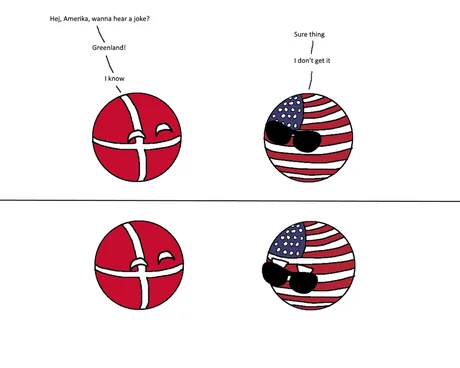
Who expected Russia to be a threat to Danish sovereignty over Greenland?
Who expected the U.S. to be a threat to Danish sovereignty over Greenland?

I remember a lot of articles and blog posts about the Arctic and how there could be conflicts over it in the near future. Those articles were written with a distinct perspective and more or less implied idea of who would be the threat. They seem to have been a bit off.

- - - - -

Worth mentioning when mentioning Greenland:


S O
.

2019/08/10

INF 2.0

.
It's official - the INF treaty is gone.
The question is what should we do now.

A launcher for SS-20 "Saber" (RSD-10 "Pioneer"),
the missile that scared the West into negotiating the original INF treaty

I've pointed out before that medium range ballistic missiles with conventional precision guided warheads are a terrible threat to high value targets (HVT) in Europe.

Ballistic and cruise missiles offer vastly more bang for the buck than strike fighters and their precision-guided munitions (PGMs) if you plan for but a week or two of air war. A combat aircraft approach (manned or not) causes huge costs for the platform, and it takes many sorties to compensate for this by using cheaper (than 500+ km missiles) PGMs. The break-even of costs between a strike fighter and surface-to-surface-missiles depends on many variables, of course. I wager it's not in the first two weeks if you take into account that strike fighters have operational expenses for on average 20+ years, which adds to their fixed cots in this comparison.
To make this more clear, here's a simplistic model to show the general idea:

An aircraft costs 150 million €. It needs a munition costing 100,000 € to deliver a 250 kg warhead precisely.
A medium range missile costs 750,000 €. It precisely delivers one 250 kg warhead each. Its launcher has a negligible price (simplistic model, but quite true if you look at the simple Sergeant missile launcher, for example).
The break even would be after 230 targets engaged with 250 kg precision-delivered warheads at about 173 million € total costs with either approach.

I have also made my case that the least unrealistic actual defence scenarios for NATO (or EU) in Europe might last no more than a few days or weeks because a threat of tactical nuclear weapons employment could (and would) prevent a counteroffensive politically.
____________

These are my three pillars for my assertion that conventional 500...3,500 km precision-guided missiles are a terrible security threat to Europe. A few hundred such missiles could deliver a terrible blow to our air forces, navies, headquarters and army HVTs (such as counter-battery or air defence radars and command vehicles). The cost of preparing such a terrible blow could be a billion € or less.

There was no such precision strike technology available to the Soviet Union, so most people don't appear to have understood its ramifications yet (since the Americans mostly used such missiles for bullying Third World countries, not so much for unexpected Six Days War-ish first hour strikes). The mass media stupidly writes and talks about nuclear-tipped medium-range missiles, as if Russia couldn't hit us with longer-ranged nuclear-tipped missiles at will if it meant to. The news media totally misses the real problem. INF was a nice cost-savings deal for the very late Cold War, but afterwards it turned into a requirement for the viability of Western European air power.
____________

I see two general options in response to the end of INF:
  1. Accept that our deterrence and defence must not critically rest on high value targets that could be targeted by PGMs and restructure our deterrence and defence accordingly.
  2. Quickly replace INF with something that keeps Western European air power viable.
#1 will be almost impossible. There's too much path dependency, too much inertia, too little chance to convince people of the extreme threat of conventional PGMs to our HVTs. Armed bureaucracies such as air forces will no doubt fight to preserve what they love; especially the gold-plated combat aircraft.

#2 is thus the only hope of avoiding horrible levels of waste that go even beyond the ordinary military bureaucracy wastefulness.

Sadly, the United States' foreign policy is controlled by a lying moron who may be a Russian asset, so they are of zero use to Europe (as in so many other cases these days). Even the "Transatlantiker" crowd (zealots with an ideology of emphasis on European-U.S. cooperation) have given up on the concept of cooperation with the administration of crooks, grifters and incompetents. That change was overdue, for it's been obvious for two years that it's pointless to negotiate with someone who lies and wants to cheat you, and who considers the signing of a treaty as but the end of round one of cheating and bullying.

The good news is that nobody needs the United States to create a useful INF 2.0.

I'll lay out a draft of how INF 2.0 could work, taking into account that the Russians need to be motivated to sign, ratify, implement and sustain it.
____________

INF 2.0 should feature these rules
  • treaty members; EU countries, European NATO, Russia, Belarus
  • missiles of 500...3,500 km range would be banned in Europe, Turkey and south of the Caucasus*
  • no treaty member bases or transports 500...3,500 km missiles on ships or submarines (excluding a defined list of sea-based legacy missiles and legacy naval aviation missiles)
  • Russia must not have any 100...500 km missiles in Kaliningrad Oblast
  • Russia would be allowed to have a moderate quantity (to be agreed-on, should be no more than 300) of 500...2,000 km cruise missiles in Asia**
  • Russia's Asian 500...2,000 km cruise missiles must not be loaded into or onto any aircraft
  • air-launched 500...3,500 km legacy  missiles can be retained, and replaced on a 1:1 basis (single warhead each and no replacement of cruise missiles by ballistic missiles)
  • no conversion of ICBM or SLBM for conventional warheads by any treaty member, nor any preparations for such a conversion
  • treaty members must not increase their quantity of ICBMs or SLBMs
  • European signatories do not permit U.S. or Canadian missiles to be based in Europe or Turkey
  • European signatories do not permit U.S. or Canadian ships with 500...3,500 km missiles to enter their territorial seas (exception for passing the Straits).
  • European signatories do not participate in or help fund the development or procurement of operation of missiles that they couldn't operate under this INF 2.0 treaty.
  • Russian 500...2,000 km cruise missiles would be accompanied by a European observer mission, which gives Europeans an early warning if these missiles are moved into range (denying the strategic surprise attack option); this means a right to unlimited access to every missile for inspection including x-ray inspection up to a specified total x-ray dosage per missile
  • General inspection regime to certify compliance, run by the United Nations with bloc-free country personnel only
  • This general inspection regime includes that missile tests need to be announced and observed, and the inspectors get the opportunity to see if the range limitations are observed
  • Range of missiles defined as range when carrying a 50 kg payload (warhead + guidance, could be calculated based on test results with a heavier payload)***
  • Treaty members may leave the treaty 12 months after announcing the move to the other treaty members
  • We could sweeten the deal with some long term contracts for Russian commodity exports and a European aviation project using a Russian gas turbine design.****

(Russia would likely not agree to a total MRBM/IRBM ban because the Chinese wouldn't, and the Chinese wouldn't agree to it becuase they need such missiles as one of the ways to keep American carrier battlegroups at a safe distance in wartime. Hence the complicated Asia exception which necessitates extra tracking by inspectors.)

We need to push our intelligence services***** to learn about Russian 500+ km inventories and missile production. It's the #2 priority behind early warning of an attack.

INF 2.0 should be in force before 2025. The heads of government of Germany, France, Italy and Spain need to step up and publicly, urgently warn the public about the problem once we know that we won't get INF 2.0 before 2025. We'd then (at the latest) need to move much funding from air forces and navies to armies AND deploy at least half of our combat and combat support aircraft to a permanent training mission in Canada where a surprise attack would be much more difficult to pull off.

My guess is that European politicians are so unimaginative and used to muddling through without any actual strategy that they couldn't pull this (or anything smarter) off. The ability to develop and enact strategy has atrophied in the West. We'd need a von Bismarck-calibre politician to change this quickly.

previously:

S O

*: 3,500 km suffices to hit all of Europe from Russian soil east of Kaliningrad Oblast
**: 2,000 km is the approx. distance between Asia (Ural mountains) and European NATO
***: This is so low because relatively light Small Diameter Bombs proved to be able to penetrate hardened aircraft shelters. This means a 50 kg warhead would almost certainly  be able to do the same if mounted on a very fast impact 3,500 km quasiballistic missile.
****: Raw materials commodities and gas turbines are almost all that works well in the Russian economy. The commodity deal would be economically and fiscally important to Russia and the gas turbine deal would be a substantial prestige boost, at least if we sign a NDA that keeps us from bitching about the product quality afterwards.
****: The spying ones, not the counter-intel ones, of course.


P.S.: Not every single EU country would need to agree. INF was only a bilateral treaty and worked even though the Soviets  knew that legally the Europeans could cheat the spirit of the treaty by getting MRBMs. INF 2.0 could work just as well as long as the Russians trust that the European non-signatory powers would not cheat its spirit, either. Germany, Poland, Baltic countries, France, UK, Turkey, Italy and Spain would probably be required members.
.

2019/03/23

Nuclear deterrence for Europe (Part III - A dirty solution)

.
previously:

A solution to NATO's nuclear deterrence credibility problem would ideally combine the following features:
  1. Keep NNPT intact
  2. No (additional) crazy person or moron with full control over a nuclear 'trigger'
  3. maintenance of second strike capability in face of extreme nuclear onslaught
  4. high, credible risk that employment of 'strategic' nuclear weapons against a NATO (or EU) country leads to a 'proportional' tit-for-tat second strike
  5. high, credible risk that employment of 'strategic' nuclear weapons against NATO (or EU) military targets on in NATO (or EU) territory leads to a 'proportional' tit-for-tat second strike
  6. moderate (additional) expenses
  7. not deemed to be of aggressive nature (no threat to the Russian second strike capability, for example)
  8. no excessive firepower for 'tactical' second strike (ability to employ a single warhead of at most 150 kt TNTeq)
  9. not destabilising international relations
- - - - -

It's difficult to combine these, especially with the basic problem that a nuclear power cannot credibly proclaim to risk its capital metropolis only because of some nuclear attack on a country with less population than said metropolis. This and the preservation of the NNPT are most difficult to reconcile.
 
I may have a way how to cheat out of this dilemma:
Protect the NNPT in its wording, but effectively (and credibly) risk that in times of war, it does not limit us for more than a few hours.

I will describe how it might be done, but first I'd like to state my distaste for the whole affair. I hope mankind will get past nuclear munitions altogether in my lifetime, and without ever using any more of them.

The scenario: We (European NATO/EU) develop and deploy a nuclear triad in addition to the traditional great powers' SSBN/SLBM arsenals:
  • few road-mobile IRBMs with a single approx. one Mt TNTeq warhead without re-entry vehicle each
  • road-mobile IRBMs (same type, but with with decoys and other countermeasures against BMD) with a single approx. 100 kt TNTeq warhead each
  • short range quasiballistic (manoeuvring) missiles in semi-trailers with a  single approx. 100 kt TNteq warhead each
The one Megaton IRBMs would be an EMP threat. Five* such explosions 400...500 km above Western Russia would damage much of the electrical equipment there. This is the EMP tit-for-tat deterrent.
The other IRBMs would be the city-destroying tit-for-tat deterrent.
The short range missiles would be the 'tactical' nuclear attack tit-for-tat deterrent.
I suppose no deterrent against nuclear attacks at sea is necessary. That stupid tsunami/Tsar bomba torpedo would be covered by the city-destroying tit-for-tat deterrent, and nuclear attacks on warships are something where we should 'offer the other cheek'.
This was the mere hardware side of deterrence.

- - - - -

The credible deterrence effect would stem from the dispersion of these nuclear forces (especially the 2nd and 3rd category): They would be scattered all over European NATO/EU (or rather all agreeing countries).
The nuclear power that provides these assets would be in control and not share control (thus no violation of the NNPT), but if Russia (hypothetically) wiped out Warsaw, the Polish government could get mad, order the evacuation of all other Polish cities, seize what nuclear arsenal is on Polish roads and then send an IRBM or two to St. Petersburg for revenge.
Likewise with 'tactical' nuclear attacks on land targets.
I suppose France itself would initiate the EMP tit-for-tat if Western Europe was hit in such a way first, so the few one Megaton warheads would not need to be dispersed in Europe.

The public might not even be fully aware of such potential sharing of nuclear second strike launch capability, but any realistic potential nuclear aggressor would be. That would be ensured behind the scenes.

So the technical (and organisational) side would need to include on one hand the ability of attacked countries to seize and use the nuclear munitions, and on the other hand no host country should be able to turn itself into a permanent nuclear power by simply seizing the nuclear munitions.** I suppose the warheads should become unusable if they hadn't received some 'keep alive' code for more than a month or were opened without first receiving a correct 'opening' code. The seizing country could still recycle the plutonium and some components, but it would take months or years to create a practical nuclear warhead with this without prior detailed knowledge of the warhead design's details.
Obviously, no criminal or errorist elements must be allowed to seize and use such nuclear munitions either, which can be ensured by spacing the launcher vehicles and the command & control vehicles (which would have to be essential for the employment).***

The necessary quantity of nuclear warheads would still be relatively small (maybe 100...200 for all of European NATO/EU). The costs for the warheads would have to be borne by France, but I suppose NATO could find an AWACS-like joint financing scheme for the missiles and the related hardware (launcher and control vehicles).

Now let's look at the criteria again:
  1. Keep NNPT intact formally yes, but complaints are to be expected
  2. No (additional) crazy person or moron with full control of a nuclear 'trigger' OK
  3. maintenance of second strike capability in face of extreme nuclear onslaught challenging, but possible
  4. high, credible risk that employment of 'strategic' nuclear weapons against a NATO (or EU) country leads to a 'proportional' tit-for-tat second strike OK
  5. high, credible risk that employment of 'strategic' nuclear weapons against NATO (or EU) military targets on in NATO (or EU) territory leads to a 'proportional' tit-for-tat second strike OK
  6. moderate (additional) expenses The cost could very well be dozens of billions of Euros.
  7. not deemed to be of aggressive nature (no threat to the Russian second strike capability, for example) OK
  8. no excessive firepower for 'tactical' second strike (ability to employ a single warhead of at most 150 kt TNTeq) OK
  9. not destabilising Maybe it is destabilising. Pakistan might get an idea about its "Muslim nuclear weapons". People might find the security against for example the Hungarian government seizing nuclear warheads (and thus possibly necessitating an invasion by allies to retake those) unsatisfactory. Another issue is the transition period (easily a decade) during which the first strike risk may actually be slightly elevated.
A return to an INF-like ban on MRBMs and IRBMs would be almost impossible once such a deterrence scheme was employed, but on the other hand it could serve as bargaining chip for a INF renewal if the great powers' nuclear deterrence was judged to be sufficiently credible again in the meantime.

I'm not really satisfied. It feels like a step backwards, especially if it's not accompanied by a reduction of SLBM warheads (though that's exactly where some of the warheads could come from almost for free!). I wish we could just get along without the damn nukes.

S O

P.S.: The IRBM could be based on the French S-3 IRBM, though I'm not sure how well that design would handle being stored and moved on road while in a horizontal position.

Regarding Russia being used as a kind-of-bogeyman; remember that I'm generally in favour of stagnant or reduced military spending in Europe given the small and unlikely threats. There  is some remnant of justification for military spending, though - and for Europeans that's de facto only Russia. So what little resources we should spend on military affairs in Europe should be spent first and foremost with deterrence and if need be defence against Russia. More specifically, the least unlikely scenario of hot conflict appears to be an aggression against NATO's and EU's Baltic members. This blog post should not be mistaken for a conflict-promoting, or hawkish one.

*: Multiple warhead explosions for multiple EMPs because direction to the EMP source matters.
**: The current  nuclear participation regime does actually not provide such a protection, but it deploys American nuclear warheads in much fewer countries.
***: I suppose this would be no more a violation of the NNPT than was to store nuclear warheads that required no codes at all in foreign host countries during the 70's. The whole scheme is a violation of the NNPT in spirit, of course.
.

2019/03/16

Nuclear deterrence for Europe (Part II - No easy solutions)

.
Part I described why nuclear deterrence may have poor credibility, notwithstanding the immense destructive potential that the three NATO nuclear powers have at hand. There's little reason why Estonians should trust any of the nuclear power to use nuclear strikes in defence of Estonia, for example.* To do so would risk the existence of New York, London or Paris.

  
A simple response could be a call for more nuclear powers in Europe. Nukes for Germany! Nukes for Spain! Nukes for Italy! Nukes for Poland!
That wouldn't solve the basic problem, though. Nobody would want to risk Berlin, Madrid, Rome or Warsaw over some NATO-peripheral attack either. The whole approach would risk the global nuclear non-proliferation treaty (NNPT) that so far appears to have been very useful at avoiding nuclear warfare. We wouldn't want to see some Saudi nukes, Indonesian nukes, Nigerian nukes, Brazilian nukes, Mexican nukes, Argentinian nukes, Chilean nukes, Iranian nukes, Japanese nukes, South Korean nukes, Taiwanese nukes, Algerian nukes or Turkish nukes, right?

Shared control of existing nuclear arms stocks also violates the NNPT (article 2). 

Another approach would be to build and keep ready and in range a conventional military that could successfully defend even against nuclear-armed invaders. This isn't impossible, but it would put greater demands for stealth, agility and dispersion on this force than on the invaders. This puts the defenders at a disadvantage at least according to 20th century military theory. This disadvantage could be overcome by greater allocation of resources, which is an undesirable condition. Nuclear-survivable conventional forces may be an answer to a tactical nuclear strikes-supported conventional aggressor, but not to a 'strategic' nuclear threat. The threat of 'strategic' nuclear attacks (on cities) could stall the employment of such conventional forces on the political level.

Another relatively simple solution is to bolster credibility again by putting an unstable person in control of one of NATO's nuclear arsenals. This person must not be a Russian asset or otherwise easily corruptible, though. This is another rather unsatisfactory approach for obvious reasons.

We could - what a weird idea(!) - also strive to reduce if not eliminate lingering conflicts and possible motivations for aggression. In all honesty, NATO doesn't appear to be capable of a much more serious attempt to do so than was already tried, and Russia doesn't seem to move towards such conflict relaxation, either. There's currently very little reason to believe in the imminence of a Russian invasion of the Baltics or other NATO territory, and it appears to be very hard to consistently further reduce the risk by addressing existing conflicts of interests or opinion.

To distract a nuclear threat by provoking a hostility or rivalry between the threat and some distant power (say, Russia vs. PRC) is difficult to pull off and unethical anyway.

Likewise, a return to the craze of the Cold War appears to be counterproductive. The own deterrence could become more credible because of the craze, but the very same craze could also trigger a war. Moreover, the associated arms racing would be extremely expensive and wasteful.

A distributed capability of devastating non-nuclear second strike (devastating enough to lead to a collapse of governance, such as by EMP or 'cyber' attacks that shut down the electricity grid for months) is an interesting idea.
Its deterrence value depends on its credibility, though. Any novel idea faces difficulty in getting respect, and reliably so.
For example, imagine every country in NATO and EU had a 'kill switch' for the entire Russian electrical grid, with a capability to outright destroy so much of it by overloading that repairs for restoring power to Moscow would take a year. That 'kill switch' would still be worthless as a deterrent if this capability was not believed to exist by the Russian president.


There don't appear to be any obvious, easy, elegant or otherwise really satisfactory solutions to the identified problem.

S O

*: Estonians, stop producing fodder for Russian propaganda with your anti-Russian rhetoric and politics already! 17.9% for a party that's hostile to Russia and Russians (especially the Russian minority) as well as claiming territory from Russia - that's asking for utterly unnecessary trouble.
.

2019/03/09

Nuclear deterrence for Europe (Part I - The problem)

.
There are three nuclear powers in NATO; United States, United Kingdom and United France.

The traditional Cold War view was that NATO's main nuclear deterrent to the Soviet nuclear might was the American arsenal which was capable of ending human civilisation several times over.
The British nukes were considered more of a national asset that extended British great power status claims to the post-Empire era and the French nukes were clearly meant as a national asset, France abstains to this day from NATO's (quite meaningless) nuclear planning group (it also extended their claim to great power status past their colonial empire disintegration, despite a weak army).
There were isolated statements about British and French nuclear power protecting all of (European) NATO, but this didn't change the perception or sentiment much.

Fast forward to 2019:

Now we've got an American president who may or may not be a Russian asset and certainly wouldn't consider risking nuclear attacks on his country by doing strategic nuclear strikes on Russia. Cabinet and Congress would take a while to depose him, and even if they did, they would certainly not destroy Russian cities in a retaliatory strike as a matter of principle if so far no American city was nuked. Such retaliatory strikes become less likely the more time people have to think (in my opinion).

Their Ballistic Missile Defence may protect them against small-scale tit-for-tat nuclear exchanges; Russia might not be able to respond to a single of its cities getting annihilated by doing the same to an American city, for a launch of a single or very few missiles might be defended against by BMD (and their stupid nuclear torpedo would be very slow to arrive). A nuclear exchange might step straight from battlefield nukes to total urban centres annihilation, even without the ingredient of Cold War craziness.
So in the end, the American nuclear umbrella over Europe isn't credible until 2021 at the very least. The American nuclear arsenal appears to join much of what other military power they have in the bin of what's outright useless and irrelevant for European deterrence and defence.

- - - - -

The British are in a bit of political disarray and a moment of extraordinarily weak political leadership. Brexit signals their intent to decouple from Europe and pretend that they're something of a mid-Atlantic island instead of an island almost in line of sight to the continent of Europe. The whole decoupling policy puts giant question marks behind their credibility as an alliance-wide nuclear deterrent.
Their only nuclear 2nd strike capability rests in Trident missiles in nuclear-powered submarines, of which typically one is hiding at sea while often all but one are in port. These nuclear warheads are a terrible choice for intervention on a battlefield. The submarine would give away its position with the launch (not necessarily a problem) and there are multiple warheads per missile.
A single such submarine might be able to kill about 20% of the Russian population in an hour (if the Russian cities weren't evacuated in time).* This doesn't change that it's unlikely that they would risk getting London and Birmingham nuked out of existence only because this happened to Berlin or Warsaw.

French Rafale with ASMP-A (big white missile on centreline pylon)
copyright Ministère des Armées

The French are traditionally national-egoistical, and many of their foreign policy attitudes and ideas are poorly aligned with the attitudes and ideas in the rest of Europe. Germany famously attempts to find common ground with France first in order to get the EU moving on major issues. The French never clearly stated or established as national ethos that their nukes are a deterrent that protects all of European NATO or all of the EU.
Their nuclear force consists of a rough equivalent of the British force (up to 64 submarine-launched ballistic missiles) plus 54 supersonic air-launched cruise missiles* (ASMP-A with each a single warhead capable of destroying a city or about one normally dispersed mechanised brigade in the field). The latter can as far as I know be employed by their small and not always available carrier aviation force, too.
Yet again, it's unlikely they would risk getting Paris and Marseilles nuked out of existence after the same happened to Warsaw or Berlin.

The end of the Cold War craziness took quite a bite out of the credibility of NATO's nuclear deterrence.

Part II follows next Saturday unless something outrageous happens.

S O

P.S.: I know that I wrote more optimistically about the European nuclear deterrence in the past. It's a change of mind. 

*: All three nuclear powers (and also Russia) appear to have substantial stockpiles of nuclear warheads that are not deployed and thus not readily usable. Some of those warheads are temporarily disassembled for refurbishment. I neglect these reserve stockpiles for the purpose of this article. Their relevance as munitions for nuclear strike is very questionable because they could fairly easily be taken out by a first strike.
.