Showing posts with label Military and Economy. Show all posts

2026/01/29

The impending crash

.
I leaned a bit out of the window and anticipated doom on Twitter:

https://x.com/DefenceFreedom/status/2016438597230961078

The U.S.' public debt amounts to about 38 trillion dollars. About 9 T $ need to be refinanced in 2026 and about 2 T $ new debt needs to be financed in 2026.

The monetary and foreign policies of the lying moron discourage foreigners from buying dollars or lend money. So who is going to finance the U.S.' excesses? The U.S. treasury ("printing" money) is the prime candidate.

2027 will be worse. Less debt to refinance, but the refinancing of 2026 will only be possible at much higher interest rates (and probably inflation-indexing), so the debt service will be crushing. The deficit may be around 3 T $ in 2027.

Yes, I know about fiscal years not being the same as calendar years, but I am writing about the financing of the budget during the calendar year here.

Back to the money "printing": Money creation to fund a substantial share of a country's government leads to high inflation, possibly hyperinflation. The degre of economic literacy at the top of the U.S. government already led to attacks on the central bank's independence.

A demand for low interest rates by the central bank is an almost obvious policy to come, so there's no way the central bank can credibly fight inflation.

Keep in mind trillions of $ are likely to flow back to the U.S., as their holders fear loss of value. 

Trade cannot cope with this. The dollar will become extremely weak. So extremely weak that inflation of imported goods will provoke exchange rate interventions, burning foreign exchange reserves for no gain.

A weak dollar may be good for exporting U.S. businesses, BUT the U.S. lacks the economy and skilled labour force to quickly expand its industry within two or three years to exploit an export-friendly exchange rate quickly.

Something else will be very quick, even near-instant: Importing will be very expensive with a weak dollar. This may wreck industries that have globalised supply chains.

The U.S. was on a bad path trade-wise for about 25 years already. Now there's a cabal of idiots in charge that don't understand that keeping what you have is demanding at that level, throw away what they have and thus become the trigger of collapse.

Unsustainable waste such as the insanely big military budget gets grown instead of cut back. Foreign lenders lose motivation to fund the U.S. lifestyle of living off credit. The USD loses its dominant reserve currency status.

The chicken comes home to roost. They make America small again.

On the other side of the Atlantic, Poland-Lithuania won't take over the once-dominant role of the U.S.. China will do & in ~20 years India will challenge China. Most people in Poland-Lithuania will enjoy a nice life in wealth & security - if the climate allows for it.

True prosperity comes form work and avoiding waste, not from living off cedit. Superpower or even only Great Power status is not needed for prosperity, as evidenced by countries such as Luxembourg, Brunei, Singapore.

Americans may have a fine life once they reach an approximately sustainable path, including taxing the rich for real again. Their next 5-8 years won't be nice, though. 

I disinvested from a MSCI World ETF two days ago. It was always the plan to not try to beat the market, but I wanted to get rid of the extreme exposure to the USD and the U.S. and am moving to a MSCI World ex US ETF.


The U.S. trade balance deficit, federal budget deficit and military spending were on about one level for a while, hinting that the U.S. actually cannot sustain its consumption (which includes the government consumption of military power expenditures) without perpetual willingness of the rest of the world to give lend money. The lying moron's policies are now the trigger to end this willingness - and it was always ridiculous to assume it would be perpetual anyway.

The upside? The PRC is most unlikely to make a violent move to get Taiwan in the next three years. It can instead wait for the Americans to collapse fiscally and economically. Purges in the armed forces to ensure loyalty to the Fascist regime as well as the stupidity at cabinet level will reduce military capability beyond any budget crunch that's going to happen when the economic base falters.

S O

defence_and_freedom@gmx.de

.

2025/06/05

Rackets

.
So according to the news, the German minister of defence comes with news from NATO; according to NATO directives or whatever Germany is supposed to add formations to its armed forces.

Meanwhile, some American dipshit in office blathered something about seeing NATO countries moving towards 5% GDP military spending.


This truly is the idiocracy timeline !


The German constitutions says 

Article 87a
[Armed Forces]

(1) The Federation shall establish Armed Forces for purposes of defence. Their numerical strength and general organisational structure must be shown in the budget.

Translated to commoner language, this means it's the legislative branch that defines the general organisational structure in Germany, NOT the minister of defence. I understand it's done differently in practice, but the German minister of defence has jack shit authority to define the general organisational structure of the German armed forces (except in his capacity of also being a member of parliament and having one of hundreds of votes in there).

That's exactly as much (=jack shit) authority as NATO does have in the matter.

This is a well-established racket. It's something similar to the appeal to authority fallacy.  


Regarding the 5%: Dipshit's own country won't spend that, there's no reason to bother paying attention to the word salat puke of the lying moron. There's no 5% GDP military spending agreement, no 5% GDP military spending obligation - there's none for 2% GDP, either.

Our #1 defence policy issue is the efficiency of spending followed by keeping China out of Europe. The military spending budgets are plentiful, regardless of the fact that claiming the opposite is fashionable.


related:

/2017/02/stephen-m-walt-on-2-debate.html

/2018/04/patterns-of-propaganda-for-higher.html


S O

defence_and_freedom@gmx.de

.

2025/04/24

The U.S. as we knew it for the past ~45 years may be collapsing, lying moron or no lying moron

.

Budget deficits are no problem for a state as long as the trend GDP growth (and thus trend revenue growth) is stronger than the growth of public debt. Suppose there's a country with a GDP of 1,000 and a debt of 1,000. This country may have an annual budget deficit of 50 (5 %GDP). This is really bad with economic stagnation, but with a (hypothetical) growth trend of 5%GDP p.a. (50 per year) the deficit would actually be sustainable unless interest rates rise and grow the deficit.*

Let's look at the development of public debt in the U.S.:


A budget deficit projection of around 5 %GDP p.a. seems optimistic to me (there's good reason to expect bigger deficits), more about this later.

Now what does the GDP growth trend in the U.S. look like?


That looks strongly as if something close to 3% p.a. GDP growth is a reasonable expectation.


Let's pay attention to why the deficit developed as it did. 

  1. The long term trend was that Republicans in control of both Congress and White House did cut taxes (thus revenue, fairytales about tax cuts being budget neutral don't fly in continental Europe) and increased spending (especially military spending). The Republicans basically have two policies for economic growth; they claim that their tax cuts bring growth (not for real!), but what really brings growth is the sugar high of deficit spending.
  2. Republicans do on the other hand try to starve the executive branch off funds whenever it's being controlled by a Democrat in the White House. Then they suddenly claim that they're extremely concerned about the lack of sustainability of deficits and social security and run scare campaigns to build up political support for budget cuts. They usually spare the military from cuts, though. These periods of Republicans controlling the purse and a Democrat controlling the spenders (the executive branch) show an improvement of the budget balance. The improvement even reached a surplus late in the Clinton administration, but the improvements (reduction of deficits in %GDP) are visible during the Obama and Biden administrations as well.
  3. Democrats in control of Congress and  Republicans in control of the White House tends to play out as Republican Presidents largely getting the budget size they want.
  4. Another mode is Democrats in control of both legislative and executive branches. This leads to deficits, but in normal times these are not as extreme ones as when Republicans are in full control.
  5. The fifth mode is disaster mode; 2008 Great Recession, 2020 Covid. This produces huge spikes of deficit spending, seemingly regardless of the party in power.

The Republicans are now in control and about to establish a dictatorship on a spectrum from one party dictatorship to overt Fascism. The remaining lifetime and effectiveness of the lying moron decides what it becomes. Their majorities in Congress are small, but they are a thing, and it's clear that they are by now "Republicans" in name only. Actions speak louder than words.

A true republic would likely continue the dysfunctional up and down of the past 45 years (hopefully without a 3rd giant disaster). To project about 5 %GDP budget deficits for the next ten years as in the 1st graphic makes sense under the assumption of a true republic.

A "Republicans"-controlled U.S. on the other hand would likely go all-in on the "Republican" orthodoxy of cutting taxes for the rich (fig leaves for the middle class) and undisciplined deficit spending, including growing military spending. To project a %GDP budget deficit development from 5 %GDP p.a. towards about 8 %GDP p.a. by 2030 seems most plausible for this scenario to me. An issue is that they may enter a war to distract from their domestic policy issues.

So the growth of the public debt till 2030 would likely be in the 27...35 %GDP range. It's at about 123 % GDP by now, so the path to 2030 would be around 150...158 %GDP.

Now let's look at economic growth. Economic growth can be explained by increased inputs (more hours worked, influx of foreign capital pushing investment, greater exploitation of natural resources) and technological progress. The Americans already work many hours per week with few vacation days and holidays per year, so there's little room for increase. Anti-immigration policies will reduce the hours worked (though an increase of pressure on unemployed people may partially compensate for this). The growth of working age population is projected to be very weak. Finally, the misogynistic leanings and traditionalism of the Republicans do not promise an increase of the percentage of females in jobs unless there#s workforce mobilisation for a war economy. 

The Biden administration was already quite eager to exploit natural resources (example crude oil) contrary to some perceptions, so there's little potential for improvement in the next couple years (and IMO also in the 30's).

Finally, technological progress. The rate of it has been shrinking since the 70's. You may look up articles on whether technological progress is slowing yourself, I didn't find a really great one. The phenomenon has been known for a while, and it's not an American one - technological progress has slowed in all rich Western countries. It's the same story in Germany, UK and so on - sometimes even worse because the U.S. recovered particularly well from the Great Recession due to huge deficit spending fiscal stimulus efforts early in the Obama administration.

Long story short; there's no reason to expect a trend growth better than what we've seen in the 2nd graphic. about 3% p.a. GDP growth is a reasonable expectation. Politicians promise much, but they never deliver a clear growth trend improvement in an already well-developed economy. 

So there's likely going to be 5...8 %GDP annual deficits and 2...4 % GDP growth p.a. on average. The former because of policy and the latter because of fundamentals that politicians can do little about (unless they deport too many people, as then both deficits and growth would become worse).

Where is the breaking point? I wrote about 150...158 %GDP public debt by 2030. Japan has about 250 %GDP, Singapore about 170 %GDP, Italy about 135 %GDP public debt. There's apparently no accurate breaking point. The U.S. might keep going forward on its unsustainable path (the trade balance is terrible as well) for quite some time. On the other hand, it might collapse anytime as well. To alienate Europeans, Australians, Canadians, Japanese, South Koreans and Taiwanese may create a tipping point in one way or another, for example when confidence in the USD as reserve currency takes a big hit. The cardhouse may collapse if and when the USD loses much of its reserve currency status. There's no reason why all those alienated countries should do the U.S. the favour of keeping the USD as reserve currency. No reserve currency status for the USD means the U.S. could not sustain its trade balance deficits. This means its consumption AND capital investment would collapse. An overtly Fascist U.S. may find it difficult to buy certain capital investmnet goods such as TSMC machines anyway, and right now it's already restricted in terms of rare earths imports. The lying moron's disrespect for Federal Reserve Bank's independent operation as shown in 2017-2020 might create such a tipping point as well. A Sino-American War is a real possibility as well.

The truly scary thing about this is not the possibility of a tipping point or the acceleration of the downhill race. The truly scary thing is the seeming inevitability. The fundamentals cannot really change for the better by much and the political system doesn't appear to be able to improve, either. So the fiscal policy won't improve fundamentally. A long-term dictatorship deserves a projection of a worsening fiscal policy until some kind of disastrous crash occurs that forces a change of a fiscal policy pattern that held for 45 years.

I understand that Americans have been told a plethora of fairy tales and scaremongering stories about this topic. An American who is not an economist would be well-served to ignore those and simply think of the economic growth trend as weakening and being near-impossible to improve, while the budget deficit is essentially about overspending on the military and undertaxing the rich (including the foreign rich; 40% of American stocks are owned by foreigners, so tax cuts on American corporations are in large part tax cuts for rich foreigners). The public debt is not really about escalating healthcare costs (which is stagnating at about 17.x %GDP since the "Affordable Care Act" a.k.a. "Obamacare" went into force) and social security isn't a big driver, either. Example: Social Security had 1.22 T $ revenue and 1.24 T $ expenditures in 2022 - its deficit was tiny in comparison to the federal budget deficit around that time (1.4 T $ in FY 2022).

By the way; the Euro area is not that unsustainable. The public debt stands at about 90% for that area as a whole. The only large Euro area country that's worsening its public debt situation is France. The overall %GDP debt increase in the Euro area was much smaller than the American one and the %GDP public debt level is below 90 %GDP instead of above 120 %GDP. The Euro area has no chronic trade balance deficit, though that may change once the EUR gains use as reserve currency. Last but not least; increases of military spending are unlikely to change this terribly much, as they would act as fiscal stimulus (few Euro zone countries are at economic capacity limit). It's still wasteful to overspend on the military, but increases big enough to propel an European-style about 0.5 %GDP aggregate budgets deficit to an American-style 5 %GDP p.a. budget deficit are plain unrealistic short of WW3.


S O

defence_and_freedom@gmx.de


P.S.: This was originally written 21 Feb 25, but not published right away and slightly edited before publication (addition of the reserve currency issue for tipping points mostly).

*: p.a. = per annum = in a year

.

2024/12/01

To understand things sometimes requires appropriate training

.


So he doesn't understand why, and I suppose that's because his training never equipped him to understand something like this even with benefit of hindsight. 

It's an issue in which figures and calculations are very important, and in abstract ways that are simply not taught in preparation of most professions.


So being a merchant mariner by heart and profession, he thinks the Suez Canal is super important. A "most important lifeline", even. That's quite some prose.

An economist isn't satisfied with such prose. An economist asks "How important?", and expects figures with currency symbols as answer. "How many $ would the average American lose by a closed Suez canal?" "What would be the reduction of U.S. GDP in short term, in long term in %?

And then an economist would be tempted to do at least a quick & dirty first order approximation calculation (or for the scientifically inclined, a full text search in a scientific paper database).


The result looked like this about a year ago:

/2023/12/the-suez-canal-issue.html

0.03% GDP or a meal at McDonald's was my answer THEN.

WITHOUT the advantage of nearly a year of hindsight.

(To be honest, I wasn't able to do a quick&dirty short term calculation and actually agreed that in short term the blockade would be "troublesome".)


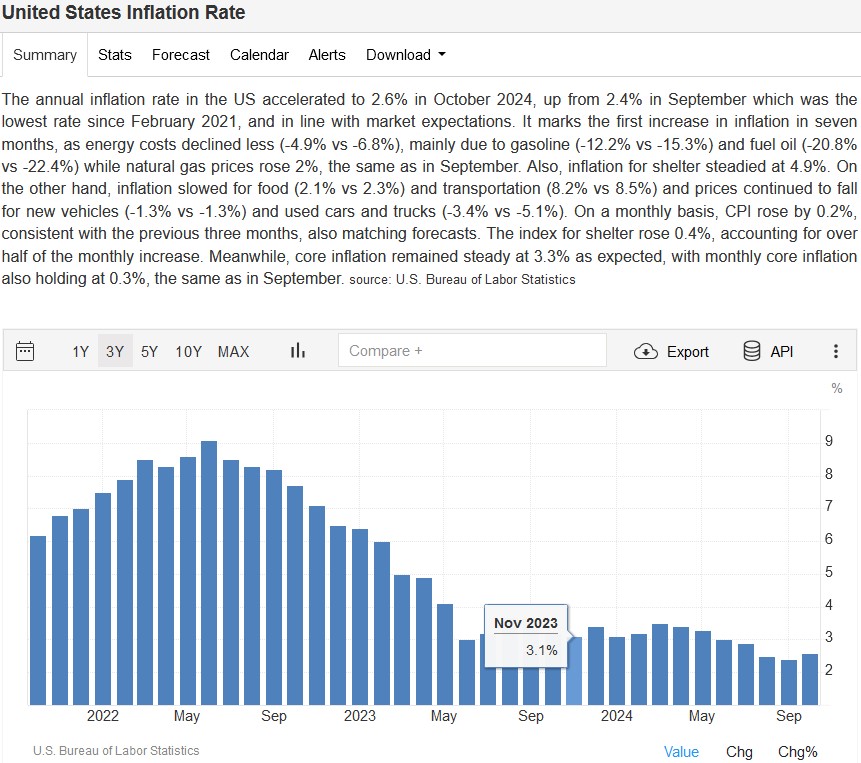
Even today, he does not appear to be inclined to check his assumptions about the Suez Canal's importance. Maybe you can help him and point out the de facto blockade's effect on inflation?

source https://tradingeconomics.com/united-states/inflation-cpi

(The current Red Sea Crisis began on 19 October 2023).


Long story short; those 99.9% of Americans who don't care according to him are correct to not care.

S O

defence_and_freedom@gmx.de

.

2024/07/08

Free Europe's security challenge if America turns full fascist (Part II)

.

The political consequences.

I wrote in 2016 that one shouldn't quit NATO ASAP when America turns fascist, despite the summer of 1914 experience with Austria-Hungary

We should quit eventually (there's a 12 month period between quitting and actually leaving the treaty, see article 13), though. The time should be used to build up deterrence & defence against the United States of America (that would be part III of the series).


The lessons learned about Putin's fifth columns in Hungary, Slovakia and kind of (more complicated) Poland point strongly at the EU not being fit for acting as a multinational defence organisation for Europe.

The European unification fanatics, EU politicians and EU bureaucrats would oppose it, but we would have to create a separate and functional European Defence initiative. It doesn't need to be a real alliance; the Lisbon Treaty can serve that purpose. We'd need a coordinating and meetings agency because we'd need to keep Americans, Canadians, Russia's 5th column, America's 5th column and unstable partners who might fall into such a category out of the core consultations and core preparations.

I mentioned the Lisbon Treaty. We really should raise awareness about it now that the "neutral" Swedes have shed their neutrality. Disregard Austrian sensitivities about them wanting to pretend to remain neutral! They signed the Lisbon Treaty as well. The public needs to understand that the Lisbon Treaty is at least as much an alliance as is the North Atlantic Treaty. Perception makes treaties powerful. Just look at Article I of the North Atlantic Treaty, which hardly anyone knows and thus almost nobody complaints about its violations. How many comments in newspapers or on television would point out our EU collective defence obligation if Vienna was hit by a Russian missile? They would probably manage to notice -with Wikipedia's help- that Austria is not NATO member, that's all.

We need to change that! A Turkish attack on a Greek island means the EU members go to war with Turkey. A Russian missile on Vienna means the EU members go to war with Russia. An American missile on Paris means the EU members go to war with America. This should be self-evident to the majority of adults in all middle-sized and large EU countries.

Finally, we need to stockpile strategic raw materials more and develop alternative routes of transportation with enough capacity for very high value but small volume and mass exports and imports. We could not make do with only services & air freight as objects of trade beyond Europe and its periphery. The stockpiling in particular would be difficult (and capital-intensive), but also useful in case of a Pacific War.


The problem with all this is that the current generation of politicians in the larger European countries is utterly worthless. They would rather misgovern so badly that their own country falls to extremists than to get their act together for European security in less than a generation.

Part III will be more about development, procurement and force design.

S O

defence_and_freedom@gmx.de

.

2024/05/29

An achilles heel of Chinese shipbuilding

.
I wrote before about how the world's shipbuilding industry appears to be concentrated in approximately even shares in PR China, South Korea and Japan, leaving little shipbuilding in Europe and almost none in North America:

/2023/07/shipbuilding-disparity-and-usn.html

The simplistic calls for American arms racing at sea are thus facing a terrible industrial base.


Now I'd like to add information that adds much to this, also reducing the alarm level:

The Chinese produce almost no marine diesel engines.

Ships are driven typically by one of two engine types; big marine diesel engines or gas turbines. Gas turbines are relevant almost exclusively to fast warships. It's possible to build warships with COGOG propulsion (combined gas and gas) using two cruise gas turbines and two sprint gas turbines, but gas turbines are less efficient for cruise than marine diesels.

I looked at the freely available information about the marine engine industry (not the expensive reports) and found that the main producers of marine diesel engines appear to be:

  • GE Transportation (US)
  • Caterpillar (US)
  • Cummins Inc. (US)
  • Rolls-Royce Power Systems (Germany)
  • MAN Energy Solutions (Germany)
  • Wärtsilä (Finland)
  • Mitsubishi Heavy Industries (MHI) Group (Japan)
  • Brunswick (US)
  • Volvo Penta (Sweden)
  • YANMAR (Japan)
  • Scania AB (Sweden)
  • Deere & Company (US)
  • Deutz AG (Germany)
  • Hyundai Heavy Industries Co., Ltd. (South Korea)
  • STX Engine (Hong Kong)

  • example list sourced from https://www.marketresearchfuture.com/reports/marine-engine-market-1988

    Some sources don't even mention STX Engine as a top company. STX Engine appears to have about 900 employees only and a turnover of almost 500 million $ (2023) in a global market of about 17 billion $.

    So the PR China's shipbuilding industry is a bit like Russia's arms industry; largely dependent on Western parts. This does not bode so well for Chinese arms racing any more, because welding together sheets of steel to form a hull is not as challenging as the production of those giant marine diesels.

    Then again, arms racing at sea could be done with China using STX Engine's (expanding) capacity and domestic gas turbines. They do produce some gas turbines domestically, but again, their capacity is not that great.

    And then I found crap like this that awfully reminded me of how intellectually unarmed and strategically illiterate German politicians are.

    edit: It was brought to my attention that foreign companies have joint-venture factories in PRC. So the real question may be whether the PRC could keep those running (short and medium term) if the Western companies become obliged to try to pull the plug.


    S O

    defence_and_freedom@gmx.de

    .

    2024/03/29

    Mobilisation Part IV: Industry

    .

    I studied warfare for a very long time, and it's self-evident to me how much of an industrial effort both world wars, the Korean War and the Vietnam War were. I looked at tables showing how many rifles, pistols, light field guns, light howitzers, heavy howitzers, lorries, cars, tanks of various types were produced in 1942, 1943, 1944 for the German armed forces. The weapons counted by the thousands, munitions counted by the millions. I know of the ammunition crisis 1915 in UK, France, Germany, Austria-Hungary, Russia - and how Russia suffered from being unable to produce enough artillery for the war effort during the First World War. I know how very much the hands of the Italian military were tied in 1940-1943 because of insufficient of access to natural resources (coal, iron ore, oil). I know about the insanely high cargo shipbuilding rates of 1942-1945. I know about the huge arms imports of Iraq during the 80's, including the purchase of many millions of old Warsaw Pact artillery shells and rockets.

    I look at the Russo-Ukrainian War and it's been utterly obvious since about May 2022 that it turned into a war in which industrial output could prove to be decisive.

    By comparison, the typical Western politician in power at the national level has a very different background. The legislative types think mostly in terms of budgets (money) and the executive branch types may -if they are low-ranking enough- think in terms of procurement processes. PEACETIME procurement processes. And then there are the (expletives) in the EU politics who come up with nonsense like buying only European (something that the Czech president exposed by telling the public that he could get 800k shells from abroad right away).

    These types don't think in terms of mobilising the economy for war as it happened during the world wars. Their idea of buying artillery shells is to create a budget, run a tender, give a contract to an established armsmaker which then promises to deliver the required quantity within the next four years or so.

    World War-ish mobilisation of industry for war looks different. Factories were repurposed*, priority purchases of different machinery were executed, previously not employed people (women) were hired, trained and became proficient workers.

    The Russo-Ukrainian War entered its current phase 25 months ago. Germany could have launched a munitions production program by May 2022 that would have reached a production level of monthly a million 105, 120, 122, 125, 152 and 155 mm high explosive ammunitions plus propellants and packaging by summer of 2023. This is not disputable. The technology involved is fairly simple, Chinese lint export stop, months of curing time for certain energetic materials - nothing could have held us back more than one year from reaching such a high output.

    We could have flooded Ukraine so much with artillery and tank gun munitions that we would have been forced to shift production towards rockets and mortar munitions away from howitzer munitions, as howitzer barrel and howitzer barrel liner production might actually not have been expanded quick enough to match such a munitions program.


    The problem here is not just a Ukrainian problem; our politicians and bureaucrats would almost certainly have failed if we needed the munitions for our own defence.

    We should be better prepared. It's near-impossible to ensure that every new legislator, cabinet member or their aides get educated in the realities of industrial warfare.

    It might be possible to exploit the current near-awareness of the legislators to create a mobilisation law, though. A mobilisation law that reduces the challenge to a mere executive or legislative decision, similar to how we already cast certain emergency procedures for the event of Warsaw Pact attack into law long ago.

    We could have a law that can easily be activated by a cabinet decision (with obligatory legislative review and possible cancellation). This law could prioritise the production of goods and services for the military (and civil defence and repair of catastrophic damage to infrastructure) along the value added chain. A factory might be ordered (not asked) to produce munitions, it would issue an order for new machinery and the producer of the machinery would be forced to prioritise this order, a force majeure on all its other contracts that thus get delayed. These factories could also get priority access to labour (how to get that done would be much more tricky due to liberties). The normal paperwork needed to expend a factory would be waived entirely, save for precautions for hazards (particularly with energetic materials). Everything would be built right away, paperwork would be done after the fact if at all.

    We could have adapted such a law for the rapid production of FFP3 masks, air sanitizers and vaccines during the Covid crisis, so such a law on the books could have value well beyond the military realm.


    Most of all, such a law would be CHEAP. It would cost almost nothing. It would make our deterrence against Russia and China much more credible, though. They would understand that we would be able to quickly harness our industrial power and proficiency for a war effort, that we could repair damage quickly.


    S O
    defence_and_freedom@gmx.de


    *: All-new factories were also built, but they usually take longer to run up to high output than already existing factories. It's better to repurpose and expand a factory with existing backoffice than to build an all-new one.

    .

    2023/12/24

    The Suez Canal issue

    .

    The naval-minded people love to pretend that maritime trade is a bigger thing than it is. They usually use the metric of % world trade in tonnage, while the rest of the world thinks of trade in terms of value (which shows the importance of services and air freight).

    Now there's some piracy (considering the Houthi forces as non-state actors) against Red Sea traffic.

    Personally I don't mind the impoverished Yemen having some couple thousand brand-new cars, but such piracy does make ship operators shy away from that route.

    I don't advocate that navies from faraway places should police the sea there, but every country is free to waste its money on that, of course. The most obvious navy responsible for the Red Sea is the Egyptian Navy, which nominally has 20 frigates and corvettes in service and the Red Sea is their backyard. The second most-obvious navy is the Saudi one.

    Egypt should be especially motivated to secure the Red Sea because an impeded Red Sea maritime traffic means reduced Suez Canal transit fees (FY 2022/3: USD 8.8 bn) for Egypt.

    But there's the pretence that European wealth depends on the Suez Canal. Just how important is it really to us?

    The short term damage by a partially or entirely blocked Suez Canal is difficult to estimate, but estimation becomes much easier when you ignore transitory effects, as we should in regard to strategymaking and grand strategy.

    8.8 bn $ (about 8 bn €) - why don't the Egyptians levy greater transit fees?*

    Presume the Suez Canal's benefit to the shipping companies is 100 bn $ per year. How much of that would the Egyptians skim off through transit fees? I say no less than 60%, no more than 90%. Less than 60% would be stupid, as they could enrich themselves much more without provoking too much diversion of traffic and more than 90% would too much risk to do exactly that in the long term.

    I'm going to argue here that the Suez Canal is not a terribly big deal in the long term for our wealth in Europe, so I'm going to give the other side of the argument the benefit of the doubt and assume that the Egyptians only skim off 60% of the benefit.

    Now if 8.8 bn $ is 60%, then 100% is 14.67 bn $. With 8.8 bn $ of the benefit going to Egypt, that leaves 5.87 bn $ benefit for the rest of the world (the remaining 40%).

    Now again I will give benefit of the doubt to the opposing side of the argument and pretend that all of those 5.87 bn $ benefit are to Europeans, not to their overseas trade partners.

    The GDP of the European Union is 16.75 trillion $ and the GDP of the United Kingdom is 3.09 trillion $. That's a combined GDP (approximating European GDP, but not all of it) of 19.84 trillion $.

    5.87 bn $ is about 0.03 % of European GDP.

    Germany's GDP is 4.08 trillion $, 20.56% of the GDP mentioned above for EU+UK. So about 1.2 billion $ share of estimated Suez canal net benefit fall on Germany (the figure would be a bit higher if we use share of goods trade instead of share of GDP). 1.2 bn $ per annum is not a big figure for Germany. It's again about 0.03% of GDP.

    There are 448 million people in the EU and 67 million in the UK. 5.87 bn $ distributed among 515 million people is 11.40 $ per capita. Basically, one meal at MacDonald's.


    I dare say the Suez Canal is not of great importance to Europeans in the long term. The short term transitory effects of its (hypothetical) total blockade would be troublesome, but its importance drowns in statistical noise in the long term.

    One might consider us responsible for anti-piracy work in the Red Sea IF there wasn't Egypt. But there IS Egypt, which is the main beneficiary of the Suez Canal and thus of Red Sea maritime traffic. Yet Westerners are so Western-centric and so eager to play with their own military toys that I haven't even seen anyone else mentioning that Egypt should secure Red Sea trade so far.

    And I don't give a shit about Houthis pretending to fight Israel and Arabs trying to avoid looking like they defend Israel. The Houthis are attacking ships rather indiscriminately and the Saudis have bombed them for eight years already. If the Egyptian tyrant insists on pretence over hard cash, then Egypt deserves to lose billions of dollars, and media should make sure Egyptians understand this. Fuck them, there's absolutely no reason why Westerners should clean up the mess caused by foreign people playing dumb. We got enough of a mess to clean up in topics where we're actually at fault.

    Sometimes it's empowering to say "So what?" and to shrug shoulders at miniscule economic losses rather than to allow foreigners and your own irrationally to drive your actions. 

    Next time you see economic interests used as motivation for military action try to look up how big said economic interest is. The supposed oil fields around the Falkland islands used as part of the reasoning for reconquest of the islands in 1982 are still not pumping any oil.


    S O

    defence_and_freedom@gmx.de

    *: The transit fees are set to rise by 5 to 15% in 2024, but that doesn't change the overall argumentation here substantially. It doesn't mean a 5 to 15% increase in transit fee revenue anyway, for some shipping would be diverted on cost grounds. Future fees should not be compared to past GDP, so I simply used the most recent figures available.

    P.S.: Everytime I wrote "Red Sea" I meant the Gulf of Aden as well, of course.

    .

    2023/08/19

    "Sanctions don't work!" (That's bollocks!)

    .

    Certain people on the intertubes are claiming that sanctions on Russia don't work, that sanctions circumventing renders them moot. It appears to be fashionable to cite trade statistics with Central Asian countries to provide supposed evidence for this assertion.

    I'm not going to publicly guess why these people do so, or what their sources of income are. Instead, the economist in me found the topic a bit interesting from an analytical point of view:


    Suppose you want to buy a used car. You spend time looking at offers on the internet, you drive to car sellers, discuss with friends, finally you travel to a specific seller and actually buy a used car from him for 10,000 currency units.

    What was the cost of this purchase? I suppose the average economics layman will say it was 10,000 currency units. The average economist should be ashamed if he/she/it gave such a reply. Economists know about the concept of transaction costs. All those other activities around the used car purchase deal caused transaction costs; currency units and time were spent on that deal beyond the purchase price.

    Now let's look at a hypothetical case of a 250,000 CU machine being purchased from a Western company by a Russian company through a middleman in some Stan-country. That purchase has a long rat's tail of additional transaction costs; middlemen, briberies, additional transport costs, a greater time delay, additional risks.

    So we know for sure that circumventing sanctions like that imposes extra economic burdens on Russia(ns).

    Furthermore, economists know a concept called price elasticity of demand. The usual case is that less goods will be purchased if the price increases. The opposite is so super rare that these freak cases have their own name (Giffen goods).

    Imagine a 10 € spare part for a 250,000 € machine. Its price could triple and it would be purchased just as often. Imagine the machine's price increased from 250,000 € to 750,000 € and the quantity sold will plummet.

    So what's the effect of additional transaction costs on products that Russia(ns) want to import from the West? The quantity will be reduced by this change, as many of the import goods have a price elasticity of demand that means less purchases at higher costs of purchase. Moreover, Russia(ns) not only get less, but they pay more for it per copy.

    This was a "ceteris paribus" analysis. We considered how the outcome changes if one input variable is changed. The overall outcome may be influenced by a gazillion input variables and others may override this one input variable's influence, of course. Trade statistics of poor countries have a lot of statistical noise. There may be a mighty influence for less trade and the end result of all input variables may still be an increase of trade for a while.

    A certain input variable has recently been very powerful, though; inflation. The "Sanctions don't work!" crowd doesn't attempt to convince people of their opinion by using trade statistics that were  corrected for inflation, currency exchange rate issues or even things such as population and economic growth. A serious economics scholar would be expected to do so if he/she/it proposed a paper on the subject for peer reviewed publication. No, that highly opinionated crowd uses relatively short run and raw trade statistics (nothing like 'since 1991', no 'real', no 'per capita', no '%GDP').

    In short; they're not in the information dissemination business. They're in the propaganda business.


    Long story short; sanctions don't work as absolutely as desired, but they hurt. Adjustments can be made to the sanctions regime, and it can become ever more restricting, an allegorical anaconda strangling an aggressor state. Russia's quality of life won't plummet much, though. The cases of Cuba and Iran show that a country with decent natural resources luck can maintain regime survival and a low-but-not-starving consumption level for decades in face of severe sanctions.


    S O
    defence_and_freedom@gmx.de


    P.S.: More could be written about this. I didn't touch on the subject of opportunity costs this time, for example. And the whole 'thinking' of the "Sanctions don't work!" crowd is somewhat reminiscent of the bollocks spreaders who claim that minimum wage increases get significantly if not fully neutralised by what inflation they (supposedly) cause.

    wa.

    2023/07/15

    The cheapest deterrence is for free

    .
    It's a tragedy, but the current Russo-Ukrianian War shows that modern inter-state warfare can last a long time, just as in the past. Moreover, it shows that army buildups in the years leading up to a war are a thing, just as in the past.*
     
    The tragedy of war is terrible, but there's a good side of the coin; extremely cheap means to deter aggression have become very plausible and also more visible.
     
    1) The ability to grow up the armed forces personnel-wise is now easily recognizable as valuable, and having deterrence value. 
     
    2) Artillery munitions stocks are really cheap compared to maintaining a large pool of personnel on active duty.
    1,500 € per shell, 500 € per multifunction fuse, 1,000 € for propellant modules, 500 € for packaging and storage at suitable climate sum up to merely € 3.5 bn for a million 155 mm HE shots.
     
    3) The ability to grow up the armed forces material-wise within a year is now a topic as well, and to demonstrate such ability would help to dissuade a wannabe aggressor's attempt to gain an advantage through a two-yer arms race.
    This ability is in part about actual economic capabilities, but it's also about legislative and administrative preparation. A law should be on the books (and administrative procedures and forms prepared) for the case of commandeering vehicles and equipment, for forcing the economy to priority-build dictated quantities of equipment (up to the government replacing the top management to force compliance).
    Such a law would have helped us greatly to respond to Ukraine's shell hunger. Such a law is FOR FREE.


    #1) This means in my opinion that we should have great many men (and women, whatever) who underwent a fine basic military training (3...6 months) and could quickly be called up for specialised training (equipment, doctrine, small unit and unit training) that lasts for weeks.**
    Moreover, we should have great many junior non-commissioned officers (active time on duty until going into reserve no more than two years) and great many junior officers (no more than three years).
    The Bundeswehr is rather preparing and maintaining a huge quantity of senior officers, which lets the force rot, as there's a lack of reinvestments, spare parts, exercises and an imbalance of personnel (1/3 officers, 1/3 non-commissioned officers, 1/3 enlisted personnel). A wartime German army needs no more than one Colonel, six majors and about 30 captains per brigade. All other officers could be reserve lieutenants, each paired with one experienced senior NCO. Civilian managers conscripted to serve as reserve officers can lead all the kinds of support services in wartime that peacetime armies employ LtCol and Col ranks for.

    #2) Germany could easily have stocked up 10 million 155 mm HE shots post-Cold War by saving the money spent on obvious bollocks. A large quantity of NATO standard artillery munitions in Central Europe would have been a huge boon for NATO defence plans (which apparenlty weren't even being prepared until about 2009 IIRC) and it would have given us enough munitions to help Ukraine decisively by now.
    The German military budget wasn't too small; it was (and is) mismanaged.
     
    #3) We don't need substantial army rotary aviation. We don't need substantial air force transport aircraft fleets, we don't need more army logistics vehicles other than the ones supposed to carry fuel and munitions within the brigade. We don't need offroad cars (or even MRAPs) to equip resevre brigades. We don't need expensive tractor vehicle for tank transporter trailers in quantities that would enable the entire army to deploy quickly. We can commandeer and conscript. That would enable us to equip 20 reserve brigades on the cheap if we wanted to do so. That's also how the Finns do it; agricultural tractors and civilian motor vehicles are meant for use in their army reserve formations.
     

    I see a lot of talk (writing) that's firmly within the establishment paradigm of paying 99% attention to army peacetime strength (formations, platforms, personnel). This paradigm calls for more and more money, ever more money, for the purpose of deterrence and defence and often produces hollow forces.
     
    This is stupid. There are more cost-effective ways that serve the group thinking senior officer caste's interests and leanings less. We should not waste money on avoidable inefficiencies in deterrence & defence!
     
    S O
     
    *: The arms race in Europe 1933-1939 (for the U.S. extending into 1941) was msot obvious, but there was also a marked increase in military buildup efforts in 1912-1914. The German parliament gave up its resistance to calls for more army corps (to counter the decades-long French army buildup) in 1912, for example.
    **: Another inisght from Ukrainians; motivated people can learn specialised military trades and using complicated equipment really quick, mcuh quicker than in ordinary peacetime training courses.
    .

    2023/07/03

    Shipbuilding disparity and the USN

    .


    I wrote about this before.

    It's nonsense for the USN to try compete with the PLAN (PR China) in a shipbuilding arms race. The U.S. has almost no capacity to begin with.

    South Korea and Japan are the two other shipbuilding giants, but it would endanger South Korea's security if it became the USN's shipyard and Japan has the same problme to a lesser extent. The Congress of the U.S. would not authorise spending a hundred billion dollars or so in shipbuilding abroad anyway, for building ships abroad costs almost twise as much as building at home (because almost none of the money flows back as taxes and saved social spending).

    It's bureaucratic self-interest and path dependency inertia that the USN is building warships at all. They cannot possibly win a surface fleet arms race with China.

    There are smart ways, and the U.S. actually has the upper hand. it just needs to be smart enough.

    A blockade of China does not require a fleet of surface warships.

    /2017/03/the-y-20-and-transport-bombers-in.html

    /2018/02/modern-warships-vii-conclusion-two-paths.html

    and smart diplomacy may reduce the problem anyway:

    /2017/02/a-hypothetical-naval-treaty.html


    Not every country with a coastline needs a navy, and not every navy needs a fleet of surface combatants. Smarter thinking leads sometimes to different force designs.

    The USN can compete in terms of equipping auxiliary cruisers. It can compete with expeditionary airfields for tactical aircraft, with tanker aircraft (including wartime converison of airliners to tankers) and with transport aircraft for missile saturation attacks on naval convoys/task forces.

    Instead, the USN is stuck in a paradigm of land attack (with explosives or marines) and nuclear deterrence. The former is unnecessary to deter or "win" a war because PRC would not prefer a decade of naval blockade and financial/cyber 'warfare' over a solution regarding Taiwan that the U.S. could live with. The latter can nowadays be done with road-mobile semitrailers and thus also with armed merchantmen.


    similar topic blog post:

    /2019/07/how-to-fix-united-states-navy.html

    S O

    defence_and_freedom@gmx.de

    .

    2023/04/04

    Finland joins NATO

    .

    Finland joins NATO. It's unfashionable to think so, but alliances used to be a concept in foreign policy to further the own nation's best interests. The notion that a country somehow has to serve an alliance rather than the other way around is a perverse distortion.

    What's in it for Germany? Well, the accession of Finland adds almost no additional risk of a hot war (considering its longtime neutral and moderate foreign policy) and Finland adds a lot of land power (especially hundred of thousands of reservists in an army that always took actual defence seriously) to the alliance.

    This added military power doesn't improve the odds that Russia would lose a war with NATO and given the demonstration of Russian military shortcomings in Ukraine*, it is beyond reasonable doubt that Finland does not improve the (already 100%) deterrence of Russian aggressions against NATO itself.

    The logical conclusion is thus that Finland's accession to the North Atlantic Treaty adds military power on top of already sufficient (for deterence & defence) military power within NATO. 

    This means that a continuation of the current military spending levels is necessarily and beyond reasonable doubt wasteful (even assuming there was no inefficiency in it at all). 

    The accession of Finland thus means that we (the old NATO members) should revise military spending planning DOWN from the planned levels (at least down from the levels planned before Finland joining might possibly have been 'priced in').

    The real benefit to Germany (and most other old NATO members) is thus that we can save military spending, as the alliance has gained military power by adding Finland rather than by adding military spending.

    Military spending is not virtuous, it's not productive, it's not an efficient way of promoting science or technology. Military spending is government consumption like spending on armoured sedans for ministers. Its justification is not emotions, it's the achievement of a sufficient deterence (and as backup defence) to protect our freedom, prosperity and lives. It's comparable to buying a good lock for the door of a family home; there's no point in spending ever more money on it if it already does its job well. Likewise, you cannot further the prosperity of the family by spending more on the door lock; it's an entirely unsuitable tool for that purpose.


    The insight that the accession of Finland should trigger military spending reductions is as alien to the general debate on military spending as is the insight that Russia proving to be a conventional military Potemkin' village  an empire without clothes, means that we need to spend less on detering it or defending against it than was previously reasonable to believe.

    The dominant notion is that somehow we need to spend more on armed forces, and hardly anyone asks about what kind of reasoning supposedly supports that notion. The vested special interests of career officers, arms industry and legislators from arms industry-rich districts combine to support the illogical notion that causes more economic harm to a country than the vast majority of criminals combined.


    The most disappointing part is not that we cannot defeat these special interest groups in pursuit of the nation's general interests. The truly disappointing part is that there's hardly anyone even only challenging to that fight.


    S O

    defence_and_freedom@gmx.de

    *: Russia revealed that its armed forces combine all weaknesses and faults ever known from Russian armed forces of the post-Suvorov era at this time (other than the mutiny & revolution of 1917).

    .

    2023/01/17

    Horseshite


    "Dunning-Kruger effect" is the term for people basically being too stupid and incompetent to understand that they are too stupid and incompetent for an issue.

    'He's a stupid man's idea of a smart man.' was said about a certain politician.

    Combine these two things and you get the modern-day pundits (and more general: "comment-givers") who now diagnose the need for more military spending. They do so with an aura that spans a spectrum from "honest truth-teller" to "elder statesman".

    They're idiots. That's the nice way to put it.

     And the media people who amplify such messages are too stupid to smell the horseshite.

    The Russian Armed Forces are failing to subdue a country that hadn't even come close to spending at least 10 billion $ in a year from independence three decades ago till the all-out invasion of 2022.

    https://www.macrotrends.net/countries/UKR/ukraine/military-spending-defense-budget

    NATO members had 1,096.6 billion $ military spending in 2020, 325.9 billion $ without the U.S. (which went insane long ago).

    https://www.nato.int/cps/en/natohq/news_197050.htm

    Russia's military spending never exceeded 88.4 billion $ in any year.

    https://tradingeconomics.com/russia/military-expenditure


    And the horseshite producers conclude that, obviously, we don't spend enough. European NATO outnumbers Russian military personnel about 2:1 without counting the U.S., and outspends it by about 4:1 (not quite as dramatic when correcting by purchasing power parity, but still outspending).

    We do spend too much - not too little - on the military.

    There's practically no other direct threat to NATO than Russia, and it proved to be a sick man of Europe, utterly rotten and incapable. Their air force is ineffective, their army is shite, Russia of today combines all flaws known from past 200 years of Russian history while the only strength is the size of their dumb munition stocks and factories.

    The realisation that the only threat is impotent leads to the logical conclusion that previous threat estimates - and thus required military power assessments - need to be revised DOWN.

    Some people may be concerned about the PRC, but that's no direct threat to any NATO territory*, and nobody seems to argue to pump arms, spares & munitions into Taiwan for real NOW. No, these horseshite spewers want more military in Europe, where it matters jack shit for Taiwan.


    This is not fantasy football. It's about real public funds. Billions and billions of Euros that would be allocated to military power if the horseshite becomes mainstream. One billion Euros is equivalent to about 100 citizen lives not saved by preventative measures that cost. One billion Euros is equivalent to 100 human sacrifices on the altar of wankers feeling good about military power.

    Horseshite is not "honest truth-telling" or "elder statesman wisdom". It's homicidal horseshite, it's quasi-genocidal.

    Misallocating so much money has real-world opportunity costs. It's not fantasy money in a fantasy game.

    The horseshite-spewers are ethically to be ranked well below bank robbers and rapists. Not only is horseshite more dangerous to the society; at least some bank robbers and rapists are aware of themselves being terrible, antisocial persons.


    The European armed forces as a whole (and big ones such as the British or German ones) don't have an underfunding problem. They have an inefficiency problem. Billions and billions of Euros are being allocated to worthless crap that matters jack shit for deterrence and defence. Meanwhile, essentials such as large and properly cared-for munition and spare parts stocks are getting neglected.

    It's the "hollow force" syndrome. The "hollow force" syndrome is not being caused by underfunding. It's caused by stubborn resistance to cutting fat and stubborn resistance to resizing according to budget. The generals and admirals prefer to keep units and platforms in service in hope of getting bigger budgets later again rather than to resize. It's a shared responsibility of minister of defence and generals/admirals.

    They (MoD, admirals, generals) fail their nation by hollowing out the armed forces, NOT the legislators who appropriate budgets that don't fit to the legacy military size. The executive branch is supposed to follow the legislative branch on this, not the other way around. Your waiter does not get to dictate how much you have to spend on dining.


    We have huge fiscal challenges to cope with. The demographic changes in much of Europe (fertility well below 2.0) make long-term investments in infrastructure and real estate (rather than building cheaper, less durable stuff) advisable. Decarbonisation costs much. Chronic large budget deficits are unsustainable, as the rate of technological progress (and thus GDP growth) keeps slowing down. Generational budget distribution fights are brewing under the radar.

    There's never a good time to waste resources, and that's very evident today.


    We need to improve the resources allocation in the armed forces (more spare parts, more munitions, more budget for exercises, less units that are irrelevant for deterrence and defence).

    We do NOT need to spend vastly more on the military. In fact, we could cut our military spending by half without any loss of security or stability.


    related:

    https://defense-and-freedom.blogspot.com/search?q=military+spending

    S O

    defence_and_freedom@gmx.de

    *: Guam and Hawaii are NOT covered by the North Atlantic treaty.

    .