2017/08/13

[Fun] Now drive backwards!

.
(It would actually not matter all that much because such T-72/-80/-90 tanks
have a walking pace-like maximum reverse speed).

In case your browser cannot show the video; link.
.

2017/08/09

Blogger issues

.
Weird things are happening with new comments now (the list of comments awaiting moderation is empty even though I receive e-mail notification of a new comment), so don't think too much about it if your comment doesn't appear quickly or at all.

S O
.

2017/08/07

Morale, endurance and the budget

.
Lightweight equipment isn't enough to keep dismounted combat troops from becoming too exhausted for their missions. Let's think about other factors;
  • selection and allocation of suitable recruits*
  • physical fitness
  • cohesion (including good enlisted-NCO relations)
  • sufficient (hot) food and water supply
  • prior training in enduring stress, exhaustion and adverse conditions *
  • sleep discipline*
  • good leadership
  • companion/mascot animals (especially dogs)*
  • comfortable clothing
  • protection from elements (suitable clothes, tent, use of buildings)
  • personal hygiene
  • replacement boots & clothes
  • uplifting moments
  • good CASEVAC and medical care
  • ideally daily communication with family (digital text messages as minimum)
Such things are relatively affordable and can thus be mastered by poor budget forces even though some high budget armed services fail at providing such favourable circumstances.
Military history shows that endurance under great stress is a hugely important determinant for battlefield success. Armies tend to become better at preparing troops for combat during wartime, and usually they pay more attention to the factors listed above than before war, unless they feel forced to cut training down in order to fill the ranks.

Such non-combat background issues are likely even more important than other pivotal questions such as:
  • Can we penetrate their tanks head-on? Can they do it?
  • Can we maintain our radio comms in face of their ECM? Can they do it?
  • Are our radio comms secure? Are theirs secure?
  • Who has air superiority? 
  • Do we need to ration fuel and munitions? Do they?
  • Do we have sufficient night vision? Do they?
  • Do we know where we are and where we are heading?
Overall, I think there clearly are diminishing returns from investment in land power quality. Improvements beyond getting the two lists above right will yield little additional benefits.**

A good approach for sufficient deterrence and defence on a tight budget would thus be to get such essentials right and keep ambitions in check for almost everything else. This would be a kind of Schwerpunkt applied on budgeting; get right what needs to be right, be frugal on luxuries.

S O

*: These are the points at which the German Heer fails as far as I know, but I am not an active soldier and really only have an outsider's vantage point these days.
**: Plus effective artillery support, but I'd exclude air superiority and be satisfied with a good air defence instead.
.

2017/08/06

A proposal for infantry modernisation

.
I wrote a summary post on soldier (infantry) modernisation programs back in 2009. Such programs range from simply new clothes, helmet, guns and night vision equipment up to super-ambitious 'electronic infantryman' approaches with helmet-mounted display, camera on the rifle, lots of wearable computer tech if not even exoskeletons.

The components are usually not ready for introduction at the same time, so whatever hardware finds its way from development into service does so in a trickling fashion. The procurement agencies have fancy buzzwords ("increment" and so on) for this, as if it was perfectly compatible with the ambition of having one big modernisation program.


That's actually something I'd like to see changed; I don't want to see "one big modernisation program", regardless of how many phases, increments, cycles et cetera it has.
I would like to see the different programs of allies competing in troops testing with realistic and at most partially scripted mock battles. I'd also like to see a competing infantry modernisation program in the same major nation as one of those 'electronic infantryman' programs - and they, too, should compete. I'd like to see - in troops testing mock battles - the concept of agile lightweight-equipped infantry tested against the concept of 'electronic infantry'. Agility and mobility versus more communication, more night vision, more digital maps.
These mock battles should include scenarios with heavy ECM influences.

It's striking that while program managers pay lip service to lightweight products, no infantry modernisation program (the 2009 list is outdated, obviously) appears to focus on reducing the weight of equipment and NOT considering those weight savings as potential for additional equipment.

There's very little insight to be gained by yet another 'electronic infantryman' program, but much insight could be gained by pitting those against a properly lightened load infantry for a change. Besides, the lightened load equipment would be hugely relevant to non-infantry troops as well (while with conventional programs that's mostly limited to clothing), and they comprise well over 2/3 of a deployed army!

S O
.

A doomsday timeline

.
There's one old (German, 1985)  book on late Cold War issues - especially nuclear war - that impressed and no doubt also influenced me much. For German readers; ISBN-3-922508-33-2. It appears to be a translation of a Scientific American publication.

The most interesting page of it is about the timeline of a hypothetical Soviet nuclear attack on the U.S.. This surprise first strike scenario includes submarine-launched missiles launched from not far off the East Coast and a huge ICBM strike. It's interesting because the timeline shows how illusory the idea of an immediate retaliation (before ICBM silos were hit) was, and how very much the nuclear deterrence rested on the ability to command and execute a second strike well after that first strike.

long exposure photo of an ICBM test

I referred to this timeline several times in discussions over the past and now that I rediscovered the book in my way too big private library I will reproduce it here. Next time I refer to the timeline I can simply drop a link to this.


first few seconds:
coordinated launch of hundreds of ICBMs from Soviet silos as well as 4 to 5 SLBMs from a SSBN off the coast

after 2 minutes:
first transmission of attack warnings by satellite-based infrared sensors and early warning radar chain

after 2 to 7 minutes:
period available (5 minutes) for decisionmaking and ordering of a non-disrupted "launch under attack"
after 7 minutes:
exoatmospheric explosions of 4 to 5 SLBM warheads over the North American continent (about one Megaton TNTeq each at abut 480 km altitude); likely damage in U.S. landline and radio communication devices by electromagnetic pulse (EMP) created by the exoatmospheric explosions

after 8 minutes:
latest possible time for arrival of the order for retaliation attacks in command centers in order to complete the launch procedures in time before x-ray radiation becomes too intense for launching missiles

after 8 1/2 to 21 minutes:
launches of additional SLBMs (then still too inaccurate to defeat ICBM silos, launches delayed to maintain surprise)

after 10 minutes:
last possible moment for launching ICBMs to avoid damages by intense x-ray radiation during flight at high altitudes

after 12 minutes:
first probable confirmation of the ICBM attack by BMEWS radar

after 12 to 15 minutes:
available period to make the decision for a retaliation strike after confirmation by BMEWS radar (x-ray issues may not be avoided any more, ICBM counterattack may fail partially or entirely)

after 14 to 27 minutes:
explosions of thermonuclear warheads of SLBM missiles above ICBM silos to suppress them with x-ray radiation (waves of explosions with one minute spacing)

after 15 to 21 minutes:
required period to relay the launch orders through emergency communications

after 21 minutes:
last possible time for the retaliation launch orders to complete launches prior to thermonuclear explosions of ICBM warheads close to the ground

after 24 minutes:
last possible time to avoid damages by thermonuclear explosions during the boost phase

after 25 to 30 minutes:
first thermonuclear explosions of ICBM warheads at U.S. ICBM silos

One can see the concerns about detection delays, suppression of communications, damages to ICBMs by x-ray radiation and damages to ICBMs by nearby thermonuclear explosions. Launches from the 31st to the 50th minute would furthermore face the problem that the (few?) surviving and 100% functioning missiles would need to rise through the dust and debris clouds of those explosions.

The attackers would have their own set of problems, mostly with reliability, dispersion and the difficulty to place multiple warheads on one target without the first explosion and its effects causing harm to the later strikes on the same target. One missile per silo would yield an unsatisfactory probability of silo destruction due to the reliability and dispersion issue.

The whole scenario did not include a first strike on the SLBM force or nuclear warheads in relatively dispersed storage. The easily-destroyed strategic bomber force was ignored as well (think of it as easy prey for SLBMs).

In the end, the wargames and operational research showed that both an immediate retaliation was unrealistic AND a satisfactory disarmament in a first strike was unrealistic. This may have kept the peace in the 70's and 80's.

The issues of the scenario did no doubt change in the meantime. The sensors used were changed, and more importantly SLBMs could have been upgraded with satellite navigation (GPS, GLONASS), so the entire attack could be completed within 8-9 minutes with an all-SLBM strike. The Cold War ended just in time before this became a practical possibility.


S O
.

2017/08/04

"Testing Theories of American Politics: Elites, Interest Groups, and Average Citizens"

.
There's an old (2014) study about the alignment of actual policy with the desires of interest groups in the United States, and I meant to write something smart about it for years. Sadly, I found no particularly smart comment in face of so much obviousness.

Martin Gilens and Benjamin I. Page, 2014


Essentially, voting doesn't matter there. Money, affinity fraud, socio-ethnic group identity (old white rich men) and networks appear to be in power constantly.

It's sad that the attempts to break this system pushed hardly competent and benevolent champions for change to the better into high office. To elect a self-proclaimed billionnaire known for selfishness strikes me as the most stupid possible attempt at ending this gilded age.


S O
.

2017/08/03

2,000 blog posts

.
This blog has reached 2,000 blog posts, and I'll use this figure for some celebration after sleeping over the 10 year anniversary in May, 2017. (Nobody reminded me! -.- )


I'm still on my mission:
  1. Promote peace.
  2. Push back against the encroaching of authoritarian features in Western societies, especially Germany.
  3. Warn about mediocrity and complacency, an unsatisfactory state of affairs in regard to Western military forces armed bureaucracies.
  4. Share interesting or amusing stuff
... though I admit I somewhat neglected #2 and #4 recently.


By the way, as part of #1 I guest-blogged once more:

ASPI - The Strategist blog


S O
.

Split trail howitzer carriages and hyped weapons in general

.
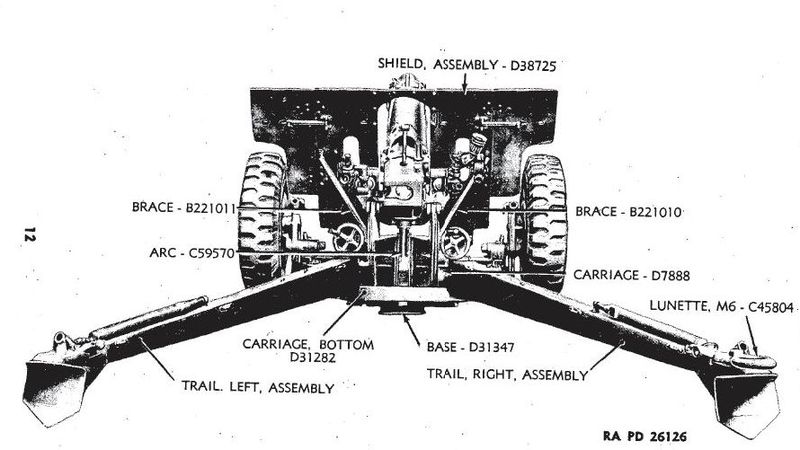
I have pointed out that split trail howitzer carriages have a responsiveness problem beyond their (no more than 62°) traverse. They lack the unlimited 360° traverse because of their carriage. The split trail carriage was a huge improvement over the box trail when introduced in the Déport gun, but it's no good if you need to respond to a call for fires outside of the ~60° traverse. A well-drilled team takes about two minutes to lift up an otherwise well-designed split trail carriage tail and turn it around for a fire mission beyond the previous traverse. For comparison; a self-propelled howitzer with a 360° traverse turret may execute a 3 round fire mission on the target and redeploy by hundreds of metres in those two minutes.
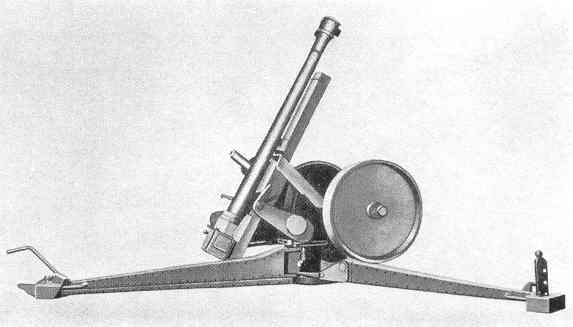
There have been platforms used (in times long gone) to give box trail carriage guns a 360° traverse, for example the Arbel platform. The British 25 pdr gun of WW2 fame was such an example. This solution isn't a good one either. The platform adds a lot of weight, slows down deployment and redeployment and mobile platforms of this kind do not transfer the recoil force into the ground. That's still being done by the tail of the carriage, typically some spade.

And this is one more problem if you need to turn around your gun like that. Look at 1:25 of this video:


You can see how the spades are not fully embedded in the soft soil until after the first shot. Thus either you have to accept several seconds additional delay between 1st and 2nd shot (which ruins the surprise effect on the target and makes HE fires much less effective) or you have to shoot a charge without a shell arriving at the target, only to produce enough recoil force to set the gun. This adds additional seconds to the two minutes mentioned above.

Let me explain why this is so important; I wrote in several of my articles on infantry tactics and survivability that infantry should move or even break contact within 2 (at most 4) minutes of being detected by opposing forces. The reason is that opposing forces' indirect fires may arrive after such a short delay. Very competent readio-networked artillery with SPGs, electronic fire coordination, not too far away, minimal if any deconfliction requirements and can deliver a devastating multiple round multiple firing position simultaneous (within seconds) impact fire mission that quickly. The state of the art squeezes infantry into such tight limits; two, at most four minutes to pull off what they ought to do, then move or die. Poor quality armies may take 10 or 15 minutes to do the same, but one shouldn't orient yourself against such opposition; they won't dare to attack NATO anyway.
Now imagine our arty has an additional, unnecessary delay of two minutes on many fire missions. This may easily halve the quantity of elusive infantry platoons that they can catch. It wouldn't matter against cumbersome and poorly led infantry, but again, arty officers who intend to prepare against those only would have pursued the wrong career.

It needs be mentioned that split trail guns also take painfully much time to redeploy compared to self-propelled guns, making them much less suitable for shoot & scoot high survivability drills (= unsuitable, sitting duck targets).

Few modern armies still use many such towed, split trail carriage howitzers. They're mostly in use as helicopter-portable light guns for airborne forces, as artillery ordnance for reserve forces or in the U.S.Army. The U.S. Army failed to develop or accept a proper and already developed self-propelled gun for its 'medium' ("Stryker") brigades, and is still stuck with these towed howitzers. They even want to increase the range of the M777 (which has the barrel length and range of 1970's howitzers of its calibre), that's how much they're invested in the M777's basic design.

WW2-style howitzer with split trail (and a gunshield)
German WW2 experiences led to requirements for howitzers
with 360° traverse and about 70° maximum elevation.
Only the increase of maximum elevation became a
dominant design choice post-WW2 save for the
Soviet 122 mm D-30 and a Swedish howitzer.
I consider this an example of how hyping and overhyping weapon systems and military procurement programs can badly hurt an armed service. The M777 was hyped for years because it was new, it was American, and it was made with expensive alloys to cut down weight (supposedly to allow UH-60 helicopters to lift it, which is hardly ever done). It did not deserve any praise. The weight reduction served no real purpose to its current users but inflated costs. The dispersion is not extraordinary good compared to other modern howitzers, the attached muzzle velocity radar is nothing extraordinary for new arty guns either and the range is stuck in the 1970's. Still, there was about a decade of hype for this gun.

This hype has blinded the public; hardly ever do I read any harsh criticism of the obsolete towed split trail approach. Sure, the Taliban and other "light infantry, motorcycle & technicals" opposing forces were not able to overmatch the M777, but they would have failed to overmatch a WW2 howitzer as well. A modern conventional land power ('peer enemy') such as the Russian army could do so easily, especially in mobile warfare. They don't even need to be able to operate counter-artillery radars; old school flash spotting and sound ranging still work and they even develop new devices for it, and the M777's relatively poor range makes it more susceptile to this than the longer-ranged 52cal 155 mm SPGs are.


The organic artillery of the light and medium brigade combat teams of the U.S.Army and of the USMC is poor, and the hype blinded the nation to it so the weakness lasts. Higher level support artillery (MLRS) doesn't compensate for this; the U.S. did not sign the cluster munitions ban, but it's still getting rid of its ICM/DPICM munitions. There are no unguided HE rockets for MLRS.


A nation should avoid hyping military hardware, period. It serves no other purpose than entertainment, and that should NEVER be a purpose of the military. Hyping military hardware risks to cover up its weaknesses and thus inhibits actions that would mitigate or eliminate such weaknesses. This appears to be true regardless of insider experts understanding the true deficits.

S O
.

2017/08/02

North Korea and a pacifism litmus test

.
I consider myself a moderate pacifist, which means deterrence and defence - national or collective - is fine, though wastefulness in it is to be avoided. Wars of aggression and military adventures are not fine at all.

This doesn't seem all that pacifistic to radical pacifists, but it's already a far cry from most people who get involved in publishing blogs, journal articles, studies or books on war, "security policy" and military affairs in general.

The often months-long propaganda barrage that builds up political support for wars of aggression or major military adventures is a fine litmus test to see who's a true pacifist - moderate or not - and who's not. Many people who claim to be against war end up being fine with war if only it hits some vilified country or leader.
I suppose we would see just another such litmus test now and in the next months if only the Trump administration wasn't so incompetent and ineffective at communicating beyond a narrow base of pro-Trump extremists. That bunch would rather stumble into a war of aggression with less preparations than even a Neocon clique.

On the one hand this is regrettable, for the masks are not taken away from everyone, but on the other hand I'm really glad that no war prepared and launched by the West seems to be in the making.

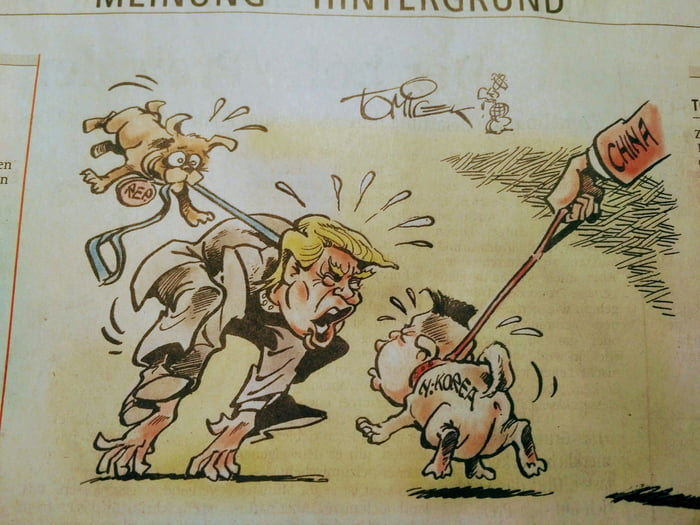
I don't consider the crisis around North Korea as a prelude to a real war anyway; it's rather a build-up of tensions where Trump thinks he can bully someone else, and eventually he will likely seek a "deal" that he can communicate to his base (via Twitter, of course) as a successful "solution", regardless of how much the fine print will actually benefit NK.
The risk is in what happens if he doesn't get a deal to speak of, nor can make one up for a change.

The future is unpredictable, but when it comes to conflicts and arrogant, stupid leaders it may get very uncomfortable. This time without the slightest upside.

S O
.