
.
The rank system appears to be a mess in all armies.
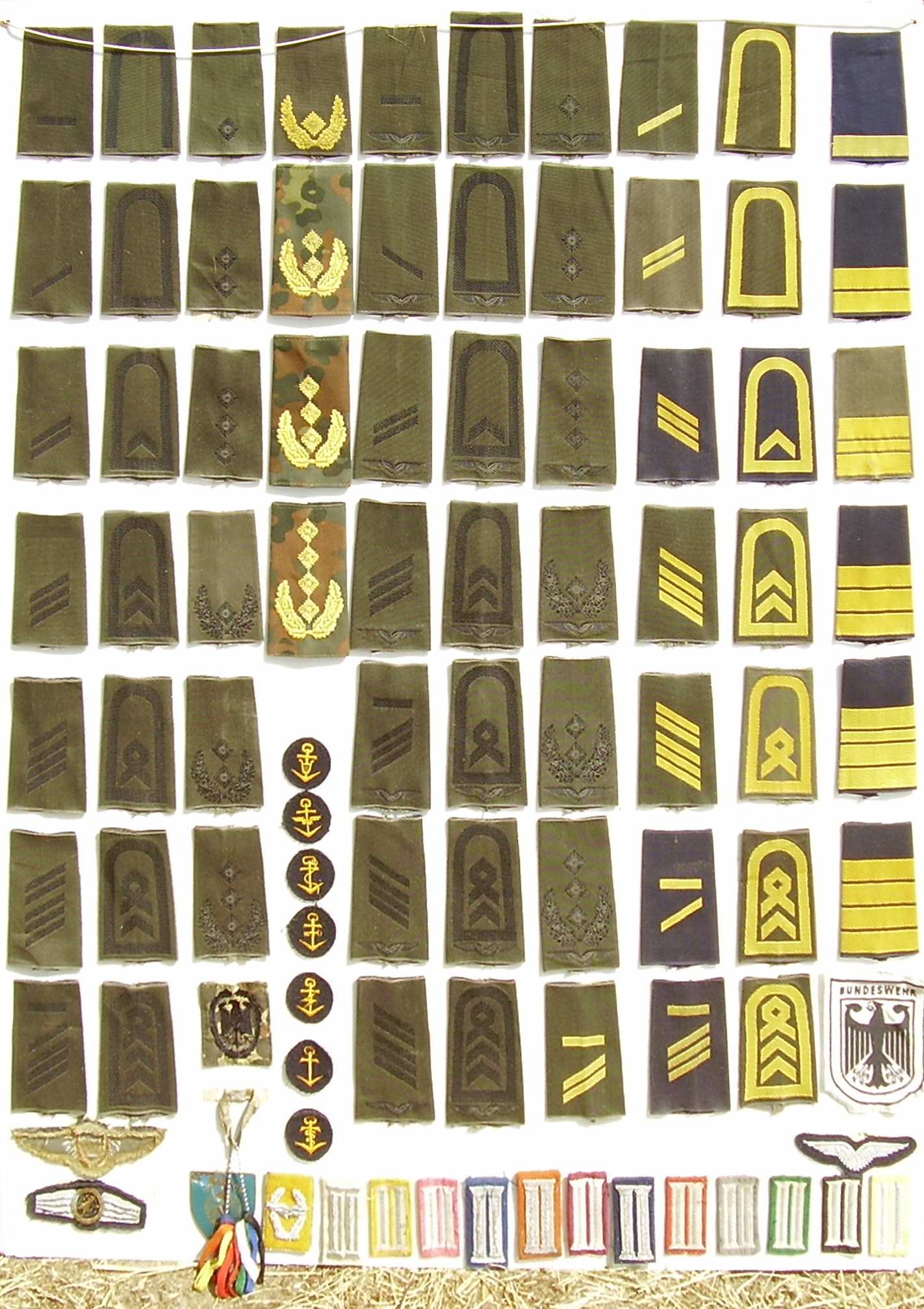
Huge corporations thrive (despite their inefficiencies) with hundreds of thousands of employees without a rank system and usually also without a uniform (especially without a uniform that encompasses manual labourers AND staffs with one uniform).
Armies have decent arguments for having ranks, though. The most solid argument is for a division between
- enlisted personnel
- non-commissioned officers (leaders who live with the enlisted personnel)
- officers (higher level leaders who separate themselves from the enlisted personnel for some psychological reasons
We can further divide between junior and senior non-commissioned officers. The latter of which would not live with the troops in the barracks (peacetime), but justify themselves by being very experienced and thus indispensable for good training of enlisted personnel and junior NCOs. They may also be very helpful authority figures.*
- enlisted personnel
- junior NCOs
- senior NCOs
- officers
We can further divide the officers between small unit and unit leaders (up to captain rank) on the one hand and formation commanders (major and up) on the other. The latter require more experience and need to have proved themselves in unit leadership. Battalion (battlegroup) command is the lowest combined arms leadership position, and combined arms expertise requires learning much about at least two arms, which junior NCOs don't need to have done.
- enlisted personnel
- junior NCOs
- senior NCOs
- junior officers
- senior officers
Now we could take into account that the majority of officers are actually NOT in leadership positions. They're in staff positions. It seems like a strong argument to separate officer ranks by this criterion, but somehow even armies with clearly separate career paths for leadership officers and staff officers usually don't do it for all I know. The maximum example that I'm aware of is the "i.G." suffix used by German armies (i.G. = "im Generalstabsdienst", 'in general staff service').
- enlisted personnel
- junior NCOs
- senior NCOs
- junior officers
- staff officers
- senior officers
The authority to give orders independent of the chain of command would be like
enlisted personnel < junior NCOs and senior NCOs < junior officers < senior officers
and
enlisted personnel < junior NCOs and senior NCOs < staff officers
in addition to the position-specific chain of command. (The complicated conditions of command authority don't matter here.)
A participation in NATO headquarters requires that armies send officers with certain NATO-compatible ranks. It's debatable whether NATO HQs are any good and whether North Atlantic Treaty members should withdraw their forces from NATO subordination as France did long ago. Anyway, I strongly suppose that temporary ranks could be assigned to satisfy NATO's idea of ranks if need be.
So I'm at six distinct groups of army combatant personnel. I suppose that we COULD make do with this. A certain unit could have four slots for junior officers, four slots for senior NCOs, dozens of slots for junior NCOs and more than a hundred slots for enlisted personnel. Who gets to work which position exactly after falling into one of these categories would be decided by qualification, JUST AS WE ARE ALREADY SUPPOSED TO DO NOW.
So why do we have such a rank system mess instead?
The simple answers are in my opinion
- 10%: A lack of self-discipline makes everything messy over time.
- 90%: Promotions have been misused to give men better pay when a pay rise for the original rank or performance-specific pay bonuses or qualification-specific pay bonuses were more appropriate, but not the policy.
I wouldn't mind adding one rank for unqualified enlisted personnel (recruits until basic or branch training is completed) or another one for medical doctors.
Here's a list that doesn't seem too radical (that is, I think it could really be done) to me any more:
- recruit
- soldier
- corporal (junior NCO)
- sergeant (as senior NCO)
- lieutenant (small unit leadership, battalion staffs)
- captain (unit leadership, brigade staffs)
- major (battalion command, divisional/corps staffs)
- colonel (brigade command, national and theatre HQ staffs)
- general (divisional and higher commands, army branch leadership)
- (doctor)
Would any battles be won through such a rank reform? Would any wars be averted? Would much money be saved? No.
The primary point of reforming the rank system would be to send a strong (symbolic) signal that the undisciplined cancerous mutations and general bollocks of the past are getting wiped away. It would only be worth the effort if that signal is true.
A secondary (and very small) point would be that the importance of qualification for a certain high level job would be highlighted. A current bright 1-star general would not be held back by his rank from getting a post that's meant for a 3-star general.
related:
/2012/05/rank-inflation-in-bundeswehr.html
S O
*: I know that accommodations are more random in reality. Almost anyone in the Bundeswehr can live off-base, so I'm referring a bit to the old school barracks and life in the field here.
.


