.
I have written about different functions in military stuff over the course of this blog.
I wrote about
repulsion and how having a long range may actually reduce the functional utility of a weapon (even ceteris paribus).
I referred often to the functions of a front line, which fell away when armies gave up the idea of establishing a front line.
Unsurprisingly, I think there's some merit in this way of looking at military theory.
The technical capability of weapons and the physical capability of soldiers very rarely coincides with what happens in real warfare. A main battle tank may be able to aim, shoot and hit while driving at 60 km/h speed, but that's not how tank combat really looks like.
A missile may be developed to destroy a radar station - and end up merely forcing the radar operators to switch their radar off for a few seconds.
An assault rifle may have the technical capability to slaughter a whole platoon in a minute, but that doesn't happen.
The difference between input potential and actual outcome isn't the only indicator for the importance of function, though. Actions have usually effects that are not obvious at all. Many actions serve a purpose, a function in war.
The difference between potential and actual result is the really important thing. We need to understand the functions that rule warfare, more so than the tools. A look at the tools is too deceiving, for it merely reveals the potential, not the actual effect.
- - - - -
Let's finally look in detail at one of the functions that interest me very much, for I see no substitute in place after its loss yet: The front line.
What does a front line do?
Basically it keeps weak forces from advancing much. A proper front line may be infiltrated, but the risk/price is usually high. It can be penetrated by an offensive (under some circumstances), but it cannot be overwhelmed by a general advance along most of its length.
It does thus keep the enemy largely from advancing and thus creates security in the rear. This in turn enhances the efficiency of forces in the rear, for they can train, repair and move supplies without needing to pull much local 360° security. Of course, they also sleep better. Sleep deprivation is a big issue in wartime.
Front lines have a geometrical reason for their (past) existence.
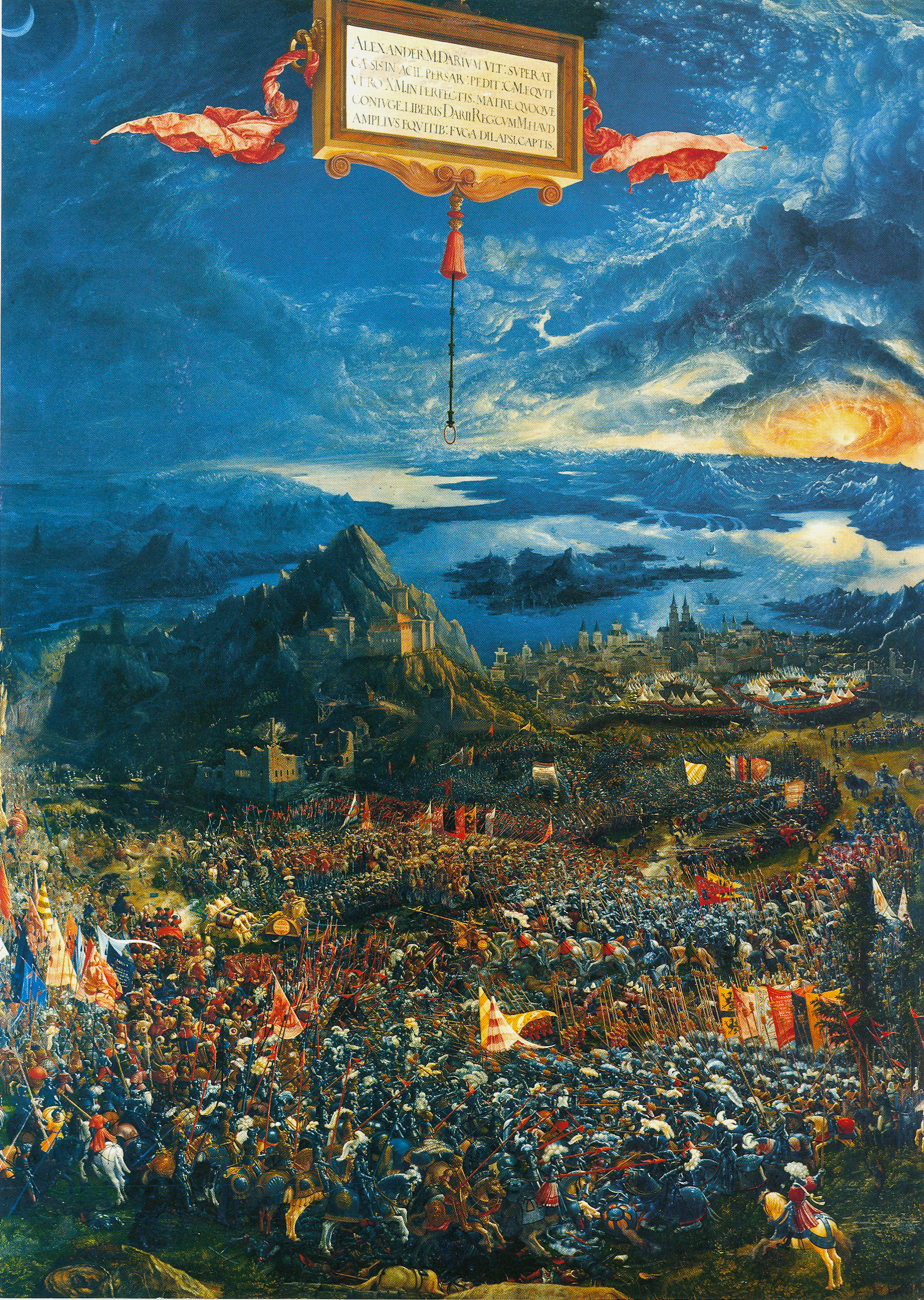
Back in the 18th and even 19th century artillery wasn't long-ranged. It was feasible to protect a town against fires with a fortified ring around it. The longer the artillery ranges became, the greater the necessary diameter of the fortifications. This in turn led to an ever longer circumference (2 *
π * radius)- up to the point when it became pointless to allocate so many defenders to a single town. In some places the defensive rings of multiple towns came in contact and it was less inefficient to give them a joint defence.
By the late 19th century it was obvious that town fortifications were pointless. To fortify the border of a state was an alternative. The geometrical reason is simple. Imagine a large circle and now fill it up with dozens of small circles. The large circle surrounds more area than the sum of the small ones, but its circumference is much smaller than the sum of theirs.
The increased lethality of small arms (= less defenders needed per length) and the mass mobilisation of troops with conscription actually enabled the fortification of an uninterrupted front line from Switzerland to the North Sea in late 1914 (as predicted by Bloch). The same was never fully possible on the Russian front in the First World War, but there was still a front line: The function of a front line was met with less ambition than total resistance against offensives.
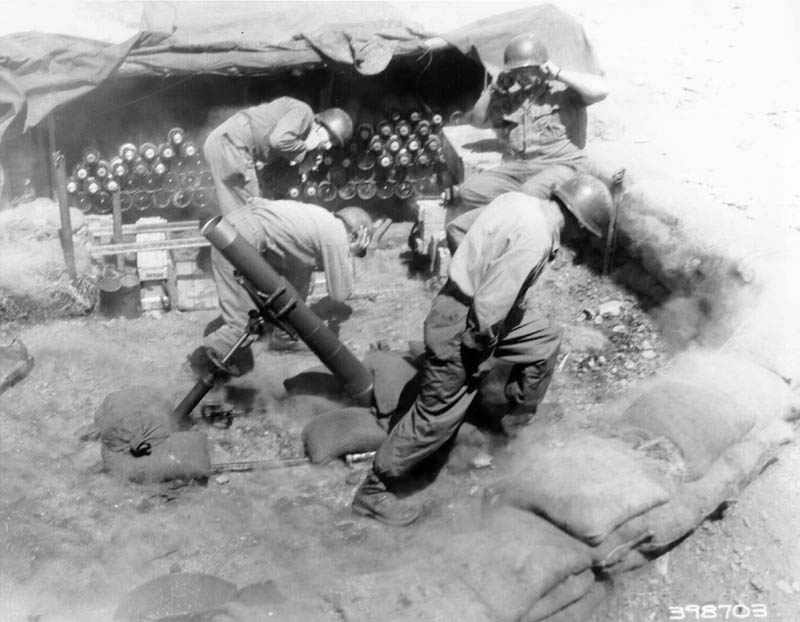
It was mostly a strong point defence with connecting trenches for patrol and surveillance purposes. Indirect fires (especially artillery and mortars) dominated the observed ground without much small arms fire. Again, it was possible to infiltrate, but infiltrations were met by counter-attacks. The less troops with direct fire weapons man a front line, the more they need to be substituted for with indirect fires. A continuous trench line was desirable for the safety of patrolling, but it was no longer always an integral component as in 1916.
The key for such a front line was to force the superior opponent to concentrate forces for an overwhelming breakthrough offensive. The rear troops were quite secure till this breakthrough occurred, and there were operational counters even to successful breakthroughs. A front line can meet its function even if it's unable to stop the enemy.
Nowadays it's unlikely that traditional, continuous front lines will be established in a conventional war. There are likely too few troops. This has actually been correct since the early Cold War, but the fixation on nukes kept many from seeing it.
- - - - -
The essential components of defence: Direct fires - counterattacks - indirect fires - surveillance.
The less forces per length, the more emphasis has to be shifted away from direct fires. Artillery fires are the classic gap-filler for thin defences.
Modern forces couldn't have short range direct fires along the length of a front line.
Their surveillance of a long line is also in doubt because of weak scout and infantry components (contrary to the sensors fashion). Indirect fires are now high quality, but low quantity (and accurate indirect fires against moving targets are still difficult).
Could all this be made up for with counter-attacks? Hardly.
You need a substitute for the discouraging effect of an established front line, or else your opposing force may put you into extremely risky and disadvantageous situations by exploiting much of its mobility potential. There's no front line that forces them to concentrate for hours or days for a predictable push, after all. They might appear just about everywhere, at any time.
I actually gave away parts of my idea for a substitute in earlier posts. My working title is "skirmish corridor".
I won't describe it in detail here because the point of most of my blog posts isn't to inject my ideas into readers' brains; it's to inspire their thought. A single brain rarely produces great ideas, but a thinking society will succeed. Well, that and the text is already long enough.
S O
.