2019/07/06

Link dump July 2019

.

- - - - -


- - - - -

/2019/06/sources-say-downed-uav-penetrated-deep-into-iranian-airspace/

- - - - -

https://tass.com/defense/1065905
 76 Su-57 by 2028. Not few, not many.
Many Typhoons and F-22 (produced since 2003 and 2002) will be really old by 2028 already.

- - - - -

defence-blog.com/army/ukrainian-soldiers-obliterates-unique-russian-artillery-reconnaissance-complex.html

The vehicle has tracks, but the crew chooses to operate from the road, which makes determining its coordinates much easier. This is the kind of tactical stupid that's borne out of complacency. Same deal as with Frenchmen letting recce drones fly the very same route day after day during the Kosovo Air War.

- - - - -

bostonglobe.com/opinion/2019/06/30/soros-and-koch-brothers-team-end-forever-war-policy/

- - - - -

china-defense.blogspot.com/2019/06/pr-photos-of-day-smurfs-training.html
Hardly anything in these photos makes sense (to me).
The physical fitness stuff is stupid, the uniforms are stupid, the simulation of underbarrel grenade launcher weight with (not fixed) canteens is stupid, the urban combat tactics seem stupid, the way of moving with backpack over a rope is totally stupid.

I'm a bit conflicted. On the one hand there's history showing that Russians have a consistently (over centuries) poor efficiency in warfare, and Chinese the same. There's plenty indications that their tech sucks more often than not, and plenty people told me that Chinese psyche is unsuitable for innovation et cetera.
On the other hand I also reject the notion that Russians or Chinese could be stupid or systemically unimaginative as individuals. There's nothing in IQ statistics pointing at them being stupid.

Maybe there's something wrong in their culture that explains this. Something that systematically nudges the people toward poor performance.
I'm sure that no Western armed service would so consistently and stubbornly publish such stupid photos. The use of stupid blue digicamo camouflage on marines alone is too much of an embarrassment. The USN has such stupid uniforms as well, but not for land combat (though theirs are stupid and dangerous, too).

- - - - -

https://twitter.com/paulkrugman/status/1141659389553795072

- - - - -


Somehow they missed the message from the German Einheits-PKW of WW2 that all-wheel steering is nonsense for military vehicles.*

Maybe it's the bulletproofing (and even mine-proofing) of our times' army vehicles that drives developers towards such overly complicated, heavy, thirsty and expensive vehicles. An armoured vehicle can be sold at five to tenfold price of a comparable unarmoured vehicle, even if the difference is little more than RHA plates (the difference is not quite as extreme with up-armoured vehicles).

Just a reminder; we could still move four humans with equipment around in a 1950's design Jeep, offroad and on-road. I assure you, they could move from A to B in a timely manner.
There's no doubt a golden middle, but I tell you, JLTV and other recent monstrosities ain't at it.

related

- - - - -

romeanditaly.com/the-discovery-of-2000-year-old-gladiators-helmet-in-pompeiis-ruins/

- - - - -

I've put my warship series AAW chapter from February 2018 (equivalent of 20 book pages) into http://www.analyzemywriting.com/ and the result was devastating. The readability grading ranged from grade 12.57 (Coleman-Liau) to grade 15.81 (Gunning fog). So I looked for a second opinion and asked https://app.readable.com/ for another Flesch-Kincaid score with a text version that had headlines, lists and captions removed (analyzemywriting gave grade 12.66 for Flesch-Kincaid). The result was grade 12.0 (and Gunning-Fog grade 14). At least I had a "cliché count" of 0%. 

"For comparison, according to this source, academic papers are written at about the 12th grade level. Malcolm Gladwell writes at the 9th grade level, F. Scott Fitzgerald at the 8th grade level, Stephen King at the 6th grade level, and Ernest Hemingway at the 4th grade level. It also says that only about 1 in 8 U.S. adults can read at the 12th grade level."
quoted from here

I have as far as I know also issues with too much use of passive voice and presumably some other habits regarding choice of words and grammar that are suboptimal.

This compound of writing issues might explain why I keep having the impression that many people who comment seem to be oblivious to my already given arguments. They may simply not have read them.

I don't even know how to write simpler British English and I don't think switching back to Simplified English would help, so don't expect any improvements on this front regardless of this new-found awareness. Sometimes there's just a problem, and no solution to be expected.

- - - - -
 
 OpenSeaMap with maritime traffic

- - - - -

https://9gag.com/gag/axzrznb
https://www.rferl.org/a/biggest-loser-in-kazakh-presidential-election-could-be-government-reputation/29991513.html
 (I did not find some NGO or OECD election observation report.)

It appears to be a rather widespread problem:
https://www.thetimes.co.uk/article/votes-in-invisible-ink-just-vanish-in-ballot-7vkg8p2bcp3
https://www.spectator.co.uk/2018/03/how-to-rig-an-election/

https://blog.penvibe.com/elections-and-disappearing-ink-pens/

- - - - -

www.vice.com/en_us/article/8qbq5x/the-cia-spied-on-people-through-their-smart-tvs-leaked-documents-reveal
"1984" was meant as a warning, not as a guide!

- - - - -


The Balkans.

- - - - -


I suppose we should get a study to see if the results can be reproduced, and if yes we should simply ban such surveillance software, period.

Meanwhile, our German ministers of the interior seem to have a consensus that the government should be able to spy a lot more on its citizens. They want encryption vulnerable and internet companies to yield as much surveillance info as possible when asked.

This is what I wrote about when I complained about the principal-agent problem. Our politicians should lead executive branch divisions to force them on a path of pursuit of national interest. Instead, they adopt the bureaucracies' self-interest for more authority, more budget, more, more and more.

“We reason that increased resources and independence from others cause people to prioritise self-interest over others’ welfare and perceive greed as positive and beneficial, which in turn gives rise to increased unethical behaviour,” the researchers concluded.

That would explain a lot - and point at a solution: Let them feel their actual dependence on others.You did not build that without the effort of many others, without the infrastructure provided by government, without the rule of law and enforcement of law by the government et cetera.

- - - - -

 Next Saturday: A "How to fix ..." series blog post.
And no, it's NOT about Sweden, Spain or Finland.

- - - - -

So in etwa.


S O
defence_and_freedom@gmx.de


*: It might make sense for large 9+ ton trucks if they are expected to use narrow river or mountain roads a lot, but AFAIK there's no such vehicle. Timber truck drivers negotiate such roads without such bells and whistles mostly by skill.
.

2019/06/29

'FutureFuel'

.

This is a very interesting study in my opinion. Ammonia has popped up in many articles during the last 18 months or so as a possible solution to the hypothetical hydrogen economy's problems. There was some technological progress in efficient hydrogen release from ammonia a few years ago.

I suppose Ammonia (they really need to make up some fancy name like "FutureFuel" for it to dispel the association with its pungent smell!) might become the fuel of the future for most land vehicles that need more range than is economical (regarding the vehicle costs, not the energy costs) with solid state batteries.


Ammonia could also (maybe in hybrid designs with substantial solid state batteries) become standard fuel in future military land vehicles (ammonia stored in pressurized tanks) if it succeeds in civilian automotive sector long range applications.

The U.S. military has looked into biofuels and biofuels are also popular with many conservative politicians in Europe (mostly because they want to give their farmer voters some gifts), but biofuels make very little sense. Nature is ridiculously efficient at many things with its evolution-optimised organisms, but it is horribly inefficient at converting sunlight into usable energy. Photovoltaic cells have an efficiency of beyond 20%, while photosynthesis has efficiency of less than 2%, commonly less than 1%. Technical energy gathering solutions are more area-efficient than biofuel production by an order of magnitude (even taking into account the later value added steps till we have comparable fuels). Utility scale photovoltaic power is now also among the cheapest power sources in the world.*
We should gather energy in poor vegetation productivity areas with much solar irradiation (some areas of Spain come to mind, we don't need to go to Africa for that) and use the more productive areas for food and non-energy raw material production (or let them  recover to avoid soil degradation and erosion).

I reckon from the current point of view that future transportation propulsion should be mostly about solid state batteries, ammonia fuels (the latter often for use in fuel cells) and for both ships and large aircraft; liquid hydrogen.
This would have huge implications for military logistics, but also for very low temperature operation of motor vehicles.

S O
defence_and_freedom@gmx.de

*: https://aneconomicsense.org/2019/06/20/the-increasingly-attractive-economics-of-solar-power-solar-prices-have-plunged/  There has been a flood of very recent study publications about the extreme economical advantages of  solar and hydro power in pure money economics (even before taking into account external effects). Only natural gas powerplants can compete (if there's a pipeline or gas field nearby). Coal and nuclear power are a waste of money right now, and to build any new coal or nuclear powerplants is utterly stupid. This does put a huge question mark on what the Saudis want "civilian" nuclear power tech for.
.

2019/06/22

Ironclads

.
I spent some time looking into the short Ironclad era - an era of roughly 15 years that began with the first iron-armoured warships and ended with a seagoing warship that had all its guns in turrets and used neither sails nor oars (only steam engines and screws) for its propulsion.


There were less than a hundred Ironclads. The pace of construction was fairly modest compared to the exertions of the 1890's to 1916. Many ironclads were modernised with better guns few years after introduction in service, and some ironclads had their armour plating improved to keep pace with better-penetrating guns (even doubled armour thickness).

The quality and thickness as well as wood backing of armour advanced at a fast pace, and a ship launched just a few years earlier might just as well have been unarmoured when facing some of the newest, biggest guns.

The success of the era-concluding Devastation class seems unlikely to me even in hindsight; its freeboard was scary small and its main armament were a mere four slow-loading heavy guns with exposed crews. Still, this was the prototype battleship, setting a dominant design that lasted until HMS Dreadnought (1906) appeared and in many ways more similar to today's warships than to warships just 15 years before its time.

HMS Devastation (built 1869-1873)
The Italians lost the only major naval battle of the era through a horrible fleet leader performance and an unbelievable degree of gunnery incompetence (missing seagoing ships at less than 1,000 m with entire salvoes).

Sadly, the literature about the era appears to be very limited. I found (and read some of them):


Modern Ships of War by Sir Edward J. Reed and Edward Simpson, 1888

The British Navy, Past and Present by S.Eardley-Wilmot, 1888

The Development of Navies by Captain S. Eardley-Wilmot, 1892

Ironclads in Action by H.W. Wilson, 1896

Our Iron-Clad Ships: Their Qualities, Performances, and Cost by Edward James Reed, 2011 (the author died 1906, so this is a new edition)

The Old Steam Navy: The Ironclads, 1842-1885 by Donald E. Canney, 1993

Ironclads At War: The Origin And Development Of The Armored Battleship by Jack Greene and Allessandro Massignani, 1998

War at Sea in the Ironclad Age by Richard Hill, 2006

Ironclads: An Illustrated History of Battleships from 1860 to the First World War by Peter Hore, 2006

British Ironclads 1860-75 by Angus Konstam, 2018 (Osprey)
European Ironclads 1860-75 by Angus Konstam, 2019 (Osprey)

Some of the new books recycle 19th century books' contents, including using refurbished drawings. I disregarded the many books about the uninteresting American Civil War's ironclad riverine boats and coastal fair weather (negligible freeboard) vessels.


I hoped to find some insights and lessons about what happens when there's some revolutionary technology and armed bureaucracies try to cope with rapid technological progress. I didn't find any such things in the books about the Ironclad era yet.
Technically, HMS Warrior's screw design and HMS Waterwitch's pump jets were surprises to me; both were approaches that would avoid the drag of the screw when the ship is sailing and became superfluous by the time HMS Devastation dropped the rigging altogether. Sailing rigs were afterwards only sensible for cruisers, particularly raiders (the auxiliary cruiser SMS Seeadler of WWI fame was a sailship for this reason).

BTW, three Ironclads survived; HMS Warrior in Portsmouth and two small Dutch ironclads (HNLMS Buffel (Hellevouetsluis, Netherlands) and HNLMS Schorpioen (Den Helder, Netherlands)).

You might find this summary of 19th century armour development of interest.

S O
 
defence_and_freedom@gmx.de

P.S.: Hat tip to the Russians for having a contemporary to HMS Devastation in their coastal warship Admiral Lazarev. It was actually laid down two years earlier and was superior in its armament concept by having three instead of two twin turrets. Reminder; the move from HMS Devastation's pattern of two twin main artillery turrets to a broadside of at least six main artillery guns was the key to the "all big gun battleship" concept a.k.a. "dreadnought" revolution three decades after HMS Devastation and Admiral Lazarev. The Russians were peripheral backwater to Western authors and their ship was a (not terribly small) coastal warship, so HMS Devastation gets more attention as groundbreaking design. I was guilty of this as well, hence this addition.
.

2019/06/15

Peace without deterrence

.
I do usually write with the unmentioned assumption that deterrence is necessary for maintaining peace.


Well, maybe it isn't?

There's the historical example of countries or princes paying some other power (not necessarily a weaker one) to maintain the peace. The Byzantine Empire did this, and it survived for more than a thousand years.
The payments may actually be cheaper than to maintain the forces to deter, and were almost certainly always cheaper than actually waging a war. So this choice may be the economically right thing to do (especially as a supplement rather than a full substitute for armed deterrence), but there's the risk that such behaviour leads to ever higher prices for peace and isn't optimal in the long term. Still, there are irrefutable and largely successful historical examples for powers maintaining the peace not only by deterrence, but also by protection money.

Other examples for peace without effective deterrence are modern and obvious. Uruguay certainly does not deter Brazil or Argentina, but it doesn't get invaded. Many other countries don't get invaded despite their obvious inability to deter, either.
Germany and Denmark would not go to war with each other even if there was no repercussion for doing so whatsoever. It would simply not cross anyone's (not insane) mind.
I mean it; Germany wouldn't even invade Denmark if it was invited to do so by all other countries, if there was no EU, no NATO, no Danish military, no UN - it simply would not happen. We wouldn't even invade Denmark if we faced economic sanctions for NOT invading Denmark.


I suppose that maintaining peace without effective deterrence and thus without much military expenditure has to receive at the very least as much attention in writing as does deterrence strategising. After all, there's somewhere the key insight for a world with marginal if any waste of resources on deterrence & defence in there.

So my own priorities are off to some degree, obviously.


S O
.

2019/06/08

The rot of Pax Americana (II)

.
Previously, I argued that the United States violated its own temporary grand strategy for peace and prosperity in the Western world with its own actions in the 50's. It would be considered a "rogue state" because of its undermining of unfriendly governments, its violent aggressions and its militarism if it was a majority Muslim, East Asian or simply "communist" country.

Remnants and façades of the international system built in the 40's and early 50's still hold out, in part because nobody wants to give nuclear war a try and in part because Europeans (and until recently also Americans) at least partially support them.*

Some European countries are somewhat aggressive (particularly the previous colonial empire UK and France), but overall, continental Europeans appear to have one precondition for being the decisive champions for a rules-based international order for peace and prosperity that the United States appears to lack:

Most of them appreciate win-win cooperation as a strategy, unlike the United States, which have  been decayed by quasi-anarchist propaganda ("(...) government is not the solution to our problem, government is the problem."**) and which cannot really settle on such a strategy any more.
I don't doubt that they have at least one political party capable of occasional win-win cooperation diplomacy, but I doubt that they have a political party of importance that would do so in a more consistent way than the country did during the 1960's-2010's.

Could Europe become a champion for a rules-based international order for peace and prosperity?

A long list would need to be checked in my opinion:
  • European unification ideologues would need to look outward a lot more and seek peace & prosperity on a global level instead of being fixated on European unification, for without them there would not be a large-enough ambitious base for such a grand strategy
  • Europe would need to join its influence with India and some other major countries in the long term (this may be Nigeria and Brazil)
  • European public(s) need to understand the utility of a win-win cooperation, and resist the decaying infiltration by ideologues from the U.S. and Russia
  • France would need to become more self-disciplined and stop its occasional violent interventions in Africa that often run counter to a rules-based international order
  • Europe would need to be willing to face the U.S., UK, Russia and possibly PR China at least in non-violent ways (UNSC votes, France's UNSC veto power, economic sanctions, refusal of diplomatic support and cooperation, support of opposing proxies)
  • Europe would need an approximately common news picture of the world. It cannot act in unity without perceiving the world approximately the same way  (keyword "elite nations" in journalism)
  • Europe needs to secure its raw materials access independently from any power it might need to face off against in defence of international law (this is about diplomacy & trade, not much about naval power)
  • Europe (EU) would need to maintain credible nuclear deterrence (France) as long as there are other nuclear powers
In other words; I doubt it will happen. Mankind is probably (and has been for sixty years) on a path away from win-win cooperation as the norm and away from an international order for peace and prosperity that's based on international law.
We're moving back to the previous world order of great powers pursuing their interests at the expense of others (with everyone most likely being worse off as a result).

We'll likely fail at the climate change challenge and fail to get to global net zero CO2-equivalent emissions from human actions' first order effects.*** We may get cleaner, healthier air in European cities from electrified motor vehicles, we will maintain necessary food supply and energy supply and preserve most of our coastlines for decades to come, but we'll fail in the greatest challenge since the risk of self-ruin by thermonuclear war simply because Western societies have decayed**** just short of true greatness, and turned away from pursuing a grand strategy for smart win-win cooperation in a rules-based world.
Challenges such as atmospheric CO2(-equivalent) content cannot be dealt with without a global appreciation of the utility of cooperation and confidence in major countries' commitment to agreed-upon obligations.

In the end, the Americans who were such a beacon of hope for mankind in 1944-1953 may be the first to blame for global civilizational decay with their aggressiveness rooted in not having had lost a great powers war ever (at least not thoroughly) and the egoism of their Rich who undermined the government / national community with egoism and anarchical ideologies to receive some taxation reprieve for a few decades.
Obviously, some other countries (especially UK, France, Russia, Saudi-Arabia) deserve much blame as well, while the others are mostly guilty of complacence and of being followers on the wrong path.

S O

*: Especially France and the UK disregard international law when it suits them, as well. The whole 1999 Kosovo Air War and Poland's participation in the war of aggression in 2003 add to the picture of Europeans being unreliable defenders of a peaceful international order.
**: The "(...)" part was "In this present crisis", but the anarchist-minded people decided to ignore it and turned the later section into their article of belief, usually granting the military an exception.
***: Thus we'll almost certainly fail to achieve net zero global CO2 equivalent emissions taking thawing permafrost and such into account. We will not stop, much less reverse, climate change a.k.a. global warming before some natural mechanism does it for us. That may take thousands or ten thousands of years, though.
I myself am guilty of believing the mainstream idea during the 90's, thinking that some savings by improved efficiency here and there would suffice as global warming countermeasures. Back then, we would have needed to add a zero emissions technology perspective (solar-hydrogen economy) and major carbon sink efforts (such as special net negative carbon concretes, maybe fertilizing some maritime areas with iron) to the "efficiency gain" route.
So in all fairness, it's not just the cooperation issue that makes us fail, but also the sluggishness of mainstream opinion turning around.
****: I can already hear some European right wingers loudly liking to read this, which is tragic.
They don't realize that their model Russia is de facto at the end state of total decay. Russia fails at science, health achievements, economy, civic development, culture and freedom and European right wingers who embraced Putin's Russia as political ally are nothing short of traitors to their own nation in my mind. They don't fight decay - they embrace it. A barefooted black lesbian couple with green hair loudly chatting in a foreign language on a train is not societal decay; the loss of community and loss of confidence in solving problems together as a nation is societal decay.
Putin doesn't want to save Europe from the gays and the brown-skinned people - he wants it to become as dysfunctional, corrupt and unproductive as Russia already is.
.

2019/06/01

Link dump June 2019

.

- - - - -

"China's facial recognition at work"
9gag.com/gag/a83Xr31


www.theguardian.com/world/2019/may/22/uk-suffers-crushing-defeat-un-vote-chagos-islands

- - - - -


- - - - -

This reminded me of him:


- - - - -

Another one from Jeffries:


(She's one of those people who famously seem to cheat time, like Kate Beckinsale, Patrick Stewart, Monica Bellucci, Paul Rudd, Suzanna Hoffs, Avril Lavigne, Jim Parsons, Allyson Hannigan, Christie Brinkley, Lori Loughlin, Keanu Reeves and Sandra Bullock.)
 
- - - - -

There's an easy solution to end the warmongering against Iran and stabilise the Persian Gulf region's northern side for good: Iran needs to enter an alliance with a nuclear power. It could enter an alliance with Russia, with China, with India or major EU powers.

The media makes it look as if Europe couldn't decisively interfere against the warmongering. That's wrong. Europe's power and influence is limited by its own will more than by anything else. 
Admittedly, the cooperation-focused policies in Europe have created a political class ill-suited to deal with sociopaths effectively.

- - - - -

Hat tip to "An economic sense", an underrated economics blog.
He clearly should have made it into this list, but then again, the very well-known Mankiw didn't either.
My background as economist sometimes lets me write about economics and military affairs issues myself once in a while:

This might be considered really wrong, but I still think the basic issue is a real one because I have this childish-naive notion that things better be sustainable:
 "I'm curious how well this economic opinion will stand the test of time."
So far I'm not too enthusiastic.

Looking back, I must say I did not fully resist the fashionable public debt craze of 2009-2012. I did largely resist the then fashionable calls for austerity (except for the Greek military budget IIRC, but that's a special case as much of the spending goes to imports), though. Another saving grace is that I called for at least some counter-cyclical spending (hastened military procurement and IIRC also infrastructure projects to have some expansionary effect without much influence on long-term public debt).
As a conclusion, I must say my previous (anti-Keynesian) professor for public finance lectures probably still had me influenced with the crowding-out thing that turned out to not matter under the specific circumstances (zero lower bound issue) of 2008-2013. 

I like to cultivate an outside-the-box, non-mainstream attitude and way of thinking, but some of my macroeconomics postings from 2008-mid 2013 weren't nearly as timeless as I hoped my blog posts would prove to be. I still don't think I was wrong, but history didn't exactly prove me correct on the trade balance and public debt alarmism issues, either.

- - - - -

https://www.commondreams.org/views/2019/05/30/after-neoliberalism


What must be said; nothing in there is contrary to economic science. To the contrary, it's exactly what economic research suggests will or does work well. Neoliberalism on the other hand is only partially reconcilable with economic theory and empirical observations. Neoliberalism is based on first order effects in the better cases and utter nonsense in some other cases (the latter category is largely confined to the anglophone world). Stiglitz is no proponent of some radical left wing ideology; he's proposing to make use of what we know about real world economics as opposed to fantasyland economics.
Neoliberalism isn't the origin of all economic evils in the West, though. A couple metrics began a trend for the worse in the 1973-1980 period already. Neoliberalism was probably less harmful with its pursuit of its agenda than by not doing anything about those bad trends.

- - - - -

Don't fall the anarchists' voodoo economics,
which end up eroding the strength of the nation.

- - - - -

My pageviews from an arbitrary recent 7-day period (monthly is about 25k):

I have no explanation for why the German share kept dwindling over time. The Russian share is even more confusing - it wasn't nearly this large before and I haven't written anything of special interest to Russians since the Shilka article in February.

- - - - -

"The present T-34 ammunition capacity is 55 rounds: 5 APCR, 20 armour piercing, 30 HE. This is not enough and only lasts for 1.5-2 hours of battle."
This is a common theme from combat reports and memoirs about tank warfare (which is mostly combat against opposition other than tanks). 30 rds HE and thousands of machinegun rounds lasted for less than 2 hrs in this report. We should expect that 10+ of today's 120 mm HE rounds would be expended in an hour of combat. Resupply of munitions should be considered a most important aspect of tactical combat and operational-level efforts unless it's about pursuit (pursuit is much more about fuel supply and POW handling than about munitions supply).
I'm not informed about the inventories of dedicated 120 mm HE tank rounds such as DM11*, but I have a hunch they would be expended real quick, and then most Western tankers would use the less efficient HEAT supposed multi-purpose rounds against "soft" targets, expending them really quick to get the desired effects. Western MBTs might be downgraded to coaxial 7.62NATO machinegun fires against all soft targets well before the campaign ends.

This old topic did hit a similar spot.

- - - - -

Sometimes, armed bureaucracy public relations people should better just admit they're clueless, useless and stupid. It would be less disastrous than them trying to do their job.


- - - - -


I have argued against this myth myself as well. Claims that the durability of a T-34's was a few days does not square with the quantities produced and the inventories in service (thousands) over a span of years.
About 80,000 T-34s were  produced during WW2, and the average inventory was somewhere around 3,000 to 4,000 That would lead to them lasting for 1/20th to about 1/30th of the war duration (June 1941 to August 1945 for the USSR) in a first approximation estimate. This leads to a likely average T-34 life of more than two months during WW2 (much of it in storage, transit or training, though). It certainly wasn't a few days, for then they couldn't have trained the tank crews.

My suspicion is that the myth rests on the rumour that T-34s produced in Leningrad during the siege had very short lifespans (some of them were supposedly manned by workers, not tank-trained soldiers). An average durability of few days at the front may have been correct there in 1942. Most T-34s in use were likely used for months, though.
 
- - - - -

Vote shares among first-time voters
in the election for the European Parliament in Germany

The radical right wingers largely failed in the recent election in Germany; they got more votes than previously (back when their party wasn't overtly xenophobic and nationalistic yet), but less than polls indicated for them if there had been federal elections instead. They got a mere 11% and frankly, I don't see them ever getting past 18% (but then again I didn't expect the FDP strawfire a couple years ago or the recent greens boom past 20% either). There are only so many right wingnuts and protest voters in this country.

The young voters clearly don't see their future in the radical right, and now don't seem to like the formerly huge and dominating conservative and social-democratic parties either.

- - - - -

[German video]


I may have been too nice to the CDU last time when I diagnosed them to not be radical right wingers on the same slippery slope towards overt authoritarianism. Their chairwoman and designated future chancellor reacted to electoral defeat and Rezo's video with a public statement that can only be interpreted as the wish for censorship against such disagreeable non-traditional media. The previous CDU call for censorship was von der Leyen's anti-constitutional call for internet censorship (with  pedophiles as excuse for the entrance into censorship).
The CDU may not seem so undemocratic as some radical right wing parties because so far it did not feel threatened in its power. Anyway, that chairwoman just disqualified herself from all high offices in my opinion.

I don't think she or the other CDU politicians who got in trouble this week really want censorship. It's less simple, but even more dangerous than that. They think of themselves as the 'good guys', and 'good guys' don't commit atrocities. So by definition they cannot want censorship, as censorship is bad. They just want some etiquette (I wonder why they didn't find this word themselves) that shuts up critics or at least moderates them to the level of harmlessness (taming) that the CDU is used to from newspapers and TV shows.
See? That's not 'censorship'. Just as Americans were the good guys and of course did not torture. They waterboarded, but since Americans are the good guys this meant that waterboarding must not be torture (when Americans do it). It's a slippery slope that unhinges the taboo of being evil. That's even more dangerous than overt agitation in favour of censorship.

"ich wusste nicht dass 70 Jahre Grundgesetz ne Abschiedsfeier war"
("I didn't know that 70 years German constitution was a farewell party)
A youtube comment

- - - - -

The inability of the CDU to cope with the Youtuber criticism should not surprise**. The other parties would probably not be much better at it.

- - - - -

[for German speakers] Und nun noch mal in inhaltlich anderer Langform:

Wenn man sich dieses Wahlergebnis und diesen Link hier

(= leider nur ein Beweis von Anekdotenqualität)

ansieht, dann stellt sich hier in der Tat die Frage, ob das jetzt ein tipping point war, also ein Ereignis, bei dem ein scheinbar stabiles System an seiner Unzulänglichkeit kollabiert.

Könnte es wirklich sein, dass die Generation U30 oder gar Generation U40 aufsteht und gegen den Status Quo vorgeht? Es ist kaum ein Geheimnis, dass die Politik sich kaum um Langfristthemen und Jugendinteressen kümmert. Ebenso ist es kein Geheimnis, dass nach ca. 70 bzw. 30 Jahren Bundesrepublik in Politik und Verwaltung alles festgesetzt und kaum noch zu entschiedener Reform fähig zu sein scheint.

Falls das wirklich ein tipping point ist - und bei sowas verschätzt man sich sehr, sehr leicht -, dann wäre eine mögliche Konsequenz, dass wir von einer (abnehmend) programmatisch links-rechts orientierten Politik zu einer jung-alt Orientierung übergehen könnten.
Die alte links-rechts Orientierung der Politik funktioniert ohnehin nicht mehr, seit die SPD in den 90ern nach Lafontaines Wahlniederlage auf Bundesebene neoliberal wurde.

Eine jung-alt Orientierung würde allerdings auch eine urban-rural Spaltung bedeuten. Die bemerkt man in Ostdeutschland (wo Großstädte die einzigen Inseln des Wohlstandes und vorteilhafter Entwicklungen zu sein scheinen) jetzt schon in extremer Form.
Wir würden vielleicht in einer krassen Weise die Entwicklung zur Polarisierung nachholen, die die Amis vollzogen haben. Jetzt muss man wohl hoffen, dass es Russen und Springer Verlag nicht gelingt, hier sowas wie Fox News, rechtsradikales talk radio und Breitbart zu etablieren. Dann stünden uns nämlich einige Jahrzehnte der gesellschaftlichen Selbstvergiftung und dysfunktionaler Politik bevor.

- - - - -

[for Germans] www.heise.de/newsticker/meldung/Bundesdatenschuetzer-Kritik-an-Darknet-Gesetz-will-Sicherheitsgesetz-Pause-4425762.html

- - - - -


S O
defence_and_freedom@gmx.de

*: The initial order for DM11 was 5,000, which would barely be enough for a single sensible munitions mix combat load per in-use Leopard 2 of the German army. I don't think there was a 2nd order yet.
**: The link shows the average age of party members (not voters) at the end of 2017. 
.

2019/05/25

The pattern of right wing radicals ...

.
 ... and their route to authoritarian government with oligarch-dominated economies:


I like to comment on the recent scandal that crashed the radical right's leadership in Austria:

This is the modus operandi of many radical right wing parties in Europe. They mix neoliberalism (which garners support by the very rich) with politics of aversion, solve no real problems for 90+% of the people and since they solve almost no real problems they need to exploit hate if not cheat to stay in power. The voters might otherwise try some political alternative in hope for better results.

The tendency to get in bed with the super rich leads to the rise of oligarchs who get unfair competitive advantages by their connections to law-disrespecting politicians.

The threat of losing elections leads to aggressive attacks on the non-aligned news media by right wingers (this already begun in Austria and is a well-known story in Hungary, Poland, Russia, Turkey, U.S.) while oligarchs provide a radical pro right wing "news" media alternative (Rupert et al/Sinclair, also media control established in Russia, Hungary, Turkey) to support their political allies.

Later, the judicial branch begins to prosecute the corruption or at least to get in the way of unconstitutional laws and governance. This leads to radical right wing  attacks on the independence of the judicial branch and the radical right attempts to politicise the judiciary branch in its own favour (see U.S., Turkey, Poland, Russia etc.).

A terminal stage for democracy strangled by right wing radicals features that political opponents are getting jailed (usual excuses are corruption or terrorism), gerrymandering, vote suppression, election fraud and sometimes when they misjudged how much they would achieve by cheating, they refuse to recognise election defeats and deny the orderly and peaceful transition of power to the political opponents.

- - - - -

Some of those right wing radical governments benefited from rapid economic growth as their well-educated populations caught up in GDP per capita by modernising and enjoying capital influx. This was particularly true of Turkey, to a lesser extent Poland. Russia recovered economically by mere export commodity price luck. These largely unearned or unsustainable economic successes sometimes stabilise such far right governments long enough to enable them to dismantle the rule of law and establish an oligarchy with an unhealthy marriage of right wing radical politicians and billionaires.

The problem with this is that without the protective rule of law and political attention on developing the middle class and lower class (education, health, opportunities, security of  businesses against the oligarchs' foul play) the nation's future economic growth potential suffers badly. The nations eventually begin to stagnate economically (just look at Russia's inability to build competitive industries outside of arms and gas turbines). Additionally, economic successes that were partially bubbles (such as in Turkey's debt-dependent development) threaten to collapse, which leads to frantic efforts by the right wing radicals to subjugate the remnants of democracy in order to stay in power.

The pattern is astonishingly universal. What differs between countries is merely the order of events and whether and how the right wing politicians achieve economic policy success for a couple years. 

The variety in regard to economics shouldn't surprise, as neoliberalism isn't really a growth-inducing ideology unless the previous economic policy was truly awful in terms of making markets rigid and access to capital for investment scarce. Most cases for neoliberal policies depend on incomplete (kind of naive) analysis of the consequences (example; privatisation of postal services) if not on outright wishful thinking (voodoo economics). The U.S. government these days use simple fiscal expansionism because its voodoo economics never work, and that's despite the very same politicians vilifying fiscal expansionism a few years ago when macroeconomics actually offered a good case for it due to the then depressed private demand.

- - - - -
 
Well, it appears this cup passed away from Austria this time.
The Austrian right wing radicals got caught by some sting op (and it really doesn't matter by whom - what matters is their behaviour on the undisputed tape) at the "cuddling with oligarchs and plotting illegal favouritism (tilting the playing field in favour of oligarchs instead of rule of law)" stage.

Similarly, the judicial branches in Italy (Berlusconi), Spain (Correa), Israel (Netanyahu) and the U.S. (Trump) were or are being challenged very much by corrupt right wing politicians and those countries have not fallen completely to authoritarian radical right wing political systems with oligarch-controlled economies yet.

S O

P.S.: It should be noted that neither CDU nor CSU are right wing radical parties as described in this article. (The AfD is such a party, though. It already employs neoliberalism ideology and began with the cuddling with rich people, illegal party financing and most of all attacks on non-aligned news media outlets.)
I still think of both CDU and CSU as awful. The CSU is awful because of the kind of politicians it brings to power (too many very poor character individuals) and the CDU is awful because it's a true conservative "reform nothing, only administrate" party, and we've had too much of that in the past 40 years. Merkel herself is not a true conservative; she does occasionally reform in order to vent problem pressure that built up and could become a risk to continued political dominance of the CDU. Her refugee policy was a most untypical attempt to make actual policy (and a poorly-devised one at that).
Both CDU and CSU fiddled with rigging the government in their favour together with industry captains a long time ago, but the young Western German democracy resisted this seemingly for good more than fifty years ago already. The CDU has since adopted neoliberalism, passes laws that benefit most of all a reliably right wing publishing house and had its party financing/corruption scandals, has always an ear for billionaires and industry captains, but it does nothing really in regard to straight march into authoritarianism.

About Czech Republic:
I don't know enough about its politics to put ANO into the radical right wing category. It does partially fit my description of those, and there are similarities between Babiš and Berlusconi.

added next day: This BoingBoing article is related.
.

2019/05/18

The rot of Pax Americana (I)

.

I disagree completely, and I do so from the perspective of someone who appears to have normalized American foreign policy much less. The real end to Pax Americana didn't come in 2016-2019.

We seem to agree on the starting point; the foundation of the United Nations in 1944. One could trace back American efforts to establish a peaceful, rule-based an prospering world to much earlier dates, but they were of little consequence.

Back in 1939-1944 the United States' "greatest generation" did the most they could to establish a peaceful post-war (or at least post-WW2) order based on rules and diplomacy. 

The problem is that they strayed from that path soon, just the United States did after the First World War, when it let the League of Nations fall well short of its potential by not joining it in the first place.

As early as 1953 the United States turned towards the evil side by supporting an anti-democracy coup d'état in Iran. That one was really about big oil interests (which aren't nearly as often behind American policy as the stereotype suggests). Their turn away from being a champion of a rules-based peaceful world was completed at the latest with the overt support for the Bay of Pigs invasion of Cuba in 1961. That one was at least in large part about the red scare.

Ever since, international law, treaty obligations and the desire for a peaceful prospering world were pushed away by even slight desires to manipulate, disrupt, destroy, punish or kill. I'm talking about subverting democratically elected governments (example Chile 1973), about supporting tyrants, about covering up murder, about abductions, about torture (support for and doing it), about habitual bombing of countries, about supporting a war of aggression with military force (Gulf War) and about illegal invasions of countries (Laos, Grenada, Panama, Iraq) here.

I understand American readers are not really accustomed to see those historical actions described this way, but the preceding two passages are solidly supported by historical facts. Whether ends justify means is another question, but the means used were not in support of a rules-based international order for peace and prosperity.

- - - - -

The Pax Americana wasn't sabotaged  post 2016 by Trump. It had already been turned into a myth by the 1960's. Peace wasn't mostly maintained in the Western world by some American grand strategy, but by the common enemy Warsaw Pact and by European reconciliation and unification efforts since the mid 1950's.

Writers used to blather a lot about "global policeman", particularly in the 90's. That, too, ended in 1953. There's only been a couple global bullies of varying sizes since. UN blue helmet troops come the closest to 'global policeman' role, but they're rather some object security guards or border guards than policemen.


So in the end, I think Krugman looks at the history of the past sixty years through a rosy mythology lens and his partisanship only recently allowed him to see some shadows. Other authors and scholars (such as Bacevich) have a much more complete field of view and offered much better observations and opinions about American foreign policy. Krugman is worth having our attention in regard to trade economics and many other macroeconomic topics, though.

S O
.

2019/05/11

Public debt after a war with conscription

.
Wartime profiteering is a disgusting affair, and it's linked to the extreme burden of wartime debt that's typical for major wars.


It has bothered me for years that states accumulate a huge debt in time of war even if they use conscription. Something didn't seem to fit in that picture.

Such states took away the liberty of up to several million men (still only about a tenth of the population), paid them and provided for them just a little more than margin of subsistence and yet these states accumulated huge debts? How? Isn't a (total) war an effort of the whole society?

One perfectly justified source for such debt is the net import of goods and services for the war effort and state services. You pay for what you buy or you accumulate debt for it - that's simple. The British bought many industrial products from the U.S. in 1940 and that naturally added a substantial debt.

The domestic debts are not so easily justified.
Why should anyone in the nation have a better income than the conscripted soldiers during wartime? I just don't get it, I see no justification for it. Millions of citizens are reduced to survival at best, and others actually gain wealth? How is that supposed to work, why, and how did it happen that it appeared to be natural?


A graph that shows U.S. federal debt - including the spikes of Civil War, WWI and WWII.

70 y.o. millionaires sitting at home should not be allowed a higher income than soldiers who risk their lives IF the war is a full national effort. All justifiable wars should be national efforts, because they would be defensive wars against peers or worse. Military adventures abroad are not easily justifiable, but they don't require a full national effort either.

The protection of many non-conscripts from the hardships of war certainly increases the readiness to enter major wars. In fact, it's even worse; the prospect of war profiteering can even create a strong pro-war lobby based on such partial interests!

How could this be avoided?
I think instead of a full wartime conscription that conscripts just about everyone age 16 or older who's not seriously retarded:

The completely (military service and work) unfit citizens would not be called upon despite the conscription (but their names would be made public to make sure the unavoidable dodgers live in shame). Those fit for military service would serve as soldiers unless they're needed more for their professional expertise in the economy. Those who are just fit for work would need to work, and a public system would need to make sure that they work in jobs that are of maximum utility for the society. Juristic persons (corporations) would get their equity capital reset to the original value at the end of the conscriptions and would not be allowed to hand out equity capital to shareholders during mobilisation.
The state would work hard on corrections of mistakes and avoidance behaviour that happened during the conscription.

In the end the net increase in public debt could be at most equal to the interest payments and national trade balance deficit sum during the conscription. That would only be a fraction of the public debt increases that we saw during both World Wars.

The greatest problem would likely be the loss of the economic key motivator in market economies; greed. This is probably not a killing blow to the idea because Western nations tend to turn towards much centralised planning when they fully mobilise for war anyway.


Does this sound extreme? I guess so, because it's not how things are usually done.

What's more extreme?
(a) Compulsive labour to force citizens into the military where they risk their lives, lose liberties and are at times supposed to kill humans?
or
(b) Compulsive labour to force citizens to work for the war effort at no better income than subsistence?

What's more gross?
(a) Not allowing companies to have any net profit during times of war and conscription (and thus capital owners no capital income)
   or
(b) corporations (and thus their shareholders) making huge profit with rushed wartime orders - profit that's paid for with public debt that needs to be paid off by the general public after the war (= a wealth transfer from the poor to capital owners because of war)?


The actual implementation of a nation-wide general conscription would be a huge challenge because of many problems (especially the problem of pushing the economy to maximum output for the war effort despite gutting the capitalist incentive structure), of course.

Nevertheless, it's in my opinion an interesting exercise for the mind; how to get rid of the orthodox concept and to think about how things should be done in the interest of the whole society.


P.S.: I wrote this back in October 2013 when discussing public debt issues was fashionable, but it was still in my drafts list. Maybe it was published before and accidentally reverted to draft status (though it has no comments) - I honestly cannot tell. It's published now because I didn't get to write a new text amid several distractions.
.

2019/05/04

Link dump May 2019

.
military innovation


- - - - -


"strategy of limited actions" = "small wars"
 
- - - - -

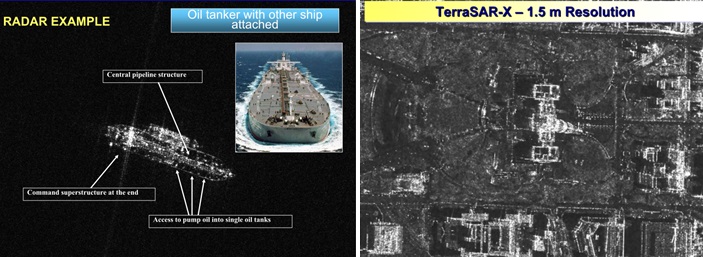
Since I recently touched on the topic of SAR radars in naval affairs:
satelliteobservation.net/2016/09/20/the-chinese-maritime-surveillance-system/
SAR imagery for ship identification (a pretty good resolution example)
geocento.com/satellite-imagery-case-studies/satellite-imagery-can-help-on-maritime-surveillance/

related to:
/2019/04/ship-detection-by-synthetic-aperture.html
/2018/02/modern-warships-iii-aaw.html

- - - - -

economictimes.indiatimes.com/news/et-explains/an-india-china-maneouvre-could-soon-leave-worlds-oil-powers-toothless/articleshow/69095599.cms

- - - - -

www.bbc.com/news/world-europe-47936682

- - - - -

Reminder that these days no treaty with the U.S. is worth its paper:
thehill.com/homenews/media/441095-washington-post-fact-checker-says-trump-has-now-hit-10000-lies-as-president

- - - - -

 I overlooked this when I wrote (repeatedly) about the merge between field artillery and air defence:
www.defence24.com/macierewicz-poland-to-get-160-himars-based-homar-rocket-systems
Well, I can't know everything. Still, I'm a bit disappointed that nobody pointed at this in comments.

This was written published by me mere days after the Polish article:
/2017/08/the-brigades-ideal-mrl.html
 
*self-praise*
At least some of my writing about the merge was earlier than the article above:
/2015/11/the-overlap-between-artillery.html

*/self-praise*

 I suppose now I can wait till I find official references to my other air defence favourites; RCWS for the dispersed low level counter-drone fight.

- - - - -

I wrote a while ago about how much Western military equipment isn't meant to function well at -30°C, and how this could open a window of opportunity for successful aggression. Colder than -20°C is actually rare in the relevant areas of NATO, though. The question remains whether the 'more extreme weather' facet of climate change / global warming will push this issue more to the forefront, and will Western armed bureaucracies respond well?

- - - - -


- - - - -

[for Germans]:
Der Wahl-o-mat für die Europawahl ist veröffentlicht:
https://www.wahl-o-mat.de/


S O
.